

[ad_1]
Information of her shopper’s launch despatched lawyer Melanie Kim scrambling to seek out garments. Her shopper hadn’t recognized freedom since 2003. She wanted one thing to put on when she left detention for the primary time in 16 years.
So Kim rushed to a reduction division retailer and grabbed what she hoped would match: a pair of joggers and a T-shirt.
However when Kim arrived on the Yuba County Jail in Marysville, California, the issue grew to become clear. Kim had solely ever seen her shopper from throughout glass panels, seated throughout transient, 30-minute visits. The garments Kim had picked had been far too massive for the petite, 4-foot-11.5-inch lady with the lengthy darkish hair who now stood free earlier than her.
“In my thoughts, bodily she was a lot greater than she truly was,” Kim recollects. It felt like a “mismatch”: how somebody as small and unassuming as Ny Nourn might have had such immense impact.
The story of how Nourn, 41, first got here to be imprisoned is the story of her emergence as an advocate. Because the co-director of the Asian Prisoner Assist Committee — and an organiser for the home violence advocacy group Survived and Punished — Nourn has quickly gained a popularity as one of the vital high-profile voices within the combat to finish what activists in the USA name the “prison-to-deportation pipeline”.
However Nourn doesn’t simply converse out about that pipeline. She has lived it herself. And in sharing her story repeatedly — on panels, in interviews, even for a TEDx Speak — Nourn usually finds herself confronting the horrors of her previous as she works to coach others in regards to the US felony justice system.

‘Born into violence’
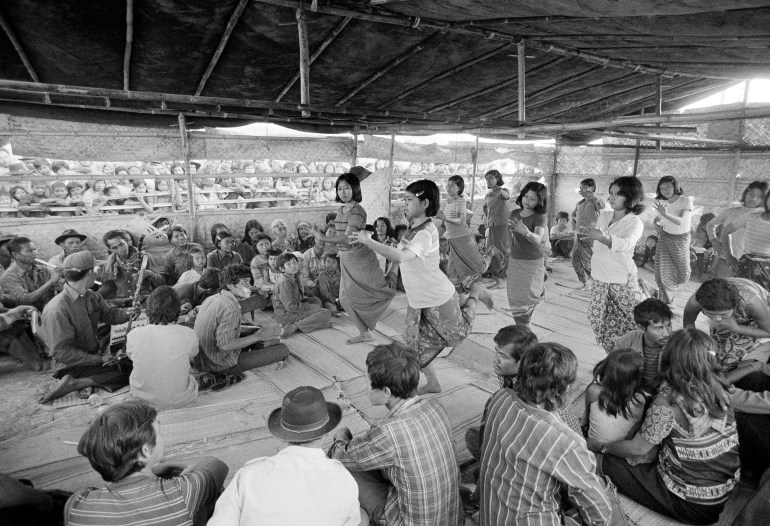
Born in 1980 in Khao-I-Dang, a Cambodian refugee camp close to the border in Thailand, Nourn remembers sorrow amongst her earliest reminiscences. At age 18, her mom had fled Cambodia on foot: the genocide there within the late Seventies killed greater than 1.7 million individuals.
She raised Nourn alone in these early years. Nourn’s father had deserted them each when Nourn was just one.
“I’ve very obscure, unhappy reminiscences — the vast majority of the time, being hungry, at all times needing my mom. She was working within the rice fields,” Nourn says. The world felt so big on the time. Now, wanting again, she considers herself “born into violence” — the trauma of the genocide resulting in the trauma that adopted.
At age 5, Nourn left together with her mom for the USA, the place they settled first in Florida, then in California. There, within the metropolis of San Diego, her mom married a fellow refugee from Vietnam, a person who labored as a mechanic. He too had suffered: he had been a prisoner of battle, Nourn says.
However in a short time, the connection between Nourn’s mom and stepfather turned violent. They settled in Mira Mesa, a booming suburb dubbed by an area publication in June 1980 as “San Diego’s most wretched neighborhood” with its limitless rows of an identical homes. Though they had been surrounded by army and Filipino households, Nourn remembers they’d few assets to course of their experiences as refugees. It was isolating.
“When you don’t take care of trauma, it bleeds into your life, your relationships, your loved ones, your work. In order that’s basically what occurred to love my mother and father, proper? It bled into their relationships and into how I used to be raised,” Nourn says matter-of-factly, her eyes downcast behind a pair of round-rimmed glasses.
Whilst Nourn’s household grew — with the arrival of her youthful brother and sister — Nourn’s mom tried to maintain the abuse she endured quiet. Nourn however caught glimpses of it. She witnessed her mom being crushed and raped.
She even remembers her mom reaching out to household associates for assist, however they simply informed her to work it out. And Nourn’s stepfather would brush her mom apart, saying, “Nobody’s going to imagine you.”
Dwelling in that home felt like “continually strolling on eggshells”. And he or she grew to resent what she noticed as her mom’s weak spot.
Nourn even discovered herself asking, “Why couldn’t she simply depart?” It was the identical victim-blaming query she too would later face when she discovered herself trapped in her personal abusive relationship.
“I actually thought to myself, once I was rising up, that I might by no means need to be like my mom, proper? I checked out her as very weak and docile,” Nourn says, shaking her head ever so barely on the reminiscence.
As a baby, Nourn had realized a saying in Cambodian: “Males are gold. Ladies are fabric.” Nourn understood it to imply that males had worth — and ladies had been solely helpful within the family.
She began to resent her heritage. She thought, “If this can be a tradition that actually doesn’t worth a lady’s value, their gender, then I don’t need to be a part of it.”
Shy and quiet, Nourn had few associates to open up to. Most days, her mother and father, who anticipated her to excel academically, made certain she got here straight dwelling from faculty, no dilly-dallying with classmates.
So as not to consider the violence at dwelling, Nourn tried to bury herself in her schoolwork. She nonetheless remembers the disgrace of receiving her first B in eighth grade: her stepfather, who requested to see her report card each quarter, had been upset.
Steadily, she discovered solace in sports activities. Nourn took up soccer, tennis and badminton. Even to at the present time, she continues to run: it feels therapeutic to her.
Escaping actuality on-line
However as Nourn neared the top of highschool, her programs began to get more difficult. With the violence at dwelling, she struggled to pay attention. It grew to become increasingly tough to care about grades and college and sports activities.
Nourn’s mother and father, nevertheless, continued to have excessive hopes for her education. Her stepfather hoped to see her in school someday. Private computer systems had been exploding in recognition within the Nineties, so to assist her together with her faculty work, Nourn’s mother and father set her up together with her personal system: “a type of massive screens with the large modem”.
By America On-line (AOL), the web entry service she used, Nourn found on the spot messaging and chat rooms. She knew that the individuals she met weren’t at all times who they stated they had been — however that was the purpose: to flee actuality. “You possibly can fake to be anybody you needed to be.”
There, in these on-line areas, Nourn might really feel needed. There, she might really feel much less alone. “Sadly,” she says, “that’s how I met my co-defendant.”
Nourn was solely 17 years previous when she met Ronald Barker, a married Vietnamese man 17 years her senior, in August 1998. In a current interview with Al Jazeera, Nourn avoids utilizing his identify: she refers to him merely as her “co-defendant” and the person he killed their “sufferer”.
Over the web, Barker claimed to be in his mid-20s. However seeing him in individual, three days after connecting on-line, Nourn realised he was a lot older; at first, she suspected he may even be in his 40s. Barker was delicate to the age distinction, too. He insisted that Nourn preserve their relationship a secret, that her mother and father wouldn’t approve.
Nonetheless, Nourn and Barker grew intimate rapidly. They began to see one another each day. He informed her the issues that she longed to listen to: that he cherished her, that he needed to marry her. He uncared for to say his pregnant spouse and little one at dwelling.
“All I knew is that the one factor I needed was simply to interrupt free from my dwelling,” Nourn says. “And to stay my life and share it with somebody that I felt would love me.”
However the verbal abuse of their relationship started immediately. Barker began to dictate what Nourn might put on, what time she ought to come dwelling from faculty, and the way she spent her free time. Barker had her trapped in a cycle of management and coercion, submission and compliance.
“To be frank, I used to be used to it,” Nourn says, referencing her upbringing. “I believed I might deal with it.” She reassured herself, “So long as he doesn’t put his arms on me, then I’m high quality.”
That autumn, shortly after she turned 18, Nourn began working after faculty as a telemarketer on the relationship service Excellent Match. She and her boss David Stevens — a 38-year-old divorcee and former state champion wrestler — grew to become shut. They went on a date in December 1998. However in accordance with courtroom paperwork, as she drove herself dwelling that night, Nourn seen a automobile parked close to her home. It was Barker.
Nourn informed a defence psychologist that that night time was the primary time Barker beat and raped her, livid that she had had intercourse with one other man. Calling her “used items”, Barker demanded that she take him to Stevens’s condominium. Fearing for her life, she complied.
Posing as Nourn’s brother, Barker used Nourn to lure Stevens out for a drive. Then, as they pulled over on the aspect of a lonely highway, Barker pulled out a gun. He grabbed Stevens by the neck. Over Nourn’s pleas of “no, no”, he shot Stevens twice within the head. He lit Stevens’s automobile on fireplace along with his physique nonetheless inside.
‘Each day was survival’
Three years later, the homicide of David Stevens remained unsolved. And Nourn nonetheless lived in concern of Barker’s abuse. He had crushed her. Shot at her. Choked her till she had handed out. And if she tried to depart, he threatened to kill her and her household. Nourn says he compelled her to endure two abortions in opposition to her will.
By that time, Nourn had moved in with Barker and his spouse: Barker defined her presence by saying she was the daughter of a household pal, in want of a spot to remain. Nourn suspects his spouse by no means questioned the association as a result of she was being abused too.
“Each day was survival for me,” Nourn recollects. She had began working at a mortgage firm, the place her colleagues seen the bruises on her legs and arms.
“After all, I might lie and say, ‘Oh, I fell within the bathe, bumped right into a chair,’” Nourn says. However certainly one of her colleagues pulled her apart and stated, “Chairs and showers don’t do this form of bruising.” She too had been abused. She too knew the indicators.
Nourn confided in her coworkers that she feared Barker would kill her. She knew he was able to it. However her colleagues didn’t perceive why. So she informed them the story of what occurred that December night time in 1998. Their response was fast: “You need to inform the police.”
“They had been holding my hand once I was speaking to the police at my job,” Nourn recollects. “They inspired me, they supported me, they helped me make that decision.” She remembers being taken to the police station and interrogated for 10 hours.
“I didn’t do something fallacious. I simply needed to hunt their assist and safety,” Nourn says. The subsequent day, she found each she and Barker had been every charged with first-degree homicide. Prosecutors characterised the murder as a premeditated assault, with Nourn complicit in luring Stevens to his loss of life.
At age 22, Nourn was given a life sentence with out the potential of parole. In handing down the sentence, San Diego choose Frederic Hyperlink asserted that Nourn was much more culpable than Barker himself.
“She took this mad canine and led him to the sufferer on this case,” Hyperlink stated, in accordance with media studies. “She let him off the leash.” He described Nourn as a “egocentric, cold-blooded killer”. She was despatched to the Central California Ladies’s Facility, the most important ladies’s jail within the state.
“My background being Southeast Asian and a younger lady, coming from a poor household and never educated — I didn’t perceive that these had been components, particularly my co-defendant being Asian and my sufferer being white,” Nourn says in hindsight.

Eventual deportation
However jail proved to be a turning level for Nourn.
Throughout her, she met ladies with related experiences, related tales, related backgrounds. Many had been home violence survivors. It was eye-opening. Even her bunkmate was a survivor, incarcerated after pleading responsible to murdering an abusive boyfriend. An older Black lady, she provided Nourn a bathe puff on her first day as a welcoming reward: it had just a little animal face sewn into its centre. Nourn nonetheless smiles on the considered it. Having simply arrived, Nourn had little of her personal, and the smiling bathe puff was foolish however sensible.
Estimates range as to what number of incarcerated ladies within the US have skilled home or sexual violence of their previous, however one 1999 examine positioned the speed as excessive as 94 %.
“When you concentrate on who’s locked up, who’s incarcerated, who’s serving life for no matter conviction, you may’t think about an Asian lady, proper?” Nourn asks.
She factors to stereotypes just like the mannequin minority fantasy, which associates Asians with success, not violence and incarceration.
“You anticipate somebody that’s tatted-up, that has a historical past of being locked up, being arrested, that used medicine, stuff like that. Individuals which might be like gang members. You don’t anticipate to see ladies, victims of home violence, survivors, being criminalised additionally.”
In 2006, an appeals courtroom in California reviewed Nourn’s case, citing the truth that her defence failed to analyze the position of “battered ladies’s syndrome” in justifying her actions on the night time of the homicide. Pioneered within the Seventies, ideas like “battered ladies’s syndrome” are more and more used to clarify the psychology of abuse survivors — significantly once they themselves are compelled to take part in against the law, like deadly self-defence.
“She was denied her constitutional proper to efficient help of counsel,” the appeals courtroom concluded. Nourn’s sentence was adjusted to a time period of 15 years to life. Moderately than spend the remainder of her life in jail, she may very well be free by the point she reached her late 30s.
However Nourn hadn’t factored in a single factor: her standing as a refugee. “Coming to the USA as a everlasting resident, with authorized standing, I believed I had the identical rights as another citizen,” she says with a shrug. It got here as a shock to study she may be deported upon launch.
At first, Nourn was in denial. “No, that’s not true,” she insisted to a pal from Thailand she met in jail, who tried to warn her about the potential of deportation. Nourn hadn’t realised she could be topic to the Felony Alien Program, a system utilized by the US Immigration and Customs Enforcement (ICE) to establish and deport non-citizens within the felony justice system.
As of 2020, 90 % of people focused by ICE for “enforcement and elimination” had been non-citizens with felony convictions or pending expenses. In different phrases, Nourn’s case was commonplace. Anoop Prasad, a senior lawyer at San Francisco’s Advancing Justice-Asian Legislation Caucus, receives a dozen letters from people like her each week.
So when Nourn wrote to the regulation caucus in 2013, it appeared like simply one other letter within the pile.
Prasad responded with the reality: that her choices had been restricted. There was little he might do to cease her eventual deportation.
“As much as that time, I feel just one one who had been sentenced to LWOP [Life Without Parole] had left a California jail alive. And nobody with an ICE maintain that we knew with LWOP had beat deportation,” Prasad explains.
A brand new aspect to immigrant rights
At present’s system of deportation was cast, partially, due to a set of legal guidelines handed in 1996, below then-President Invoice Clinton. Chief amongst them was the Unlawful Immigration Reform and Immigrant Duty Act (IIRIRA) of 1996, which expanded the variety of crimes that made immigrants eligible for deportation.
The regulation additionally stripped away the power of immigration judges to train discretion in deportation instances. As Prasad wrote in his letter again to Nourn, the regulation prohibited judges from contemplating her historical past as a baby arrival or her standing as a refugee. It didn’t even matter that Nourn had by no means been to Cambodia, the nation she could be deported to.
Nourn knew her possibilities of evading deportation had been low, even earlier than she acquired Prasad’s response confirming as a lot. However she was decided to persevere.
“If the system discovered a technique to put me in right here, I knew that there’s a technique to get me out,” she says. She credit her fellow prisoners with inspiring her persistence. One lady informed her she lives not just for herself and her household however to show that incarceration will not be remaining — one thing Nourn took to coronary heart.
So she doubled down and saved on writing. And Prasad quickly discovered himself in a vigorous correspondence with Nourn. “What struck me was simply how persistent Ny was. She was simply not prepared to simply accept that deportation was inevitable,” he recollects. “Principally for 4 years, she was nudging us.”
Much more astounding was the truth that Nourn had began lobbying him to characterize different ladies she met in jail too — ladies who likewise confronted ICE detention.
“Though I hadn’t but dedicated to truly taking this on, Ny was already connecting me with and pushing me to tackle illustration for other people,” Prasad says. Her organising efforts left Prasad impressed. Her hope began to offer him hope.
Nonetheless, Prasad needed to deal with public sentiment. Even within the immigrant rights motion, he discovered there was little sympathy for individuals with felony backgrounds.
“For a lot of the final a number of many years, the immigrant rights motion has tried to concentrate on this mannequin of respectability, displaying immigrants as being law-abiding, hardworking, English-speaking,” Prasad explains.
“There was no blueprint for an advocacy marketing campaign for somebody with a homicide conviction and who as soon as had a ‘life with out parole’ sentence.”
Want for defense
For Kham Moua, the director of nationwide coverage on the Southeast Asia Useful resource Motion Middle (SEARAC), the complexity of Nourn’s case illustrates how even probably the most severe felony offenses deserve consideration earlier than deportation. His organisation advocates on behalf of people like Nourn to vary federal regulation and defend immigrants from penalties like necessary detention and deportation.
“What we’re searching for is to not take away accountability from the actions and the errors that these of us made, however to offer them the kinds of protections that actually another American has — to offer them the power to redeem themselves legally with out going through deportation as a consequence,” Moua says.
He argues that the 1996 immigration legal guidelines had been swiftly handed, with out correct consideration of their wide-ranging results. Not solely did seemingly minor crimes — like drug possession and shoplifting — develop into trigger for deportation, however the legal guidelines had been retroactive. Any non-citizen with a felony report of their previous may very well be weak. And if a household misplaced its breadwinner to deportation, all the family risked spiraling into poverty.
“I feel politicians neglect that the 1996 legal guidelines — IIRIRA specifically — was handed as a part of an omnibus. That invoice wasn’t handed as a standalone invoice. There wasn’t a tonne of time to take it into consideration,” Moua explains.
He estimates that greater than 17,000 Southeast Asian People have been topic to orders of elimination because the 1996 legal guidelines handed. Moua identifies carefully with that neighborhood. Like Nourn, he was born in a Thai refugee camp, his mother and father having fled Laos through the horrors of the Vietnam Struggle. His household joined the 1.2 million Southeast Asian refugees who’ve resettled in the USA within the many years since.
“For refugees and for Southeast Asians specifically, we’re right here and our communities are right here as a result of the US supported armed conflicts or was straight concerned in our nations,” Moua says. “Many of those of us, for all intents and functions, are People. Individuals like myself have by no means recognized another nation.”
Nourn too had by no means recognized any dwelling however the USA. And but, as her date with the parole board loomed nearer, Prasad, her lawyer, held little hope that she might escape deportation.
“I didn’t inform her this, however behind my thoughts, I used to be additionally developing with contingency plans for how you can assist Ny if she did get deported to Cambodia,” he says. Prasad knew situations in Cambodia may very well be difficult, particularly for a newcomer with few language abilities and no assist system to depend on. He had seen instances like hers finish with purchasers stranded an ocean away, deported to a rustic of which they knew little or no.

‘Strip individuals of their humanity’
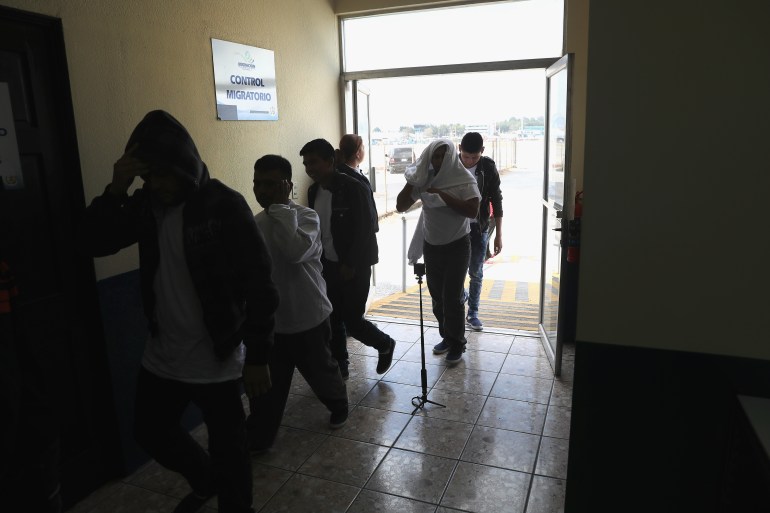
Nourn’s parole listening to arrived in January 2017. And certain sufficient, her parole was authorised. However as quickly because the jail launched her from custody, ICE brokers had been available to shackle her and drive her to the Yuba County Jail.
Prasad remembers receiving Nourn’s jail file after her switch to ICE. It contained what’s referred to as a “physique receipt” — the time period used for the paperwork used to doc the switch. “It was actually a receipt for her physique,” Prasad says with emotion rising in his voice. “I really feel just like the system does all the things it could to strip individuals of their humanity.”
Nourn’s new environment felt much more hopeless than earlier than. In jail, she had routines, associates and the liberty to work, cook dinner and socialise. She had a neighborhood. However in ICE detention she felt remoted, awash in an environment of despair. Caught in a “module” of 18 bunk beds, Nourn watched as her fellow bunkmates confronted their deportations with little trigger for hope.
Her possibilities of ever being let loose had been slim. Her solely interactions with the skin world got here in 30-minute increments, throughout glass dividers.
Nonetheless, Nourn saved busy. She gave media interviews, referred to as into panel discussions and led marketing campaign calls to map out a method for herself and others. Prasad remembers that it was like having an additional member on her defence crew.
She was additionally maintaining correspondences with outdoors supporters. A type of letters got here from a younger man named Nate Tan. Born within the San Francisco Bay Space within the early Nineties to survivors of the Cambodian genocide, Tan had grown up struggling to narrate to his Cambodian heritage, simply as Nourn had.
“Anytime you carry up Cambodian anyplace, the preliminary thought is at all times the genocide, in any US context,” Tan says. He additionally seen his friends related Cambodian individuals with poverty and gangs. “So in that regard, it was onerous for me to seek out any optimistic attributions of being Cambodian.”
As a baby, Tan noticed his mother and father contending with post-traumatic stress. That they had night time terrors. Poverty compelled them to maneuver from neighbourhood to neighbourhood. And when a discover went out to all mother and father that an energetic shooter was on campus at Tan’s faculty, his mother and father got here working.
“My mother and father had been blowing up my cellphone: ‘Are you protected? Are you protected?’” Tan thinks that, after dropping so many family members to genocide, their concern of dropping their kids was all of the better.
Tan’s first brush with the felony justice system got here when he was in center faculty. His youthful brother, fearing bullies, had introduced a knife to campus. That afternoon, the police arrived at Tan’s home, handcuffed his little brother and positioned him in a holding cell on the native precinct.

Hope within the Cambodian American neighborhood
Early experiences like that impressed Tan to become involved with the Asian Prisoner Assist Committee in school. The committee was providing ethnic research programmes inside prisons like San Quentin State Jail, and Tan signed on. “I’ve in all probability met extra Cambodian individuals in jail than I’ve ever,” Tan says emphatically.
He remembers that, on his first day visiting the jail, a person got here as much as welcome him: “You’re Cambodian? I’m Cambodian!” They grew shut, and Tan was excited to study he was quickly due for parole.
However when the parole date got here, somewhat than be launched, the person was transferred to ICE detention. “That’s once I knew there was one other system able to inflict one other type of violence on my neighborhood,” Tan says. “To me, it was a shock.”
Studying about Ny’s story by way of the activist neighborhood, although, gave him hope. It gave him delight. And it got here at a time when deportations had been at a historic excessive: within the early years of Donald Trump’s presidency, from 2017 to 2018, deportations of Cambodians alone leapt 279 %.
Supporters crowded Nourn’s courtroom hearings and celebrated her birthday with a sit-in on the native ICE workplace. Different incarcerated ladies had been following her lead. In the meantime, lawyer Melanie Kim had joined the crew at Advancing Justice-Asian Legislation Caucus, and collectively, she and Prasad had been exploring novel methods to scuttle Nourn’s deportation.
One technique concerned submitting a Conference Towards Torture utility on Nourn’s behalf, arguing that her life could be endangered by deportation. The opposite choice they pursued was making use of for a pardon from California’s governor — an answer that appeared too unlikely to return true.
“Once we first began serious about pardons as an choice, pardons had been so uncommon — and pardons to cease deportations weren’t a factor that actually occurred,” Prasad says.

‘Freedom on the opposite aspect’
However even when her Conference Towards Torture utility was granted — defending her from deportation — ICE appealed the choice. And within the interim, it refused to launch Nourn.
On November 9, 2017, Prasad entered a California courtroom to argue for Nourn to be launched on bond. He was touched to see the courtroom flooded together with her supporters: “A whole lot of lifers, loads of of us who had hung out in ICE, individuals who had achieved time with Ny, had been all within the courtroom, which was simply actually wonderful to see.”
When a choose granted Nourn her bond, Prasad was surprised. “I used to be nonetheless just a little bit in a state of shock,” he stated. “We simply wanted to publish the bond, and he or she could be out that day.”
That end result appeared so unlikely, he and Kim hadn’t even thought to organize garments for Nourn.
As they drove to Yuba County Jail to select her up, Nourn was having fun with her first style of freedom in 16 years. ICE had already launched her into the ready space, the place she might see a door to the skin world. There have been no chains. No locks. No boundaries. Nothing to cage her inside.
“You possibly can simply step out, and that’s freedom on the opposite aspect,” she recollects. It felt like a novelty to climb into the backseat of a automobile with out chains wrapped round her waist.
Three years later, in 2020, Nourn herself was working as a neighborhood advocate on the Advancing Justice-Asian Legislation Caucus. She was on her technique to a workshop when her lawyer — now colleague — Prasad stunned her with the information: the governor of California, Democrat Gavin Newsom, had used his government powers to grant her a full pardon.
Her first response was disbelief: “I’m getting what!?” Pardon functions can take years to course of, and sometimes candidates are solely notified if the governor chooses to take motion.
Shock washed over Nourn, then pleasure. With the governor’s pardon, Nourn had safety that no courtroom might overturn — a situation she confronted together with her Conference Towards Torture utility. The Conference Towards Torture determination additionally left her weak to deportation to a different nation outdoors of Cambodia.
However the pardon had the facility to finish deportation proceedings, by addressing the unique grounds for her elimination: her crime. Nourn now not needed to concern deportation for what occurred in 1998. She would now not have to fret about being separated from her household, being compelled to depart the one nation she had by no means recognized.
Crying and shaking, Nourn referred to as her mom and her siblings to share the information. Her cellphone began buzzing with messages of congratulations from her well-wishers.
After receiving the paper pardon certificates within the mail, Nourn took to Twitter. “Thanks @GavinNewsom,” she wrote, earlier than asking that he please “grant mass clemency for extra individuals to free them from ICE detentions, prisons, & concern of deportation!”
As of 2022, Newsom’s workplace has granted 112 pardons whole, together with to Cambodian refugees like Kang Hen and Hay Hov, whose pardons in 2019 had been seen as a rebuke to the Trump administration’s immigration insurance policies. Nourn and different advocates proceed to combat for a brand new regulation that may stop state and native governments in California from aiding with ICE deportations.

Preventing the deportation machine
At present, Nourn organises on behalf of Survived and Punished, a grassroots group that campaigns to free survivors of home violence enmeshed within the felony justice system. She additionally received to fulfill Tan, her former pen pal.
Tan admits to being “just a little star-struck” when assembly her in individual for the primary time. “Within the Cambodian neighborhood, sometimes you hear a narrative about somebody reconnecting with somebody they misplaced through the genocide,” Tan explains. “After I noticed Ny, despite the fact that I didn’t know Ny earlier than her incarceration, it felt like I used to be assembly her in a long-lost reunion.”
They now co-direct the Asian Prisoner Assist Committee collectively, which runs jail and re-entry programmes in addition to campaigns in opposition to deportation. It’s the identical organisation that first received Tan volunteering in San Quentin State Jail. Provided that the overwhelming majority of prisoners in the USA are males — at a fee of 93.4 % as of March — Tan says Nourn’s instance is all of the extra highly effective for giving voice to a feminine minority that may really feel invisible.

“I’ve seen so many incarcerated ladies combat the deportation machine so fiercely, modeling after what Ny did,” Tan says. “There’s a disproportionate quantity of assist for males. Ladies don’t almost get the identical assist. However Ny has actually introduced ahead this combat for incarcerated ladies.”
Tan is aware of it’s simple to hate the system that incarcerates so many. It’s simple to be indignant. However so far as he can inform, Nourn hasn’t gotten into advocacy out of spite. She does this work out of affection for her neighborhood: for the abuse survivors whose lives are derailed by violence. For the immigrants doubly punished by way of jail and deportation.
“She has this deep love for individuals who have been in conditions like hers,” Tan says.
Although she now not lives with shackles and bars, Nourn insists she doesn’t be happy — not but at the least. “We’re solely free till everyone seems to be free,” she says. That’s why she continues to share her story, working for that day to lastly come.
[ad_2]









Leave a Reply