
Clearly someone is trying to drive a stake between Trump and Americans.
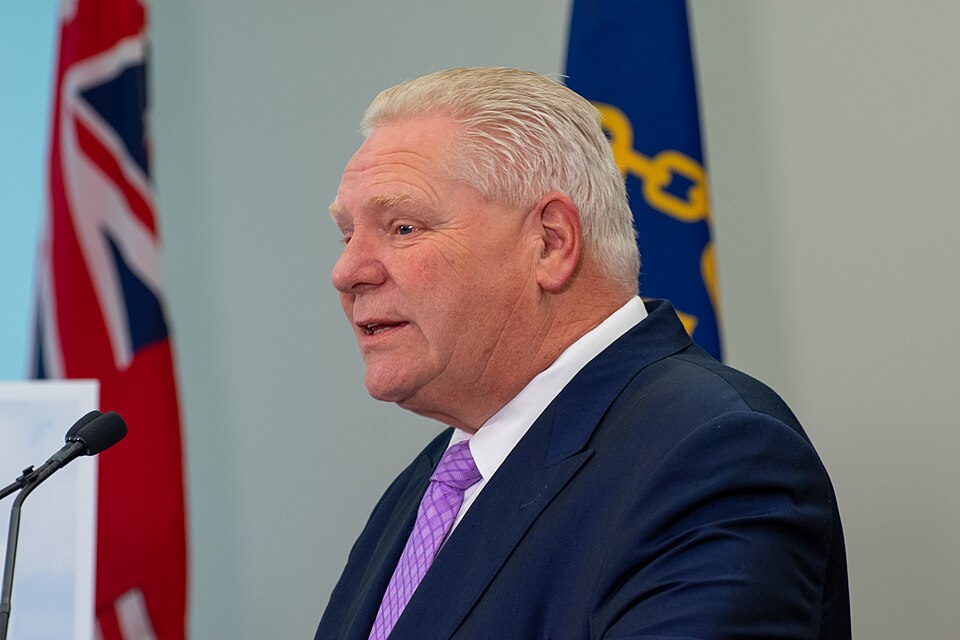
Ontario Premier Doug Ford is taking direct aim at President Donald Trump while simultaneously attempting to separate his criticism of the president from his feelings toward the American people.
As a bitter U.S.-Canada trade dispute intensifies, Ford made one of his strongest accusations yet during a Tuesday appearance on CNN, claiming Trump’s tariff strategy could ultimately hurt Americans financially.
“I think President Trump wants to hurt the American people!” Ford said.
The accusation marks another escalation in an increasingly personal confrontation between Trump and one of Canada’s most prominent political leaders.
At the same time, Ford insisted Canadians remain supportive of their American neighbors — even as Canadian officials prepare retaliatory measures that could affect U.S. businesses, workers and consumers.
Ford Warns Americans About Trump’s Tariffs
At the center of the dispute are new U.S. tariffs on Canadian products and Canada’s plans to respond with tariffs of its own.
Trump has defended his aggressive trade strategy as part of a broader effort to protect American industry, strengthen domestic manufacturing and demand better treatment from U.S. trading partners.
Ford sees the situation very differently.
The Ontario premier claimed American consumers could end up paying substantially more for automobiles as tariffs move through the highly integrated North American auto industry.
“It’s going to cost the Americans up to $5,000 more on automobiles,” Ford said.
That figure is Ford’s estimate, and the ultimate impact on vehicle prices will depend on how manufacturers, suppliers and consumers respond to the new trade measures.
For millions of Americans already concerned about household expenses, however, the larger question is straightforward: Who will ultimately bear the cost of the escalating trade battle?
Trump Says America Has Carried Canada Long Enough
Trump has consistently argued that previous trade arrangements have allowed foreign countries to benefit from access to the enormous U.S. market without giving American businesses a sufficiently fair deal in return.
His administration’s use of tariffs represents an attempt to change that equation.
The president made his position unmistakable in a fiery social media response to Ford.
“America has been carrying Canada for decades, but no longer!” Trump wrote.
That message fits squarely within Trump’s long-running “America First” approach to trade, which seeks to use the economic power of the United States to secure better terms and encourage more production at home.
Supporters of that approach argue that accepting some short-term economic disruption may be worthwhile if it produces stronger American industries and better trade agreements over the long run.
Critics, including Ford, argue consumers could feel the pain before those benefits materialize.
Canada Plans To Hit Back
Canada isn’t simply protesting Trump’s tariffs.
Prime Minister Mark Carney’s government is moving forward with retaliatory tariffs on American products, escalating the economic confrontation between two countries whose businesses and supply chains have been closely connected for decades.
Ford acknowledged that Canada’s response could hurt Americans as well.
He said the Canadian government was preparing an extensive list of tariffs targeting U.S. products.
“And that hurts the American people,” Ford said.
That admission illustrates the difficult reality of a trade war: retaliation intended to pressure a foreign government can also affect businesses, employees and consumers who had no role in creating the dispute.
American farmers, manufacturers and exporters will therefore be watching closely to see which U.S. products Canada targets and how long the confrontation lasts.
Ford Separates Trump From American People
Ford then made a notable distinction between his increasingly hostile relationship with Trump and his view of Americans themselves.
“I do not understand why he wants to attack Canada nonstop,” Ford said.
But he quickly added that Canadians continue to have warm feelings toward their neighbors.
“Canadians still love the American people,” Ford said. “They love the U.S. They don’t see eye to eye with the president by any means. But we love the American people, and I do as well.”
The message was clear: Ford wanted Americans to know that his fight is with Trump and his policies, not necessarily with them.
But the political battle has already moved well beyond diplomatic disagreement.
Ford’s Rhetoric Turns Personal
Just one day earlier, Ford used much harsher language while discussing Trump.
The Ontario leader vowed to confront the president “full-steam,” labeled him a “bully” and used profanity while rejecting Trump’s tariff demands.
Ford acknowledged Tuesday that the dispute had become heated.
“Things got a little heated,” he admitted during his CNN appearance.
Trump responded to Ford’s attacks with personal criticism of his own, unfavorably comparing the Ontario premier with his late brother, former Toronto Mayor Rob Ford.
The president dismissed Ford’s rhetoric as “bluster” before returning to the economic argument at the heart of the dispute.
For Trump, the issue remains whether America’s longstanding economic relationship with Canada has adequately served U.S. interests.
Why This Matters For American Families
The political insults may attract attention, but the financial consequences could prove much more important.
The United States and Canada share deeply interconnected industries, particularly in automobiles, energy, agriculture, steel and aluminum. Products and components can cross the border multiple times before reaching consumers.
That means a prolonged tariff fight has the potential to affect prices, jobs and investment decisions on both sides.
For Americans approaching retirement or living on fixed incomes, even relatively modest increases in the cost of vehicles, household products and other necessities can matter.
For American workers, meanwhile, the outcome could depend on whether Trump’s tariffs successfully encourage companies to move production into the United States or whether Canadian retaliation reduces demand for American-made goods.
Those competing possibilities are why the economic results — rather than the political rhetoric — will ultimately determine whether the strategy succeeds.
Trump and Canada Show Few Signs of Backing Down
Ford now says he wants tensions lowered and a deal reached, but neither side appears willing to simply surrender its position.
Trump maintains that America should no longer tolerate trade relationships he believes put U.S. businesses and workers at a disadvantage.
Canadian leaders argue they have an obligation to defend their country’s industries and sovereignty.
Caught between those competing positions are millions of ordinary Americans and Canadians whose jobs, businesses and household budgets could be affected by what happens next.
Ford may insist his criticism is directed at Trump rather than the American people, but Canada’s retaliatory tariffs could still have consequences inside the United States.
And as the dispute becomes increasingly personal, the pressure on both governments to find a workable agreement is only growing.








Leave a Reply