
Is Kamala really trying this?
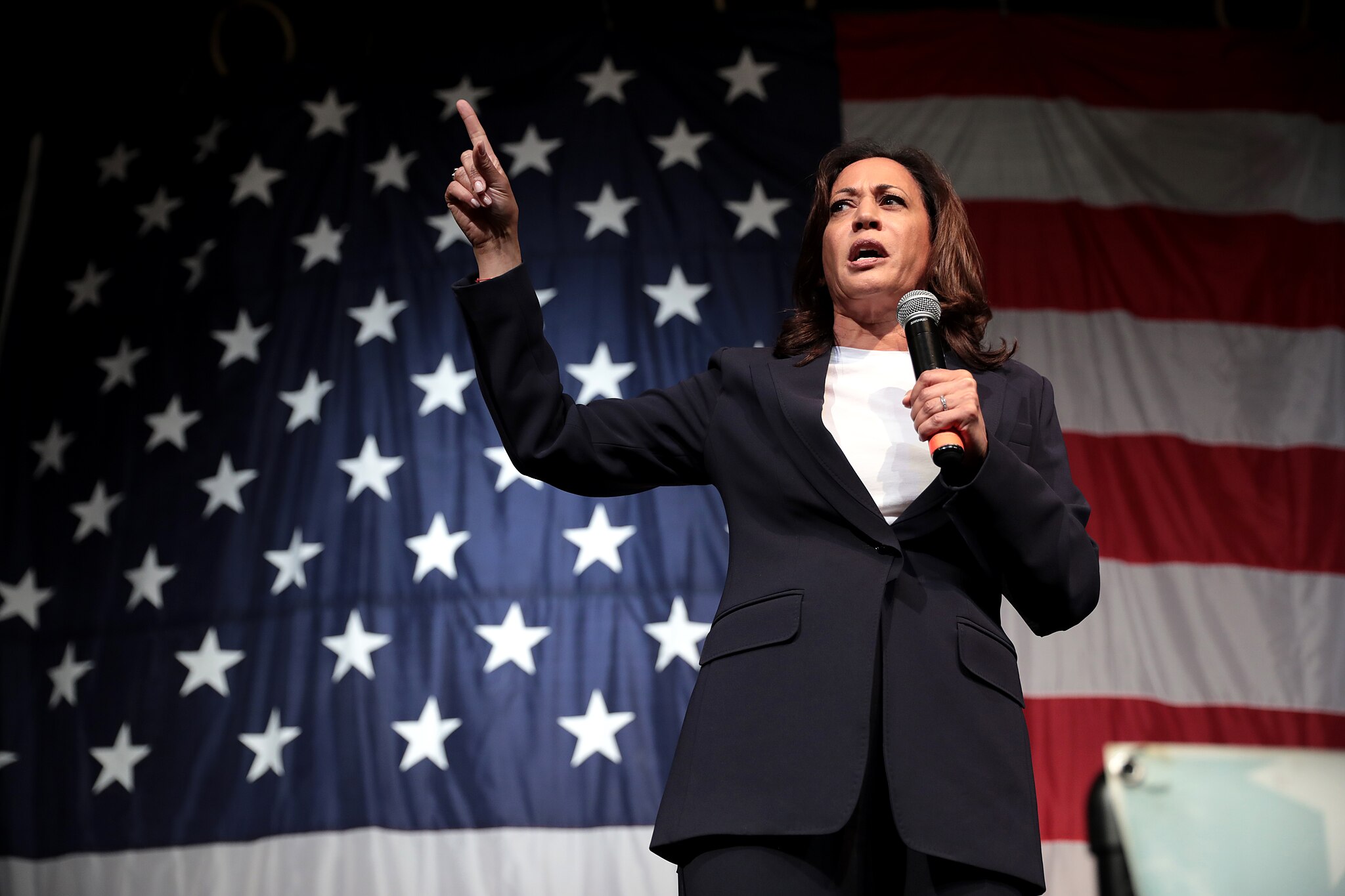
Former Vice President Kamala Harris is stepping back into the national political spotlight, throwing her support behind Democratic Rep. Chris Pappas in one of the most closely watched U.S. Senate races of the 2026 midterm elections.
Harris endorsed Pappas on Monday in New Hampshire, giving the four-term congressman a major national endorsement just eight days before voters head to the polls in the state’s Democratic primary.
The move could have consequences far beyond New Hampshire.
With control of the U.S. Senate at stake in November, both Republicans and Democrats are closely watching the race to replace retiring Democratic Sen. Jeanne Shaheen.
And for Harris, who remains a prominent figure in Democratic politics, the endorsement gives her another opportunity to influence a major election during President Donald Trump’s second term.
Harris Jumps Into New Hampshire Senate Race
Harris announced her endorsement by portraying Pappas as a lawmaker capable of confronting Washington while addressing economic concerns facing New Hampshire families.
Harris said Pappas is the kind of advocate New Hampshire needs to confront higher costs, challenge corruption in Washington and push back against an administration she believes has failed to deliver for Americans.
She also praised Pappas for what she characterized as a willingness to work across party lines when necessary.
“Chris knows how to get things done, and he knows that means working with anyone — or taking on anyone — to make life better for his fellow Granite Staters,” Harris added.
Harris said she was proud to support Pappas in his campaign for the Senate.
Her intervention comes at a crucial point in the Democratic primary.
Pappas Faces a Tightening Democratic Primary
Pappas, who has represented New Hampshire’s 1st Congressional District since 2019, entered the Senate contest as a strong favorite for the Democratic nomination.
But his advantage has narrowed considerably.
A late-August University of New Hampshire poll showed Pappas receiving 47% support among likely Democratic primary voters, compared with 34% for progressive challenger Karishma Manzur.
That 13-point advantage is substantial, but it represents a dramatic change from earlier in the campaign.
Pappas held a 43-point lead over Manzur in a January survey, making her recent gains particularly noteworthy heading into the Sept. 8 primary.
Harris’s endorsement therefore arrives at a time when Pappas is looking to secure the nomination and turn his attention toward the general election.
Pappas Praises Harris and Biden-Era Legislation
Pappas welcomed Harris’s endorsement by highlighting legislation approved during the Biden-Harris administration.
He pointed specifically to the Bipartisan Infrastructure Law, CHIPS and Science Act and Inflation Reduction Act.
Pappas said that while Harris served as vice president, Congress approved major bipartisan measures that had a significant impact on Americans nationwide.
He also praised Harris as a prominent Democratic voice on the economy and American democracy.
Pappas said the stakes in New Hampshire “couldn’t be higher” and that he was honored to receive the former vice president’s support.
His campaign has focused heavily on affordability, the cost of living and protecting federal programs.
Those economic issues are expected to remain major subjects in the race as voters weigh competing Republican and Democratic proposals on taxes, spending, regulations and the economy.
Republicans See Opportunity in New Hampshire
Republicans, meanwhile, are fighting their own primary battle.
Former New Hampshire Sen. John E. Sununu is seeking a return to Washington and has emerged as the Republican front-runner against former Massachusetts Sen. Scott Brown.
Sununu represented New Hampshire in the Senate from 2003 until 2009, when Shaheen replaced him following the 2008 election.
Brown previously represented Massachusetts in the Senate before moving to New Hampshire.
Recent polling gives Sununu a commanding advantage in the Republican contest.
A University of New Hampshire survey showed Sununu with 60% support compared with 20% for Brown.
That means the November election could ultimately produce a Pappas-Sununu showdown featuring two candidates with extensive political experience.
Latest Poll Shows Just How Close Race Could Get
New Hampshire could become a major Senate battleground this fall.
The latest University of New Hampshire polling offered Republicans an encouraging sign, showing Sununu at 45% and Pappas at 43% in a hypothetical general-election matchup.
Other recent polling has produced different results, including surveys showing Pappas ahead, underscoring the competitiveness of the race.
New Hampshire has a long history of closely contested elections, and the retirement of Shaheen creates a rare open-seat opportunity.
For Republicans, defeating the eventual Democratic nominee would mean flipping a Senate seat currently held by Democrats.
For Democrats, defending the seat could prove critical to their hopes of improving their position in Washington.
That makes the New Hampshire race one to watch as the 2026 midterms enter their final months.
Cost of Living Takes Center Stage
The economy is also emerging as a major dividing line.
Pappas has emphasized the cost of living and government programs, while Sununu has campaigned on reducing taxes and government regulations.
Those competing approaches could become central to the general election.
Voters continue to express concerns about everyday expenses, including groceries, gasoline, housing, utilities and health care.
That gives both parties an incentive to convince voters that their economic policies offer the better path forward.
The debate also connects the New Hampshire Senate race directly to the Trump administration and the broader national battle over the economy.
Harris Keeps Her Political Profile Alive
Harris’s involvement carries another layer of political significance.
The former vice president has been campaigning for Democratic candidates during the 2026 midterm cycle as questions continue about her own political future and whether she could make another run for the White House in 2028.
New Hampshire is familiar territory for Harris.
She narrowly carried the state over Trump in the 2024 presidential election, winning by roughly three percentage points.
Now she is returning to the state’s political arena by backing a Democrat who could ultimately face a Republican candidate seeking to strengthen Trump’s position in Washington.
A Senate Race With National Consequences
The battle for Shaheen’s seat is about more than two candidates or one state.
Control of the Senate determines which party has greater power over federal legislation, spending battles, presidential nominations and other major decisions in Washington.
That makes competitive races such as New Hampshire especially important.
Harris and other prominent Democrats have an obvious interest in preventing Republicans from flipping the seat.
Republicans have an equally strong incentive to turn New Hampshire red and strengthen their position in the Senate.
First, however, voters must decide who makes it through the Sept. 8 primaries.
Pappas remains ahead of Manzur, while Sununu holds a substantial advantage over Brown. But recent polling suggests the eventual general election could be considerably more difficult to predict.
Harris has now placed herself squarely in the middle of that battle.
And with November approaching, New Hampshire could become one of the states that determines how much power Republicans and Democrats wield during the final two years of Trump’s second term.








Leave a Reply