
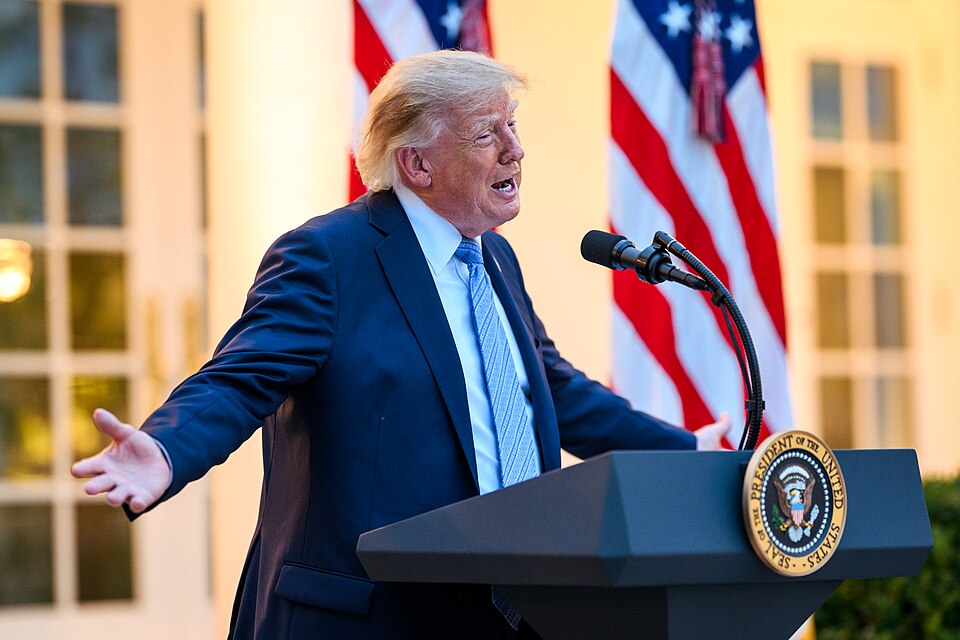
Trump is fighting for Americans the mainstream media won’t show you.
President Donald Trump is taking on some of America’s biggest banks and credit card companies, backing a major proposal designed to lower costs for businesses and potentially deliver savings to millions of American consumers.
The president is throwing his support behind the Credit Card Competition Act, legislation that could dramatically change how credit card transactions are processed across the United States.
The proposal has triggered a heated debate between the White House, major financial institutions, and business groups.
At stake are billions of dollars in credit card processing fees, the future of popular cash-back rewards programs, and whether American families could eventually pay less for everyday purchases.
For consumers already struggling with high grocery bills, utility costs, and other household expenses, the outcome could have important financial consequences.
Trump Takes Aim At Powerful Credit Card Companies
Trump recently renewed his support for legislation championed by Republican Senator Roger Marshall of Kansas.
During an October 19 appearance in Kansas, the president praised Marshall for challenging the fees imposed on businesses when customers use credit cards.
“Roger is also the number one champion fighting to protect hardworking Americans and small businesses from predatory credit card companies and out of control swipe fees,” Trump declared.
The legislation targets a payment processing market largely dominated by Visa and Mastercard.
These two companies operate networks responsible for processing a substantial majority of American credit card transactions.
Whenever someone purchases groceries, fills up at a gas station, or pays for dinner using a credit card, the business typically pays a transaction fee.
Those charges may seem insignificant individually, but they can add up quickly for businesses processing thousands of transactions.
Supporters argue that the fees place unnecessary pressure on merchants and contribute to higher prices for consumers.
Trump wants Congress to address the issue by introducing greater competition into the payment processing industry.
How Trump’s Plan Could Lower Everyday Prices
The Credit Card Competition Act would require certain large credit card issuers to allow transactions to be processed through at least two competing payment networks.
Under the proposal, merchants would have more flexibility to select which eligible network processes a transaction.
Supporters believe the resulting competition would encourage networks to offer lower processing fees.
That could be especially significant for grocery stores, gas stations, restaurants, and independent businesses operating on narrow profit margins.
For example, a business processing $100,000 in monthly credit card purchases would incur $2,500 in processing costs at an illustrative average rate of 2.5%.
If competition reduced that effective rate to 2%, the business would save approximately $500 per month.
Actual fees and savings would vary substantially depending on the business and its payment arrangements.
Advocates hope merchants would pass at least some savings along to shoppers.
However, the legislation does not require businesses to lower prices, and there is no guarantee that consumers would receive the full benefit.
Major Banks Warn Americans Could Lose Credit Card Rewards
Not everyone supports the president’s proposal.
Major banks and financial industry representatives argue that increased competition could threaten rewards programs that millions of Americans use regularly.
These programs include cash-back bonuses, travel points, airline miles, and other benefits associated with credit card purchases.
Financial institutions receive revenue from transaction fees, some of which helps finance these rewards.
If that revenue declines, banks could respond by reducing certain benefits or changing cardholder terms.
For Americans who regularly use cash-back credit cards to offset household expenses, that possibility deserves attention.
But supporters of the legislation argue that the current rewards system also comes with costs that many consumers never notice.
Retailers frequently incorporate payment processing expenses into their overall prices.
That means shoppers using cash, debit cards, or credit cards without substantial rewards may indirectly contribute to the costs of programs that primarily benefit other cardholders.
The central question is whether reducing processing fees would produce enough consumer savings to outweigh any potential changes to rewards.
Why Seniors And Retirees Should Pay Attention
For Americans living on fixed incomes, even relatively modest changes in everyday expenses can affect household budgets.
Retirees relying on Social Security, pensions, or retirement savings must often plan carefully around recurring costs.
Groceries, gasoline, prescription medications, insurance, and utility bills can consume a substantial portion of monthly income.
If Trump’s proposal eventually results in lower retail prices, older Americans could benefit regardless of how they choose to pay.
At the same time, retirees who depend on cash-back rewards should pay attention to possible changes in their credit card agreements.
For example, someone spending $1,500 per month on a card offering 2% cash back could earn approximately $360 annually, assuming every purchase qualifies.
Those savings could be affected if financial institutions modify their rewards programs.
Importantly, the proposal does not directly eliminate cash-back programs or prohibit banks from continuing to offer rewards.
The ultimate effect would depend on how banks, payment networks, and retailers respond.
Trump’s Effort Draws Support Across Party Lines
One unusual aspect of the Credit Card Competition Act is its bipartisan support.
Senator Roger Marshall, a Republican from Kansas, introduced the 2026 Senate legislation alongside Democratic Senator Dick Durbin of Illinois, with Senator Peter Welch of Vermont joining as a cosponsor.
The measure has also attracted support from organizations representing retailers and other businesses.
Supporters argue that greater competition would reduce the influence of dominant payment networks and give merchants more control over their operating expenses.
The financial industry sees the situation differently.
Banking organizations contend that the legislation could undermine existing payment systems, reduce consumer benefits, and create unintended consequences.
The disagreement has turned a technical dispute over payment processing into a broader debate over financial fairness, competition, and consumer protection.
Trump’s endorsement has brought additional national attention to the issue.
What Happens To Your Credit Cards If The Law Passes?
Americans should understand that the proposed legislation would not automatically cancel their credit cards, erase accumulated rewards, or eliminate existing credit limits.
Instead, its principal objective is to change the competitive structure of the payment networks available for certain credit card transactions.
Consumers would generally continue using credit cards to make purchases.
However, individual financial institutions could eventually modify some card features in response to changes in processing revenue.
That makes it important for cardholders to monitor notices from their banks and review changes to rewards terms.
There is also a distinction between credit card processing fees and credit card interest rates.
The Credit Card Competition Act primarily addresses payment network competition. It does not directly establish a new nationwide cap on the interest rates banks charge consumers who carry balances.
Americans who regularly pay credit card interest would therefore not automatically receive lower borrowing costs simply because the legislation passes.
Will Congress Approve Trump’s Credit Card Plan?
The Credit Card Competition Act of 2026 was introduced in Congress on January 13.
The Senate version, S. 3623, was referred to the Senate Banking, Housing, and Urban Affairs Committee.
A corresponding House proposal, H.R. 7035, was referred to the House Financial Services Committee.
As of October 20, 2026, the legislation has not been enacted into law.
Congress would still need to approve the measure before its requirements could take effect.
Meanwhile, Trump’s continued public support has increased political attention on the issue and intensified the debate between business organizations and financial institutions.
For American consumers, the stakes go beyond credit card points and airline miles.
The broader question is whether greater competition can reduce the hidden costs associated with everyday purchases without significantly weakening benefits that cardholders currently enjoy.
Trump has made clear that he wants to challenge the existing credit card payment system. Whether that effort ultimately delivers lower prices for American families will depend on what Congress does next and how businesses and banks respond.







Leave a Reply