
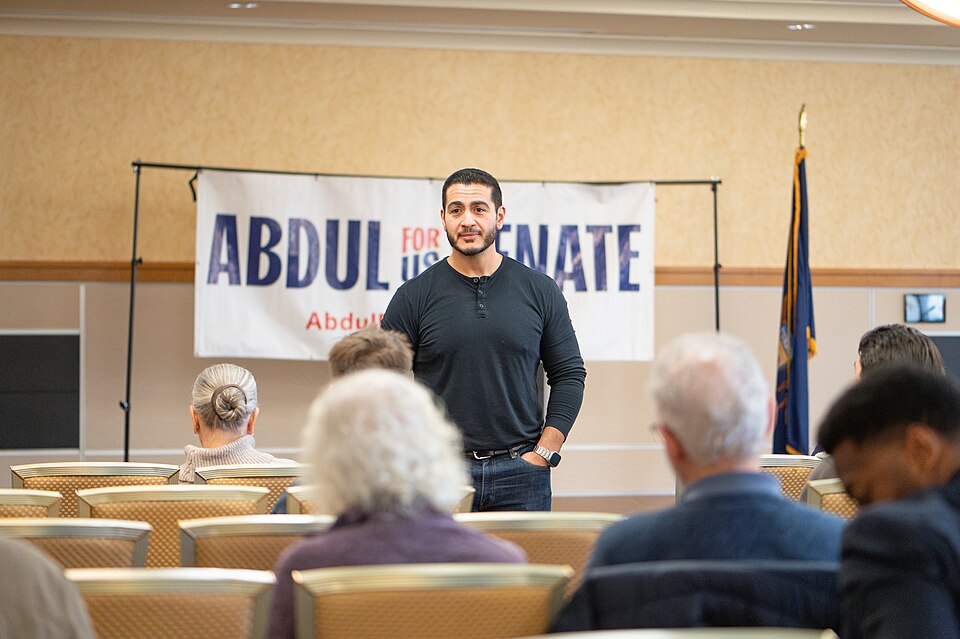
Here’s what happened.
Michigan’s newly elected Democratic Senator Abdul El-Sayed is already making headlines in Washington, this time by launching a political fundraising organization with a name that appears to poke fun at President Donald Trump, Vice President JD Vance, and other Republican critics.
Just days after defeating Republican Mike Rogers in Michigan’s closely watched U.S. Senate election, El-Sayed established a new leadership political action committee called Habibi PAC.
According to Federal Election Commission filings, the organization was officially established Thursday, November 5, marking one of El-Sayed’s first major political moves since winning his election.
While the committee will allow him to raise money to support other candidates, its unusual name has attracted considerable attention.
And the meaning behind that name reveals why the incoming senator may be looking to continue his public feud with Republican leaders.
Why Did El-Sayed Name His New Organization Habibi PAC?
The word “habibi” is an Arabic expression commonly translated as “my beloved.” Depending on the context, it can also be used as a friendly term similar to “buddy” or “my friend.”
El-Sayed frequently used the expression during his campaign, particularly when responding to criticism from prominent Republicans.
The phrase became especially notable following his election victory, when he used it while directly addressing Vice President JD Vance.
During his victory speech, El-Sayed highlighted the fact that Vance, as vice president, would be responsible for administering the Senate oath when the new Congress convenes in January.
The comment was delivered humorously but also served as a pointed political response to the vice president’s criticism during the election.
Now, by turning the same expression into the name of a political fundraising committee, El-Sayed is extending that message beyond his Senate campaign.
The decision suggests that the Democrat has little interest in abandoning the confrontational approach that helped define his election battle.
Trump And Vance Were Major Critics During Michigan Race
El-Sayed’s Senate campaign became the subject of considerable national attention as Republicans questioned his political positions and foreign policy views.
President Trump, Vice President Vance, and Republican candidate Mike Rogers all criticized El-Sayed during the contest.
One of the most contentious issues involved El-Sayed’s opposition to American military assistance to Israel.
The issue has become a significant source of disagreement within the Democratic Party, particularly as progressive lawmakers push for changes to longstanding American foreign policy.
Republicans have raised concerns about the consequences of reducing military support for Israel, a major American ally in the Middle East.
El-Sayed defended his political positions throughout the campaign and frequently responded to his opponents through speeches and public statements.
His victory over Rogers demonstrated that those attacks were not enough to prevent him from winning the Senate seat.
The election also made El-Sayed the first Muslim elected to the United States Senate, a historic development that received national attention.
What Is A Leadership PAC And Why Does It Matter?
Although Habibi PAC has attracted headlines because of its name, the organization could serve a much larger political purpose.
A leadership political action committee allows an elected official to raise and distribute money to support other political candidates and organizations.
These committees are separate from a politician’s official election campaign and operate under federal campaign finance regulations.
For members of Congress, leadership PACs can provide an important way to build alliances and increase their standing within their political party.
El-Sayed could use Habibi PAC to support Democratic candidates in future congressional elections, particularly those who share his progressive policy priorities.
The organization may also help him establish connections with political activists, donors, and other Democratic officials outside Michigan.
That could become increasingly important as both parties prepare for the 2028 presidential election.
However, the creation of a leadership PAC does not automatically translate into political power. Its effectiveness will depend on fundraising, spending decisions, and the success of the candidates it supports.
Michigan Remains A Key Political Battleground
El-Sayed’s victory also highlights the ongoing political importance of Michigan.
The state has been a central battleground in recent presidential and congressional elections, with Republicans and Democrats competing aggressively for working-class voters, suburban families, and independent voters.
Issues such as inflation, manufacturing employment, energy costs, immigration, and government spending remain important considerations for Michigan residents.
For Republicans, losing the Senate contest to El-Sayed raises questions about how the party can improve its performance in competitive Midwestern states.
For Democrats, the election provides an opportunity to strengthen their political influence in a state that could once again play a decisive role in the next presidential election.
El-Sayed’s new fundraising committee may become another tool in that effort.
Rather than focusing exclusively on his upcoming Senate responsibilities, the incoming Democrat is already preparing to participate in broader political contests.
Could Habibi PAC Help Shape The 2028 Election?
The timing of El-Sayed’s announcement is significant.
With the 2026 midterm elections concluded, political attention is beginning to turn toward the next presidential campaign.
Democratic officials are expected to compete over the party’s future direction, including its positions on economic policy, national security, healthcare, and foreign affairs.
El-Sayed’s progressive political identity could place him among those seeking greater influence over that debate.
Through Habibi PAC, he will have an opportunity to support candidates who share his priorities and potentially expand his network of political allies.
For conservatives, the development is another reason to watch how the Democratic Party’s progressive wing attempts to shape future elections.
Still, there is no indication that the creation of Habibi PAC represents a presidential campaign announcement or guarantees El-Sayed a larger national leadership role.
For now, the organization is primarily a fundraising vehicle that could help him support other candidates.
A Political Message Republicans Are Unlikely To Miss
The launch of Habibi PAC illustrates how political messaging can continue long after an election ends.
El-Sayed’s use of the Arabic expression during his victory speech generated considerable attention, and the new organization ensures that the phrase will remain associated with his political identity.
His decision also keeps the spotlight on his disagreements with Trump, Vance, and other Republican leaders.
But beyond the name, the larger story concerns how the incoming senator plans to use the organization to influence future elections.
Republicans will be watching to see which Democratic candidates receive financial support and whether the committee becomes an important part of the party’s political fundraising network.
For now, El-Sayed has turned a campaign catchphrase into a new political organization, raising fresh questions about his ambitions and the future direction of Democratic politics.
Whether Habibi PAC becomes a powerful fundraising operation or remains best known for its provocative name will ultimately depend on what the Michigan Democrat does next.



Leave a Reply