

[ad_1]
MOSCOW — Vladimir Pozner was an English-language Soviet propaganda editor in Moscow in 1962, a job that gave him uncommon entry to American newspapers and magazines. That allowed him to observe the Cuban Missile Disaster outdoors the Soviet media filter, and sense a world on the brink of conflict.
Mr. Pozner, a longtime Russian tv journalist, says he now feels one thing related.
“The odor of conflict could be very sturdy,” he mentioned in an interview on Friday, a day when shelling intensified alongside the entrance line in japanese Ukraine. “If we discuss concerning the relationship between Russia and the West — and specifically, america — I really feel that it’s as unhealthy because it was at any time within the Chilly Battle, and maybe, in a sure sense, even worse.”
In contrast to 1962, it’s not the specter of nuclear conflict however of a serious land conflict that now looms over Europe. However the feeling that Russia and america are coming into a brand new model of the Chilly Battle — lengthy posited by some commentators on each side of the Atlantic — has develop into inescapable.
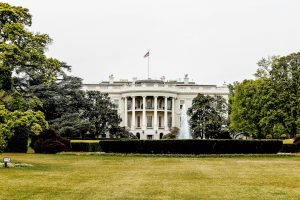
President Biden hinted at it on Tuesday within the East Room of the White Home, pledging that if Russia invaded Ukraine, “we’ll rally the world to oppose its aggression.” President Vladimir V. Putin of Russia drove the matter house on Saturday, when he oversaw a take a look at launch of nuclear-capable hypersonic missiles that may evade American defenses.
“We’re coming into a brand new stage of confrontation,” mentioned Dmitry Suslov, a global relations specialist on the Increased College of Economics in Moscow. “After this disaster, we’ll naturally be way more specific and open in acknowledging that we’re enemies, we’re adversaries, with all the following penalties.”
For now, nobody is aware of simply how the world will emerge from the disaster — whether or not Mr. Putin is staging an elaborate, costly bluff or is actually on the verge of launching the most important navy offensive in Europe since 1945. However it does seem clear that Mr. Putin’s overarching purpose is to revise the result of the unique Chilly Battle, even whether it is at the price of deepening a brand new one.
Mr. Putin is searching for to undo a European safety order created when his nation was weak and weak after the Soviet Union collapsed in 1991, and to recreate the type of geopolitical buffer zone that Russian rulers over the centuries have felt they wanted. He’s signaling that he’s ready to perform this by diplomatic means, but additionally by the usage of drive.
The disaster has already introduced Mr. Putin some tactical wins in addition to perilous dangers. Since first mounting a threatening troop buildup on Ukraine’s borders final spring, he has managed to grab Washington’s consideration — a aim for a Kremlin that, as within the Chilly Battle, sees confrontation with america as its defining battle. However his actions have additionally spurred anti-Russian attitudes and additional united Europe and america towards Russia — one thing that ought to fear the Kremlin given the West’s still-far-greater world financial and political may.
Daniel Fried, a retired American diplomat who handled Moscow each in the course of the Soviet period and the Putin period, mentioned he had a message for Russians who lengthy for the Chilly Battle days when their nation, of their telling, was revered by america. In any case, the Soviet Union misplaced the unique Chilly Battle.
“Chances are you’ll simply get that again,” Mr. Fried mentioned in an interview. “And it’ll not go nicely for you.”
In contrast to the Soviets, Mr. Putin will not be attempting to wage a world ideological battle, neither is he — for now — bankrupting his nation in a expensive arms race. Russia is much extra intertwined within the world economic system, a actuality that some nonetheless hope will assist the world keep away from as deep and lengthy a confrontation between East and West. And to america, it’s China — not Russia — that now looms because the extra severe strategic adversary in the long run.
However to Mr. Putin, the battle to roll again his nation’s defeat within the unique Chilly Battle has already lasted at the very least 15 years. He declared his rejection of an America-led world order in his speech on the Munich Safety Convention in 2007, warning of “unexploded ordnance” left behind from the Chilly Battle: “ideological stereotypes” and “double requirements” that allowed Washington to rule the world whereas crimping Russia’s growth.
This weekend, in one of many many ominous developments of current days, Russia is skipping the Munich convention — an annual assembly at which Western officers have been capable of sit down with their Russian counterparts all through the prior tensions of Mr. Putin’s rule.
As an alternative, the Kremlin launched footage of Mr. Putin within the Kremlin’s scenario room, directing take a look at launches of its modernized arsenal of nuclear-capable missiles from bombers, submarines and land-based launchers. It was a rigorously timed reminder that, as Russian tv just lately advised viewers, the nation can flip American cities “into radioactive ash.”
And Mr. Putin has massed a monumental drive to Ukraine’s north, east and south with a purpose to sign that the Kremlin sees the previous Soviet republic’s pro-Western shift as such a dire risk that it’s keen to battle a conflict to cease it. The confrontation in some methods evokes the Berlin disaster of 1961, when the Soviets demanded that Western forces depart Berlin, and East Germany finally constructed the wall that divided East and West. To some Russians, the truth that Ukraine is far nearer to Russia than Berlin is what makes the brand new Chilly Battle much more harmful.
“Again then, the frontier ran by Berlin,” mentioned Mr. Suslov, the Moscow analyst. “Now the frontier goes by Kharkiv” — a Ukrainian metropolis on the Russian border that could be a day’s drive from Moscow.
The Chilly Battle might also supply parallels for what may occur inside Russia within the occasion of conflict. Analysts predict an much more authoritarian swing by the Kremlin, and an much more ruthless hunt for inside enemies purportedly sponsored by the West. Mr. Pozner, a state tv host who was born in Paris, grew up partly in New York and moved to Moscow in 1952, posited that Russia’s foes within the West may even be quietly hoping for conflict as a result of it may weaken and discredit the nation.
“I’m very fearful,” Mr. Pozner mentioned. “A Russian invasion of Ukraine is a disaster for Russia, at first, within the sense of Russia’s popularity and what’s going to go on inside Russia in consequence.”
Some Russian analysts assume Mr. Putin may nonetheless de-escalate the disaster and stroll away with a tactical victory. The specter of conflict has began a dialogue in Ukraine and within the West about the concept that Kyiv could disavow NATO membership. And america has already supplied talks on quite a lot of initiatives that Moscow is all for, together with on the location of missiles in Europe and on limiting long-range bomber flights.
However Mr. Putin is making clear he needs greater than that: a wide-ranging, legally binding settlement to unwind the NATO presence in Jap Europe.
The depth of the disaster that Mr. Putin has engineered is obvious within the harsh language that the Kremlin has deployed. Standing this month alongside President Emmanuel Macron of France on the Kremlin, Mr. Putin mentioned President Volodymyr Zelensky of Ukraine had no alternative however to hold out a 2015 peace plan that Russia was pushing: “Chances are you’ll prefer it, it’s possible you’ll not prefer it — cope with it, my attractive.” International Minister Sergey V. Lavrov, in a joint information convention along with his visiting British counterpart, Liz Truss, mentioned their dialogue had resembled that of a “mute individual with a deaf individual.”
“Generally discussions have been somewhat heated between Soviet and American leaders,” mentioned Pavel Palazhchenko, a former Soviet diplomat. “However most likely to not that extent and never as publicly as now. There may be actually no parallel.”
Mr. Palazhchenko, who translated for the Soviet chief Mikhail S. Gorbachev in his summits with American presidents, describes that language as an outgrowth of a Russian frustration with the nation’s safety considerations being ignored. In the course of the Chilly Battle, Washington and Moscow got here collectively over landmark arms management agreements. In the course of the Putin period, little of that has occurred.
“This can be a clear emotional and psychological response to the years and even a long time of the West and the U.S. being somewhat dismissive of Russian safety considerations,” Mr. Palazhchenko mentioned.
Doug Lute, a former American ambassador to NATO, rejects the notion of previous disrespect for Russian pursuits, particularly on condition that Russia’s nuclear arsenal is “the one existential risk to america on this planet.” However like Mr. Palazhchenko, he additionally sees classes within the Chilly Battle for rising from the present disaster.
“It could be that we settle right into a interval the place we now have dramatically totally different worldviews or dramatically totally different ambitions however even regardless of that political contest, there’s house to do issues in our mutual curiosity,” Mr. Lute mentioned. “The Chilly Battle could possibly be a mannequin for competing and cooperating on the identical time.”
[ad_2]



Leave a Reply