
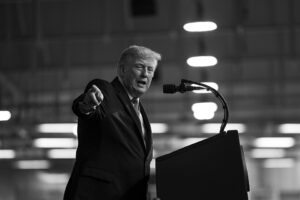
Here’s what president Trump had to say.
President Donald Trump is defending the newly announced U.S.-Iran agreement by arguing that the outcome of the recent conflict effectively amounts to what he calls an “unconditional surrender” by Iran.
Trump made the comments during an interview with Axios journalist Marc Caputo on Thursday, one day after signing a memorandum of understanding (MOU) intended to bring an end to months of military tensions involving the United States, Iran, and Israel.
The agreement has quickly become one of the most closely watched foreign policy developments of the year. Supporters see it as a possible path toward regional stability, while critics argue that the terms provide significant concessions to Tehran.
The debate has drawn reactions from political leaders, foreign policy analysts, and media figures across the ideological spectrum, making the agreement a major topic in discussions about U.S. diplomacy, Middle East security, and global energy markets.
What’s Included in the Iran Agreement?
According to information released by officials, the 14-point memorandum includes several provisions aimed at reducing tensions and restoring economic activity in the region.
Among the reported elements of the agreement:
- Iran would permit unrestricted commercial shipping through the Strait of Hormuz.
- The United States would end its naval blockade of Iran.
- Iran would gain access to substantial financing intended for reconstruction and economic development.
- Both sides would commit to measures designed to reduce the risk of future military escalation.
The Strait of Hormuz is widely regarded as one of the most critical maritime corridors in the world, serving as a key passage for a large share of global oil exports. Due to its vital role in international energy markets, developments or agreements involving the region can have economic and geopolitical effects that extend well beyond the Middle East.
Why the Strait of Hormuz Matters
The Strait of Hormuz serves as a critical link between oil-producing nations and global markets. Disruptions in the area have historically caused spikes in energy prices and raised concerns about international trade.
For American consumers, stability in the region can influence fuel costs, transportation expenses, and broader economic conditions. As a result, financial markets and energy analysts are closely monitoring the implementation of the agreement.
Many experts believe that reducing tensions around the Strait could help improve confidence in global energy supplies, although questions remain about how effectively the agreement will be enforced.
Trump’s Comments on Presidential Power
During the interview, Caputo asked Trump what lessons he had learned about presidential authority during the conflict.
Trump responded by emphasizing what he described as a decisive military outcome and suggested that the United States had achieved its objectives.
The discussion then shifted to Trump’s earlier calls for Iran’s “unconditional surrender.”
When Caputo pointed out that the newly signed agreement did not appear to match the traditional definition of unconditional surrender, Trump argued that the overall outcome effectively met that standard.
His remarks immediately sparked discussion among historians, legal scholars, and foreign policy observers.
What Does ‘Unconditional Surrender’ Mean?
Historically, unconditional surrender refers to a situation in which one side in a conflict accepts defeat without negotiating terms or receiving concessions from the opposing party.
Examples are often associated with major conflicts such as World War II, where defeated nations accepted the conditions imposed by the victorious powers.
Some analysts argue that the newly announced agreement does not fit that traditional definition because it includes economic and diplomatic provisions that provide benefits to Iran. Others contend that the military and strategic outcome may be what Trump was referring to when making the comparison.
The disagreement highlights the broader debate over how the agreement should be interpreted and what it ultimately represents.
Critics Raise Concerns
The agreement has drawn criticism from several prominent conservative voices and lawmakers.
Commentator Mark Levin questioned the arrangement, while former Congressman Trey Gowdy expressed concerns about its potential economic impact. Senator Ted Cruz of Texas also voiced skepticism, suggesting the administration may be receiving poor advice regarding the deal.
Other critics have focused on the financing provisions and whether they could strengthen Iran economically over the long term.
Supporters of the agreement, however, argue that diplomacy often requires compromise and that avoiding a prolonged conflict may provide benefits for both regional stability and global markets.
JD Vance Defends the Agreement
Vice President JD Vance, who was involved in negotiations surrounding the memorandum, strongly defended the administration’s approach.
Speaking Thursday, Vance criticized some opponents of the agreement and argued that President Trump remains one of Israel’s strongest international allies.
Vance suggested that critics should consider the broader strategic relationship between the United States and Israel before dismissing the agreement outright.
His comments added another dimension to an already intense debate over whether the deal represents a diplomatic breakthrough, a strategic compromise, or a combination of both.
What Happens Next?
The future of the agreement will depend largely on whether both sides follow through on their commitments in the coming weeks and months.
International observers, investors, and policymakers are watching closely to see whether the memorandum becomes a foundation for long-term stability or simply a temporary pause in hostilities.
Energy markets are also paying attention. Because Iran and the Strait of Hormuz play major roles in global energy supplies, developments in the region can affect oil prices, shipping costs, and inflation around the world.
Supporters believe the agreement could reduce the risk of future military conflict while improving economic stability. Critics remain concerned that the concessions offered may outweigh the benefits.
Why This Story Matters
The debate surrounding the Iran agreement extends far beyond Washington politics. The outcome could influence U.S. foreign policy, Middle East security, global energy markets, and economic conditions that affect millions of people.
As more details emerge and implementation begins, the agreement is likely to remain one of the most significant and closely scrutinized international developments of the year.
Whether history ultimately views it as a diplomatic success, a strategic compromise, or something in between may depend on what happens next.

Leave a Reply