
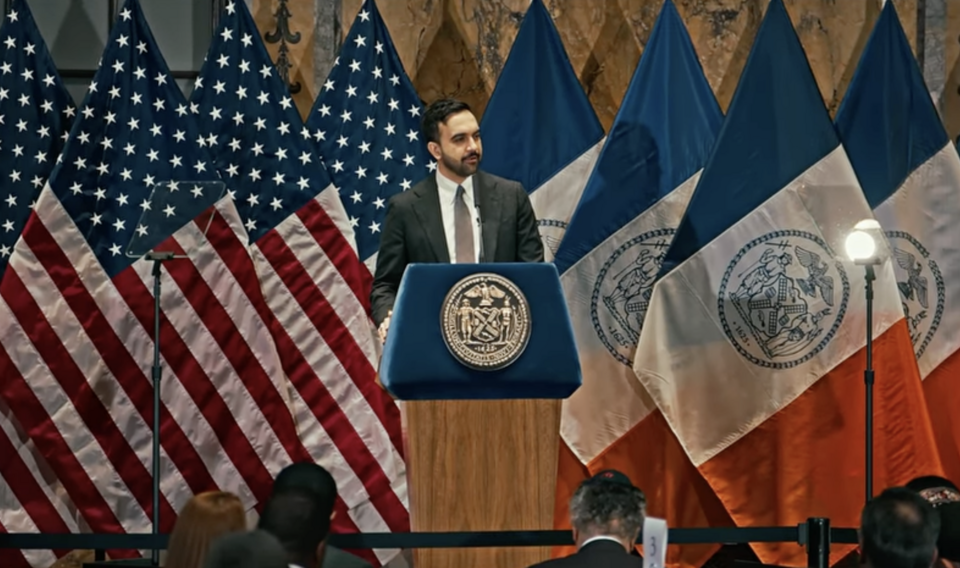
Mamdani has some explaining to do but the media isn’t asking any questions.
New York City Mayor Zohran Mamdani is facing new questions about his controversial government-backed grocery store plan after another publicly funded supermarket project failed, raising concerns about taxpayer spending and the media’s willingness to scrutinize his economic policies.
The latest controversy comes after a community-owned grocery store in Illinois announced it was shutting down despite receiving substantial government financial assistance.
Critics argue that the store’s financial problems highlight serious risks associated with publicly supported grocery initiatives, particularly when politicians promise lower prices without explaining how businesses will remain financially sustainable.
Now, some conservative commentators are accusing major news organizations of giving Mamdani favorable coverage while overlooking warning signs from similar projects across the country.
Government-Backed Grocery Store Closes After Financial Struggles
Prairie Food Co-Op, a community-owned supermarket in Lombard, Illinois, announced that November 15, 2026, would be its last full day of business.
The grocery store opened in July 2025 after years of planning and fundraising, with supporters promoting it as an alternative to traditional supermarkets.
Approximately 2,400 local residents invested in the cooperative, contributing roughly $500,000 through ownership shares.
But private contributions were only part of the financial picture.
The project also received substantial government assistance, including more than $800,000 in state-related funding and another $750,000 in federal funding secured by Democratic Congressman Sean Casten.
Despite the financial support and community enthusiasm, the supermarket struggled to attract enough paying customers.
According to the cooperative’s board, weekly sales were averaging approximately $40,000.
However, the store needed about $80,000 in weekly revenue to remain financially sustainable.
That meant the business was bringing in only about half the money required to support its operations.
The board determined that an attempted turnaround would require at least another $500,000, with no guarantee of success.
Rather than continue operating under those conditions, the cooperative decided to wind down its business.
The closure has become a cautionary example for critics who question whether public funding can overcome the economic challenges facing grocery retailers.
Mamdani Wants Government-Backed Grocery Stores Across New York
The Illinois closure has renewed attention on Mayor Mamdani’s proposal to establish five city-owned grocery stores across New York City.
Under the plan, each of the city’s five boroughs would receive a municipal grocery location intended to provide residents with more affordable food.
Mamdani has promoted the initiative as part of his broader effort to address New York City’s high cost of living.
His administration has said the stores could offer discounts of approximately 30% on categories of essential groceries, including produce, meat, and certain pantry staples.
Supporters argue that the stores could lower prices by removing some costs associated with traditional grocery operations.
They also believe government involvement could improve access to affordable food in neighborhoods where residents have limited shopping options.
But opponents say the proposal raises serious financial questions.
Traditional grocery stores must cover expenses associated with employees, equipment, food distribution, utilities, insurance, refrigeration, and inventory.
Those costs do not disappear simply because a store is government-owned.
And when a publicly supported business cannot generate sufficient revenue, taxpayers may be left covering the difference.
For New Yorkers already dealing with high taxes and expensive living costs, that possibility has become a major concern.
Critics Accuse The Media Of Ignoring Warning Signs
The controversy has also sparked a debate about whether national news organizations are adequately examining Mamdani’s proposals.
In a November 17 opinion column published by Mediaite, conservative writer Brad Slager criticized what he characterized as overly favorable media coverage of Mamdani’s grocery initiative.
Slager argued that several news organizations emphasized the mayor’s promises of lower prices while giving less attention to the financial struggles of comparable grocery ventures.
His criticism centered on the difference between promoting an attractive political proposal and examining whether that proposal can actually succeed.
The Illinois closure is particularly relevant because it occurred after substantial investment and years of preparation.
Yet the cooperative was unable to produce enough revenue to continue operating.
Critics believe that experience deserves serious consideration as New York City prepares to enter the grocery business.
The allegations of favorable media treatment remain a matter of political opinion, rather than proof of a coordinated effort to conceal information.
Nevertheless, the broader issue of journalistic scrutiny is legitimate.
Major government spending proposals should receive careful examination regardless of whether they come from Republicans, Democrats, or independent politicians.
Other Grocery Experiments Have Encountered Problems
Illinois is not the only place where a publicly supported grocery initiative has experienced financial difficulties.
Previous government-involved grocery projects in Missouri and Florida have also struggled to maintain sustainable operations.
Critics frequently point to those examples when questioning whether local governments should operate or financially support retail food businesses.
While each project has its own circumstances, the failures demonstrate how difficult the grocery industry can be.
Even established private supermarkets operate in a highly competitive environment where managing expenses and attracting regular customers are essential.
A successful store needs dependable suppliers, competitive prices, convenient locations, and enough customers to generate consistent revenue.
Political enthusiasm and government financial assistance cannot automatically provide those conditions.
At the same time, a community-owned cooperative is not identical to Mamdani’s proposed city-owned supermarket model.
That distinction matters when comparing outcomes.
Still, the experience of financially troubled grocery projects provides useful lessons about the risks of entering a business where operating expenses can quickly exceed revenue.
Small Business Owners Fear Unfair Competition
Another concern surrounding Mamdani’s plan involves its potential impact on independent grocery stores and family-owned businesses.
New York City depends on thousands of privately operated supermarkets, bodegas, and neighborhood food retailers.
These businesses provide employment, serve local communities, and contribute to the city’s tax base.
Many operate with narrow profit margins while facing substantial rent, labor, insurance, and utility expenses.
Some business owners worry that government-backed competitors could offer artificially low prices by relying on taxpayer subsidies or advantages unavailable to private retailers.
In August 2026, a group of New York City businesses filed a lawsuit challenging Mamdani’s municipal grocery initiative, alleging that the proposal would create unfair competition.
Supporters of the mayor argue that consumers deserve additional affordable shopping options and that public involvement could help address longstanding food-access problems.
But critics say the city must consider what happens if subsidized competitors take customers away from existing grocery stores.
If independent businesses close, neighborhoods could ultimately lose established retailers and jobs.
That possibility raises an important question about whether the city can expand affordable food access without damaging the businesses already serving local residents.
Taxpayers Deserve Answers Before More Money Is Spent
For many Americans, particularly retirees and households living on fixed incomes, grocery affordability remains a major financial concern.
Families have seen food expenses take up a larger share of household budgets in recent years.
Lower grocery prices would undoubtedly provide welcome relief.
However, the central disagreement is about how those savings should be achieved.
Mamdani and his supporters believe government-backed supermarkets could offer consumers an alternative to traditional retailers.
Opponents argue that reducing regulatory burdens, encouraging private investment, and strengthening competition may provide a more sustainable solution.
Both approaches deserve evaluation based on measurable results.
Before New York City commits additional public resources to its grocery initiative, officials should be able to explain how the stores will operate, what they will cost, and how financial losses would be handled.
Taxpayers also deserve to know what benchmarks will determine whether the program is successful.
Promises of affordable groceries are appealing, but responsible government requires more than appealing promises.
It requires realistic budgets, transparent accounting, and a willingness to acknowledge financial risks.
Will The Media Hold Mamdani Accountable?
The closure of Prairie Food Co-Op has brought new attention to the challenges facing publicly supported grocery businesses.
For Mamdani, the debate comes as his administration continues promoting government involvement as a way to address New York City’s affordability problems.
His supporters remain optimistic that municipal supermarkets can provide meaningful savings to consumers.
Critics, however, believe past failures demonstrate why government officials should proceed cautiously.
The media also has an important role to play.
Reporters should examine the projected costs of Mamdani’s grocery plan, evaluate concerns from independent businesses, and investigate whether the promised savings can be sustained over time.
That scrutiny should be just as rigorous as the examination applied to proposals from Republican officials.
For taxpayers, the stakes extend beyond political ideology.
Public money is limited, and every dollar spent on one government initiative is a dollar unavailable for other priorities.
The real question is whether Mamdani’s government-backed grocery stores will provide lasting financial relief to New York families—or become another costly experiment that leaves taxpayers paying the bill.
Until the city can demonstrate that its plan is financially sustainable, concerns about government spending, private-sector competition, and media accountability are unlikely to disappear.




Leave a Reply