
Here’s what Americans need to know.
A disturbing new warning from congressional national security officials suggests that China could be using America’s own technological advancements to develop military capabilities that may eventually threaten U.S. troops.
The warning comes from leaders of the U.S.-China Economic and Security Review Commission, who say Beijing is aggressively pursuing advanced American computer chips, artificial intelligence, and other sensitive technologies to strengthen its armed forces.
According to the commission’s 2026 annual report to Congress, China’s military is attempting to obtain sophisticated American technology despite restrictions designed to prevent such equipment from strengthening foreign adversaries.
The findings raise serious questions about whether American innovation could inadvertently help a potential military rival.
For President Donald Trump and members of Congress, the growing competition with China presents another major national security challenge.
Congressional Officials Warn Of Growing Chinese Military Threat
Commission Chairman Randall Schriver and Vice Chairman Mike Kuiken have expressed concerns about China’s expanding efforts to acquire American technology for military purposes.
Their warnings focus on the People’s Liberation Army, China’s armed forces, which has been pursuing increasingly sophisticated military systems powered by artificial intelligence.
The commission’s findings indicate that Chinese military organizations have sought advanced semiconductor technology capable of supporting weapons development, intelligence operations, and military planning.
These technologies could eventually help China’s military make faster decisions, improve battlefield coordination, and develop more capable weapons systems.
One particularly serious concern involves technology that has both civilian and military applications.
Computer chips originally designed for commercial artificial intelligence systems can also support military research and development.
That creates a difficult situation for American policymakers trying to protect national security without unnecessarily restricting American businesses.
The underlying concern is that technologies developed by American companies could ultimately strengthen military systems designed to challenge American forces.
China Reportedly Seeking Advanced American Computer Chips
The commission’s report highlights China’s efforts to obtain sophisticated semiconductors, including technology developed by American chipmaker Nvidia.
Advanced semiconductors are essential components of modern artificial intelligence systems because they allow computers to process enormous quantities of information.
These capabilities have become increasingly valuable in military applications.
According to the commission, an April 2026 assessment by Georgetown University’s Center for Security and Emerging Technology found that China’s military had sought advanced Nvidia chips for artificial intelligence-related military capabilities.
Beijing’s military modernization strategy includes integrating AI into weapons systems, targeting operations, command structures, and logistical planning.
Such improvements could allow Chinese forces to process battlefield information more efficiently and operate increasingly complex military equipment.
American export restrictions are intended to limit China’s access to certain advanced technologies.
However, congressional officials remain concerned that Beijing could use alternative purchasing arrangements, overseas infrastructure, or other methods to circumvent those restrictions.
The findings have renewed debate over whether existing safeguards are sufficient to protect America’s technological advantages.
Artificial Intelligence Could Change Future Military Conflicts
China’s growing interest in artificial intelligence goes beyond simply developing faster computers.
Military analysts have increasingly focused on how advanced technology could change the nature of warfare.
Artificial intelligence can assist military organizations with evaluating intelligence, tracking equipment, coordinating operations, and identifying potential threats.
It can also support autonomous systems, including unmanned aircraft and other equipment capable of operating with reduced direct human involvement.
China’s military has been working to incorporate these technologies into its existing capabilities.
For the United States, these developments are particularly important because American forces depend heavily on advanced technology to maintain their military advantage.
Faster intelligence processing and improved automated systems could make future military confrontations more complicated.
The commission’s findings do not establish that China has surpassed the United States in military artificial intelligence.
Nevertheless, they highlight why American officials are increasingly concerned about protecting technological leadership.
American Data Centers Could Become Another Security Concern
Congressional officials are also examining a potential vulnerability involving powerful computing facilities.
Large data centers provide the computing power needed to operate sophisticated artificial intelligence systems.
While much of this infrastructure supports legitimate commercial activity, access to advanced computing resources can also benefit military development.
Commission Vice Chairman Mike Kuiken warned that China’s access to sophisticated computing infrastructure could create national security concerns even when restricted computer chips are not shipped directly to Beijing.
The issue is especially complicated because access to computing services can cross international borders.
A foreign organization might potentially use powerful systems located outside its own country.
That raises questions about how effectively American authorities can prevent sensitive technology from being used for military purposes.
Officials believe stronger oversight may be necessary to ensure that American computing resources are not exploited by institutions connected to China’s military.
China’s Cyber Capabilities Raise Additional Concerns
Another major issue involves protecting sensitive American information from increasingly sophisticated cyber threats.
Artificial intelligence can help cybersecurity specialists identify weaknesses in computer systems and strengthen digital defenses.
However, similar capabilities can potentially be exploited by hostile actors seeking unauthorized access to protected information.
The commission’s leaders have warned that advanced AI models could make it easier to discover vulnerabilities in digital networks.
This creates concerns for military communications, government agencies, major corporations, and other organizations that manage sensitive information.
Recent technology disruptions affecting prominent American institutions have also drawn attention to the importance of reliable cybersecurity protections.
However, congressional officials have not established that those outages were caused by China.
The broader concern is that hostile governments could use increasingly advanced technology to conduct more sophisticated cyber operations.
As America’s military and economy become more dependent on digital infrastructure, protecting sensitive information remains a critical national security responsibility.
China Rejects American Technology Restrictions
Chinese officials have pushed back against American criticism of Beijing’s technological ambitions.
A spokesperson for the Chinese Embassy in Washington defended China’s pursuit of technological advancement and criticized U.S. export controls.
Beijing argues that restrictions on advanced technology can interfere with international commerce and disrupt global supply chains.
Chinese officials have also emphasized cooperation between Washington and Beijing on artificial intelligence safety.
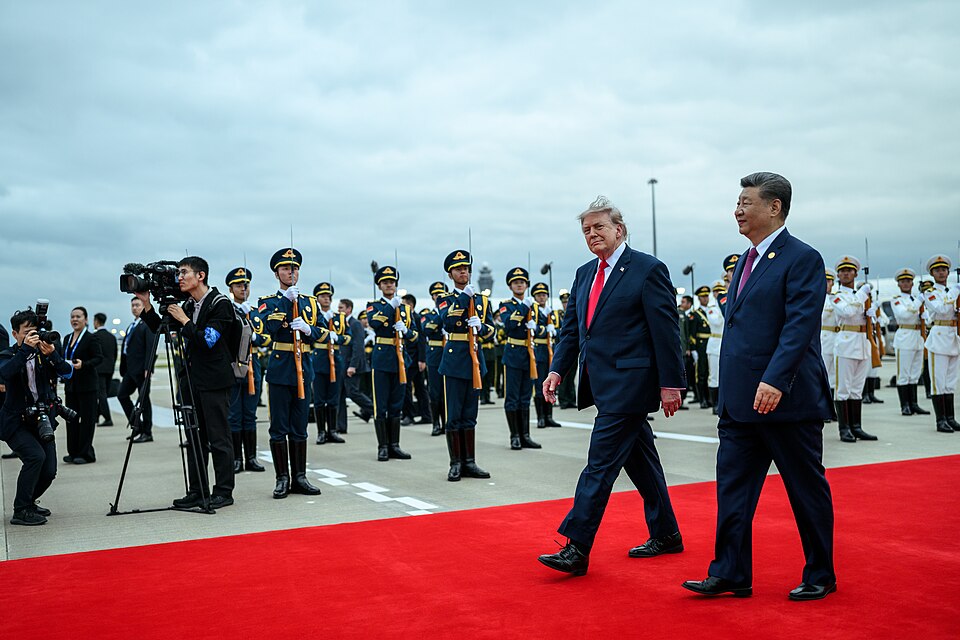
Following discussions between President Trump and Chinese President Xi Jinping, China’s Foreign Ministry expressed support for improved communication regarding AI security and keeping artificial intelligence under human control.
Despite those statements, American officials remain concerned about the potential military consequences of China’s access to sensitive technology.
The disagreement reflects the broader competition between the world’s two largest economies over technological leadership, military strength, and national security.
Trump Administration Faces Difficult National Security Decisions
The commission’s findings place additional attention on President Trump’s approach to China and American technology exports.
The United States remains a global leader in advanced semiconductor development and artificial intelligence innovation.
American companies benefit from international markets, but their products can also have applications far beyond ordinary commercial activities.
That creates a difficult balancing act for Washington.
Restricting sensitive technology could help prevent American innovations from strengthening potential military adversaries.
At the same time, overly broad restrictions could create financial challenges for American companies and potentially encourage foreign competitors to develop alternative technologies.
Congressional officials have raised concerns about technology transfers, cybersecurity protections, and business arrangements that could contribute to China’s military modernization.
For the Trump administration, the challenge involves maintaining America’s technological leadership while preventing sensitive capabilities from reaching organizations that could threaten national security.
Any changes to export restrictions or oversight would likely have significant implications for American technology companies and the broader U.S.-China relationship.
What This Means For American Military Readiness
The congressional warning illustrates how dramatically national security challenges have evolved.
America’s military strength has traditionally depended on advanced aircraft, naval vessels, missile systems, trained personnel, and a strong defense industrial base.
Those capabilities remain essential.
However, artificial intelligence and advanced computing are becoming increasingly important components of military preparedness.
A country that can process intelligence faster, coordinate operations more effectively, and deploy sophisticated automated systems may gain meaningful advantages during a military confrontation.
That is why the competition over advanced technology has become closely connected to concerns about Taiwan and broader security in the Indo-Pacific region.
The United States maintains military forces and longstanding security commitments throughout the region.
Any significant improvement in China’s military capabilities could complicate American defense planning and increase pressure on U.S. forces.
The commission’s findings do not indicate that an American military confrontation with China is imminent.
Instead, they underscore the importance of preparing for potential future threats before they become more difficult to address.
America’s Technological Advantage Is At Stake
The latest congressional findings highlight a national security dilemma that could influence American defense policy for years.
The United States has invested heavily in developing some of the world’s most powerful technologies.
Those innovations contribute to economic growth, support American businesses, and strengthen national defense.
However, officials are increasingly concerned that foreign adversaries could exploit those same advancements to improve their own military capabilities.
The commission’s warning suggests that protecting America’s technological edge will require more than traditional military spending.
It may also require stronger cybersecurity protections, carefully targeted export controls, and greater scrutiny of how sensitive technology reaches foreign organizations.
For President Trump and Congress, the decisions ahead could help determine whether America maintains its technological and military advantages over China.
The central concern is straightforward: American technology should strengthen America’s security, not provide potential adversaries with new tools that could endanger U.S. service members.
As Beijing continues modernizing its armed forces, protecting sensitive American innovations is likely to remain a major priority in Washington.






Leave a Reply