
[ad_1]
The Conger Ice Shelf crumbled after temperatures within the East Antarctic surged to 40C above regular earlier this month.
An East Antarctica ice shelf disintegrated this month following a interval of maximum warmth within the area, scientists have mentioned.
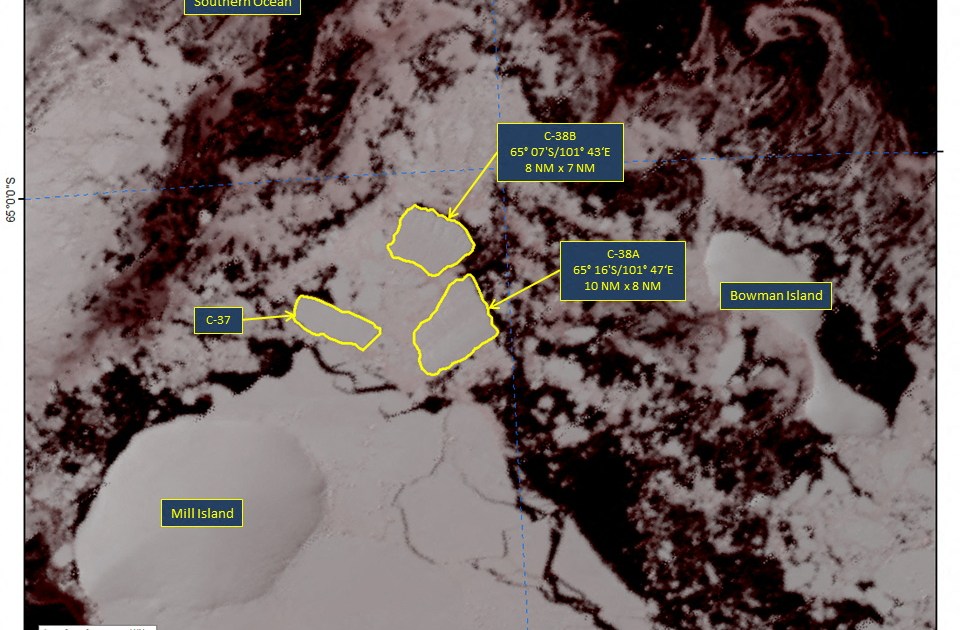
Satellite tv for pc photos present the 1,200sq km (463sq miles) Conger Ice Shelf collapsed fully on or round March 15.
“Doable it hit its tipping level following the #Antarctic #AtmosphericRiver and warmth wave too?” NASA Earth and Planetary Scientist Catherine Colello Walker requested on Twitter on Friday, sharing photos of a white expanse crumbling into shards over the darkish ocean.
Ice cabinets, everlasting floating sheets of ice connected to land, take 1000’s of years to type and act like levees holding again snow and ice that may in any other case circulation into the ocean, inflicting seas to rise.
The March heatwave, with temperatures reaching 40C (70F) above regular in elements of East Antarctica, was tied to the atmospheric river phenomenon, mentioned Peter Neff, a glaciologist on the College of Minnesota.
This course of creates columns tons of of kilometres lengthy that carry water vapour from the tropics, creating an impact Neff described as “a fireplace hose of moisture”.
“The [Antarctic] local weather is extremely variable however this was off-scale,” Neff mentioned. “This was a minimum of twice as excessive of a warming occasion as we might have anticipated.”
New @usnatice-named icebergs ensuing from full collapse of East Antarctica’s Conger Ice Shelf (~1200 sq. km) on/round March 15, seen in combo of #Landsat and #MODIS imagery. #CongerIceShelf #Antarctica @helenafricker @jdmillstein https://t.co/16JtKcXQPY pic.twitter.com/lSKMNgRgNi
— Catherine Colello Walker (@CapComCatWalk) March 24, 2022
Temperatures within the area normally sit at about -51C (-60F) at the moment of 12 months, however they had been about -12C (-10F) earlier this month.
They’ve now gone again to regular, Neff mentioned.
Surrounded by huge oceans and buffered by winds that have a tendency to guard it from giant warm-air intrusions, the frozen continent is responding extra slowly to local weather change than the Arctic, which is warming at thrice the speed of the remainder of the world.
Within the final century, East Antarctica barely warmed in any respect, however some areas have been affected and the continent misplaced a mean of 149 billion tonnes of ice per 12 months from 2002 to 2020, in line with NASA. The lack of the Conger Ice Shelf is the most recent instance of the adjustments which might be underway.
“This poor little ice shelf was simply hanging on for pricey life on this actually heat coastal local weather and it had been thinning and getting broken over the previous few a long time,” mentioned Neff.
The Conger shelf was splintering lengthy earlier than the heatwave, and its demise reveals the Antarctic system is delicate to atmospheric adjustments, however the occasion itself shouldn’t be a trigger for concern, mentioned Ted Scambos, a senior analysis scientist on the College of Colorado Boulder.
A small glacier behind the place Conger used to sit down could now circulation sooner and unload somewhat extra ice into the ocean, he mentioned.
“If it was in your again yard it’d be large … however by Antarctic requirements and by sea degree requirements, it’s a tiny space,” he mentioned.
[ad_2]









Leave a Reply