
[ad_1]
Jamie Golombek: RRSP Residence Consumers’ Plan is so arcane, even the CRA can have hassle explaining it

Opinions and proposals are unbiased and merchandise are independently chosen. Postmedia could earn an affiliate fee from purchases made by hyperlinks on this web page.
Article content material
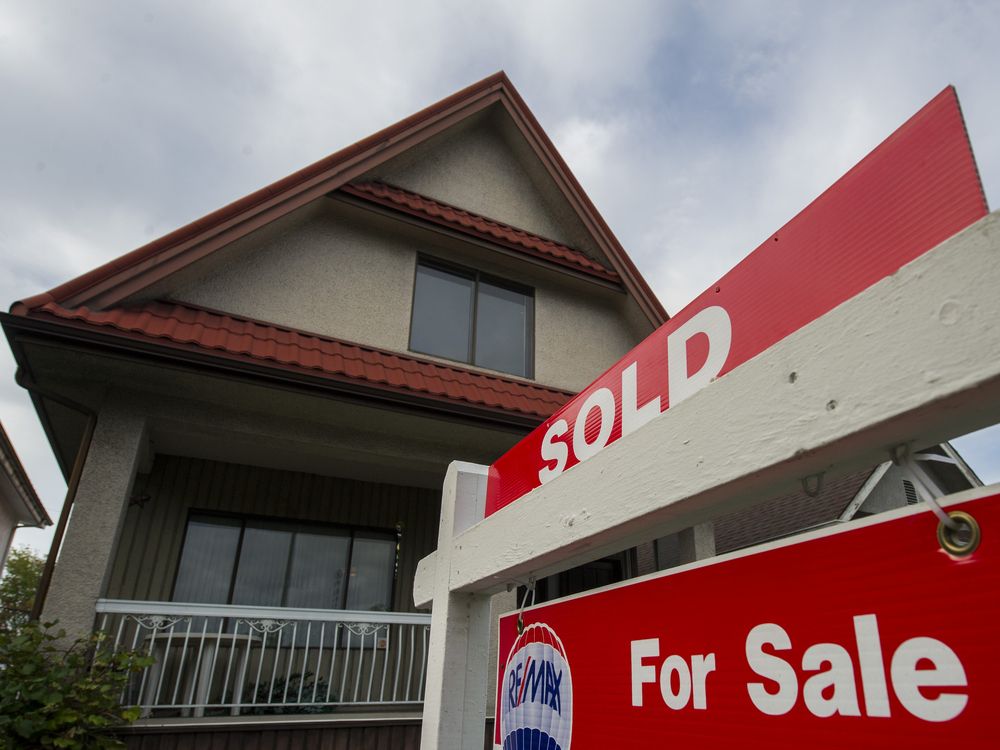
Final month’s federal price range sparked a lot curiosity amongst potential homebuyers within the proposed launch of the Tax-Free First Residence Financial savings Account (FHSA), a brand new registered account to assist people save for his or her first residence. Whereas many Canadians scramble to know the mechanics and potential alternatives that might be accessible with the FHSA, we have to remember that the plan is just set to launch in 2023 and at a proposed annual contribution restrict of solely $8,000.
Commercial 2
Article content material
For anybody considering shopping for a home in 2022 or 2023, nonetheless, the FHSA received’t come quickly sufficient, which is why it’s necessary to think about the 2 different major sources Canadians are presently utilizing to fund a down cost: the Tax-Free Financial savings Account (TFSA) and, the Registered Retirement Financial savings Plan (RRSP) through the Residence Consumers’ Plan (HBP).
The TFSA restrict for 2022 is $6,000 and, assuming you have been a minimum of 31 and a resident of Canada since 2009 (the 12 months the TFSA started), your cumulative TFSA restrict is $81,500, ignoring any withdrawals you might need constituted of the plan. For the reason that creation of the TFSA, this financial savings automobile has turn out to be the dominant manner some Canadians have been setting apart further money for a big buy comparable to a primary residence. The added flexibility of having the ability to withdraw the funds for a down cost, tax-free, after which recontribute the quantities withdrawn in any future 12 months, make TFSAs an especially versatile possibility.
Commercial 3
Article content material
However for some present first-time homebuyers, TFSA financial savings will not be sufficient and thus Canadians proceed to faucet into their RRSPs, through the HBP, to assist fund that down cost. To recap, the HBP permits people to withdraw as much as $35,000 from an RRSP to buy or construct a primary residence with out having to pay tax on the withdrawal. Quantities withdrawn beneath the HBP have to be repaid to an RRSP over a interval not exceeding 15 years, beginning the second 12 months following the 12 months of the withdrawal. Quantities not repaid in a specific 12 months, as required, have to be included in revenue.
However the HBP guidelines might be tough and, should you’re not cautious, can land you in hassle as one Toronto taxpayer not too long ago came upon. The taxpayer’s saga started again in 2015 when she agreed to buy a pre-construction Toronto condominium. Her settlement contemplated a December 2015 completion date.
Commercial 4
Article content material
The taxpayer wished to take part within the HBP, and consequently withdrew $20,000 from her RRSP in 2015 and used that quantity to pay the deposit. On account of building delays, together with these involving building claims filed towards the property, her occupancy date was delayed till December 2017.
In early 2016, the taxpayer contacted the Canada Income Company to elucidate the delays in closing and was instructed that she would be capable of withdraw a further $5,000 quantity as a part of her HBP and use it to pay the closing prices. (The HBP restrict was $25,000 in 2015 and was solely raised to the present $35,000 restrict in March 2019, for withdrawals after that date).
In 2017, the taxpayer withdrew an extra $5,000 from her RRSP, which she assumed was additionally beneath the HBP, and used the funds to assist her along with her closing prices. The acquisition of the apartment in the end closed in Might 2018.
Commercial 5
Article content material
The issue, nonetheless, is that beneath the HBP laws, the taxpayer’s $5,000 second RRSP withdrawal was not thought of to be an “excluded quantity” because it was not withdrawn in the identical 12 months as her preliminary $20,000 HBP withdrawal, or within the following 12 months. The consequence was that the CRA reassessed the taxpayer for the 2017 tax 12 months to incorporate the $5,000 as a daily RRSP withdrawal, topic to tax, moderately than as a further tax-free withdrawal beneath the HBP, which could possibly be paid again over a 15-year interval.
The taxpayer objected to the CRA’s evaluation and the matter went to Tax Court docket in March 2022. The taxpayer argued that had she been given appropriate info by the CRA official that her second HBP withdrawal needed to be made within the 12 months following her first, she may have made that $5,000 second withdrawal in 2016 and used it in the direction of the acquisition closing prices of the condominium.
Commercial 6
Article content material
The choose was extraordinarily sympathetic in the direction of the taxpayer, acknowledging that the HBP provisions “have been written many years in the past and predate the trendy actuality of a red-hot residential building market in cities like Toronto and Vancouver.” The choose additionally agreed that, within the taxpayer’s explicit circumstances, “the applying of the two-year interval and the ensuing tax price to her don’t seem from a tax coverage perspective to be acceptable, affordable or simply.”
-

How one can doubtlessly save hundreds in your tax invoice forward of CRA’s prescribed rate of interest hike
-

What it is advisable know because the CRA cracks down on principal residence exemptions
-

Suggestions so that you don’t find yourself in tax court docket for overcontributing to your RRSP
-

Personal overseas property, together with shares? Higher inform the CRA on time or face a penalty
Commercial 7
Article content material
That being stated, the choose’s arms have been tied in that court docket “has to use the relevant legislation and can’t select not to take action out of considerations of equity, fairness or justice.” Citing a previous case, “It’s not open to the Court docket to make exceptions to statutory provisions on the grounds of equity or fairness. If the applicant considers the legislation unfair, his treatment is with Parliament, not with the Court docket.”
Though he had no alternative however to dismiss the taxpayer’s case, the choose instructed that the taxpayer apply to the CRA for a remission order. The CRA describes a remission order as “a rare measure that permits the federal government to offer full or partial aid from a tax or penalty, or different debt, beneath sure circumstances, when such aid just isn’t in any other case accessible beneath the prevailing legal guidelines.” Every remission request is taken into account “by itself deserves to find out whether or not assortment of the tax or enforcement of the penalty is unreasonable or unjust, or if remission is within the public curiosity.” To help CRA officers in making that evaluation, pointers have been developed as to when remission could also be granted. These embrace instances of utmost hardship, incorrect motion or recommendation on the a part of CRA officers, monetary setback coupled with extenuating components, or unintended outcomes of the laws.
Given the CRA’s position in offering incorrect HBP info to the taxpayer, in addition to the delay within the apartment’s closing, which was wholly exterior the taxpayer’s management, this case cries out for tax remission.
Jamie Golombek, CPA, CA, CFP, CLU, TEP is the managing director, Tax & Property Planning with CIBC Personal Wealth in Toronto.
_____________________________________________________________
For extra tales like this one, join for the FP Investor e-newsletter.
______________________________________________________________
Commercial

[ad_2]







Leave a Reply