
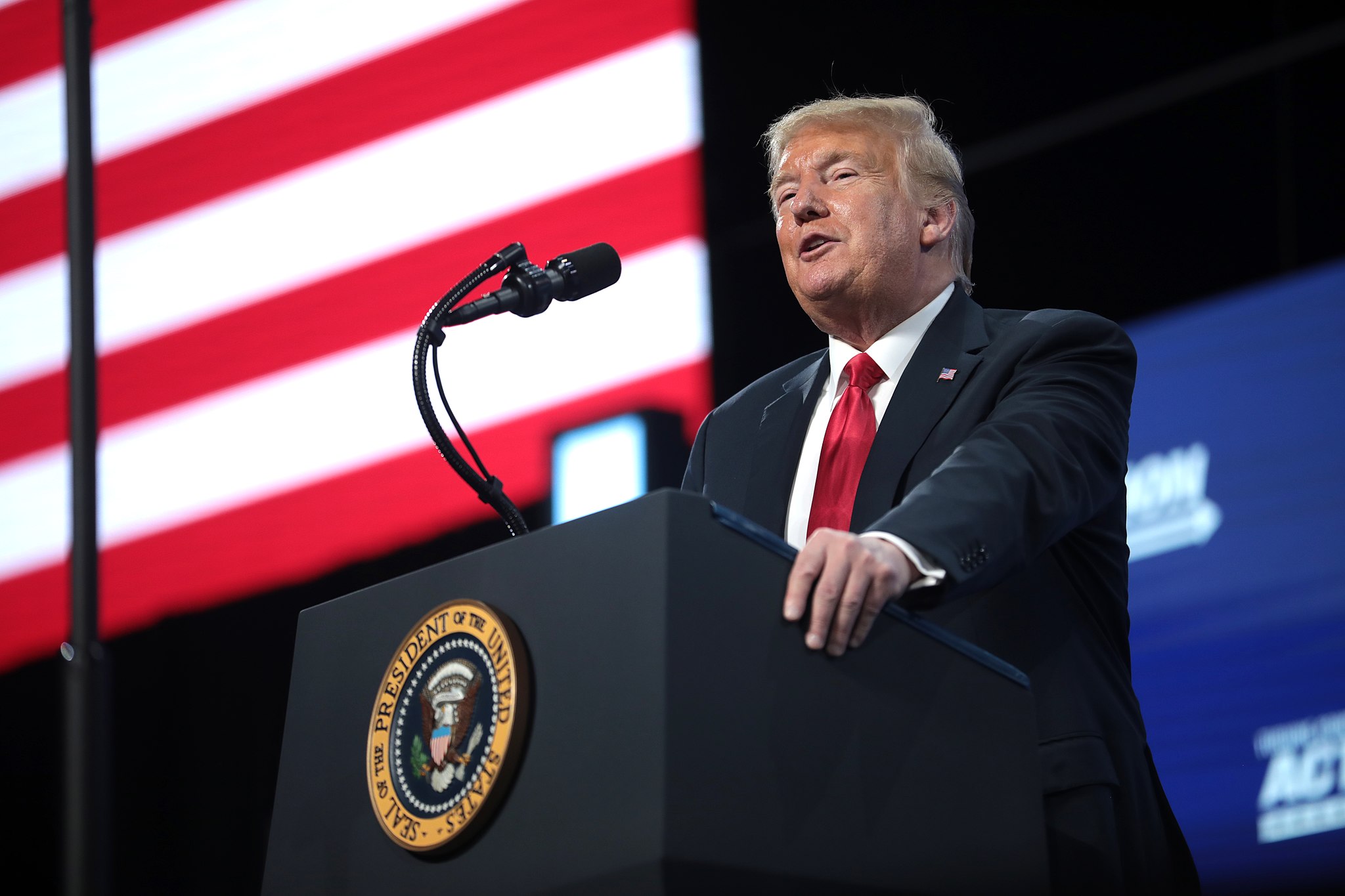
Here’s what Trump has decided.
President Donald Trump has made his position clear on the high-profile case of Massachusetts mother Lindsay Clancy, signaling that he does not intend to intervene as the closely watched legal battle moves forward.
Clancy, 36, is charged with three counts of first-degree murder in connection with the deaths of her three children in 2023. Her defense team maintains that she was experiencing postpartum psychosis at the time and therefore should not be held criminally responsible for her actions.
The proceedings ended in a mistrial after the jury failed to reach a unanimous decision, leaving Clancy’s legal future uncertain as prosecutors consider whether to bring the case before a new jury.
Now Trump has weighed in.
Trump Responds to Pardon Request
Asked Sunday about the possibility of pardoning Clancy, Trump called the case “very sad” while pointing out a crucial legal reality: the matter is being handled by Massachusetts, not the federal government.
“There’s no winner there,” Trump said. “There’s no win no matter what you do. Three children are dead.”
The question followed a public appeal from Clancy’s defense attorney, Kevin Reddington, who asked Trump to consider his client’s situation.
Reddington has acknowledged that a president does not have the authority to pardon someone for Massachusetts state charges. Presidential pardon authority generally applies to federal offenses, meaning Trump cannot simply erase the charges Clancy currently faces.
Instead, any resolution will have to come through Massachusetts’ legal system.
Trump indicated that he believes the attorneys and state officials involved should handle the matter.
“I hope they can work it out,” Trump said.
He also praised Reddington’s reputation, calling him a “good attorney” and saying he had heard positive things about his work.
Trump Previously Addressed the Case
Trump’s latest comments follow earlier remarks in which he discussed the serious consequences Clancy could still face.
The president previously described the deaths of the three children as a horrific tragedy while suggesting that the legal system would ultimately determine whether Clancy’s future involves incarceration, psychiatric treatment or another outcome.
“You’ll find out what the price to pay is,” Trump said during his earlier comments.
His latest response makes one thing clear: Trump does not see the case as one in which the federal government can take control.
That distinction is particularly important because presidential pardon powers are limited to federal offenses. State criminal cases generally remain under the authority of the individual state.
What Happened in the Lindsay Clancy Case?
Clancy is a former nurse who was charged following the January 2023 deaths of her three children — 5-year-old Cora, 3-year-old Dawson and 8-month-old Callan.
She suffered severe injuries following the incident and was left paralyzed.
The case has received national attention largely because of the central question surrounding Clancy’s mental condition at the time.
Her defense team has argued that she was experiencing postpartum psychosis, a rare but severe psychiatric condition that can occur after childbirth and may involve hallucinations, delusions and a loss of contact with reality.
Her attorneys have also raised questions about the psychiatric care and medications Clancy received before the tragedy.
Prosecutors have challenged the defense’s account and maintained that Clancy should be held criminally responsible.
That disagreement became the central issue presented to jurors.
Jury Could Not Reach a Verdict
The case took another major turn when Clancy’s trial ended without a unanimous verdict.
After approximately a week of deliberations, jurors remained deadlocked, leading Judge William Sullivan to declare a mistrial.
According to statements reported following the trial, the jury was split 11-1, with 11 jurors favoring a finding that Clancy was not criminally responsible.
Because the jury failed to reach a unanimous decision, however, Clancy was not acquitted.
The charges remain unresolved, leaving prosecutors with the option of pursuing another trial.
What Happens Next?
The next chapter of the Clancy case will be decided in Massachusetts rather than Washington.
A retrial remains possible, and the legal debate over Clancy’s mental state is likely to remain central to any future proceedings.
Trump’s comments are significant because Clancy’s attorney publicly appealed to the president for help. But despite the attention surrounding that request, the constitutional limits on presidential pardon authority leave the decision outside Trump’s direct control.
For Trump, the human tragedy appears to be the overriding issue.
“There is no win there,” he said.
With three young children dead, a mother facing serious criminal charges and a jury unable to reach a unanimous verdict, the case remains one of the most difficult and closely watched criminal proceedings in Massachusetts.
Whatever happens next will ultimately be determined by the state’s courts and legal system — not by a presidential pardon.





Leave a Reply