
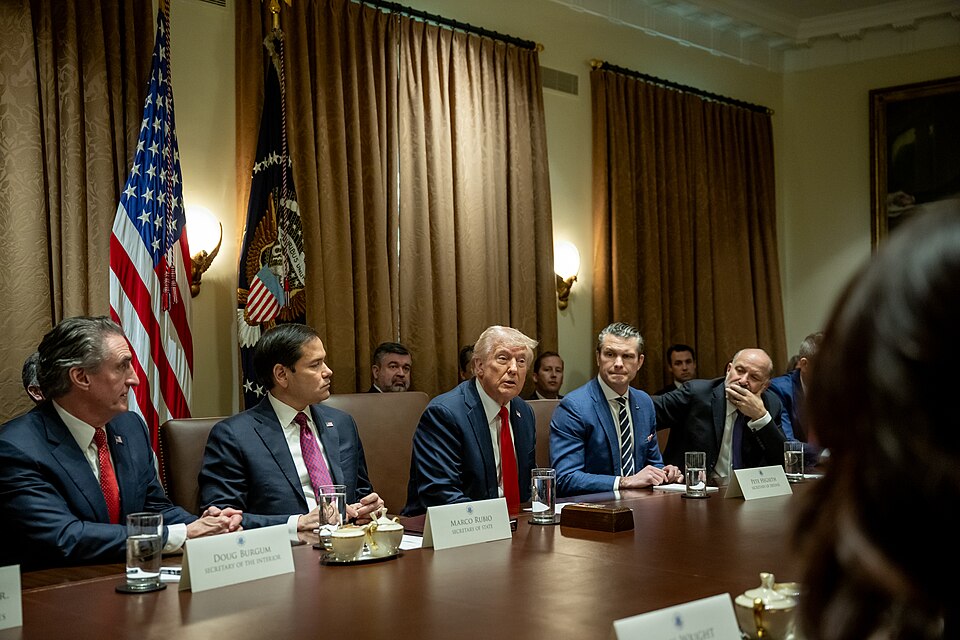
This is concerning.
Several high-ranking officials in President Donald Trump’s administration are living on military bases or in government-protected housing as growing security concerns raise serious questions about the safety of America’s top political leaders.
The latest revelation involves acting Attorney General Todd Blanche, who has reportedly spent months residing at a military installation near Washington, D.C.
According to Fox News Digital, three sources familiar with the situation confirmed Blanche’s unusual living arrangements, adding another prominent administration official to a growing list of government leaders who have relocated to military housing.
The developments come as threats involving foreign adversaries, criminal organizations, and domestic security concerns increasingly complicate the lives of senior federal officials.
While the circumstances surrounding every relocation remain unclear, the expanding use of military housing has attracted attention in Washington.
Another Top Trump Official Moves To Military Housing
Blanche’s reported living arrangements represent the latest example of senior civilian government officials residing on military property.
Sources told Fox News Digital that Blanche had been living at a military installation in the Washington area for several months.
However, the precise reason for his relocation has not been publicly disclosed.
The Justice Department was contacted for comment regarding the arrangement.
Blanche previously served as a key member of Trump’s legal team before joining the administration, making him a prominent figure in the president’s political and legal circles.
His reported relocation follows similar moves involving other high-profile administration officials.
Although government officials have historically received specialized security protections, the growing number of civilian leaders residing on military installations has raised new questions about the threats confronting the federal government.
Treasury Secretary Relocates Amid Reported Iranian Threats
Treasury Secretary Scott Bessent is among the administration officials whose relocation has been directly connected to reported security threats.
According to Fox News Digital, Bessent recently moved to a military base after concerns intensified over potential threats associated with Iran.
Those concerns reportedly grew after a photograph published online made it possible to identify the location of Bessent’s private residence in Washington’s Georgetown neighborhood.
A source familiar with the matter indicated that the exposure contributed to increasing concerns about the Treasury secretary’s personal safety.
The situation underscores the potential dangers facing senior American officials involved in decisions affecting foreign governments.
As Treasury secretary, Bessent occupies an influential position in shaping economic policy, financial sanctions, and the administration’s international economic priorities.
Iran has been the subject of significant American sanctions and diplomatic pressure, making security concerns involving officials responsible for those policies particularly serious.
The specific nature and severity of the reported threats against Bessent have not been fully disclosed.
Nevertheless, the decision to relocate him to military housing demonstrates the precautions being taken to address potential security risks.
Rubio And Hegseth Also Reportedly Living On Military Bases
Secretary of State Marco Rubio and Secretary of War Pete Hegseth have also reportedly established residences at Fort McNair in Washington, D.C.
The historic Army installation sits along the Potomac River and has traditionally provided housing for senior military leadership.
White House chief of staff Stephen Miller has likewise reportedly moved into military or government-protected accommodations.
These arrangements place several influential members of Trump’s administration within environments that offer additional security resources and controlled access.
The officials involved oversee some of the federal government’s most consequential responsibilities, including national defense, foreign policy, economic security, and White House operations.
Military installations can offer security infrastructure that may be more difficult to provide at private homes in ordinary residential neighborhoods.
However, it is important to distinguish between the different circumstances behind these moves.
Not every official reportedly relocated because of a specific publicly identified threat, and the administration has not disclosed a single common explanation for all the housing arrangements.
Former Trump Officials Also Faced Security Concerns
The issue has extended beyond officials currently serving in the administration.
Former Attorney General Pam Bondi reportedly moved from her Washington apartment into military housing after law enforcement identified threats connected to drug cartels.
According to earlier reporting from The New York Times, security concerns contributed to that relocation.
The newspaper also reported allegations involving threats related to controversy surrounding Bondi’s handling of the Jeffrey Epstein files.
However, the Justice Department disputed that explanation.
Other government figures reportedly associated with military housing arrangements include former Homeland Security Secretary Kristi Noem and Army Secretary Daniel Driscoll.
Their reported accommodations involved different military installations and circumstances.
The broader pattern illustrates how security considerations have become an increasingly visible part of life for prominent federal officials.
Why Are Trump Administration Officials Living On Military Bases?
Military installations provide several advantages for individuals facing heightened security risks.
Unlike private residences in ordinary neighborhoods, military facilities typically feature controlled entry points, professional security personnel, and established procedures for responding to potential threats.
For officials involved in sensitive national security decisions, these protections can be especially valuable.
The moves also highlight a difficult challenge for the federal government.
Senior political leaders must remain accessible enough to carry out their public responsibilities while receiving adequate protection from credible threats.
That challenge becomes more complicated when officials face potential retaliation from foreign adversaries or organized criminal networks.
The reported relocations do not establish that every official involved has received a specific threat.
Instead, they demonstrate how federal security arrangements are adapting to differing circumstances involving some of the country’s most recognizable government leaders.
Military Housing Arrangements Raise New Questions
The increasing use of military residences by civilian officials has also generated questions about government resources and the appropriate use of military property.
Fort McNair, one of the installations reportedly housing Trump administration officials, has a long history of accommodating military leadership.
The installation is also home to the National Defense University and contains historic residences traditionally associated with senior military personnel.
According to military housing information cited in the reporting, Fort McNair and nearby Fort Myer together contain dozens of historic residential units.
As more civilian officials reportedly occupy military accommodations, questions may arise concerning housing availability, government expenses, and the procedures used to approve these arrangements.
Security requirements remain an important consideration, but the public also has a legitimate interest in understanding how government resources are allocated.
Finding the appropriate balance between protecting public servants and maintaining accountability will remain an important issue.
Political Threats Become A Growing Concern In Washington
The developments reflect a broader challenge facing the nation’s political institutions.
Disagreements over government policies are a normal part of American democracy. Threats of violence against public officials, however, represent a fundamentally different matter.
Regardless of political affiliation, government leaders should be able to perform their responsibilities without fearing for their personal safety or the well-being of their families.
The reported threats involving foreign governments and criminal organizations are particularly concerning because they can create risks extending beyond political disputes.
For the Trump administration, protecting officials responsible for major national security and economic decisions remains an essential government responsibility.
The relocations also demonstrate that maintaining security sometimes requires substantial changes to the personal lives of public servants.
What Happens Next For Trump’s Administration?
The growing number of administration officials residing in military housing suggests that enhanced security arrangements could remain an important issue in Washington.
Additional information may eventually clarify the circumstances surrounding individual relocations, including Blanche’s reported move earlier this year.
For now, officials have not publicly provided a complete explanation of the security assessments behind every housing decision.
What is clear is that multiple senior figures connected to the Trump administration have moved into military or government-protected residences, with reported threats playing a role in some of those decisions.
The developments raise important questions about personal security, national defense, and the government’s ability to protect officials carrying out sensitive responsibilities.
As threats involving foreign adversaries and domestic security concerns continue to receive attention, the safety of senior federal officials is likely to remain a significant priority.
For President Trump and his administration, the growing reliance on protected housing highlights a serious reality: The responsibilities of governing increasingly extend beyond the halls of Washington and into the personal security of the people making America’s most consequential decisions.




Leave a Reply