
Here’s what was said.
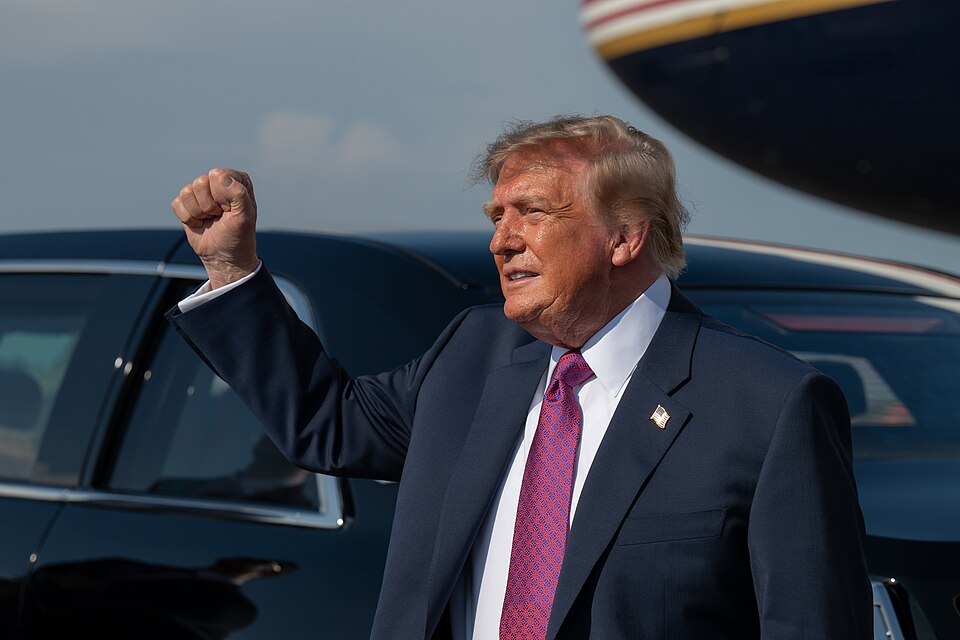
President Donald Trump has announced a sweeping new security agreement involving Greenland, giving the United States expanded long-term military access to one of the most strategically important locations in the Arctic.
The agreement has already drawn a striking comparison from retired U.S. Marine Col. Grant Newsham, who said its strategic importance could rival America’s historic purchase of Alaska.
Newsham said on “Fox & Friends Weekend” that he views the agreement as a major strategic development, comparing its significance to the U.S. acquisition of Alaska under Secretary of State William Seward.
The comparison comes with an important distinction.
The United States is not purchasing Greenland, and the island is not becoming American territory. Denmark and Greenland have stressed that the agreement preserves their sovereignty while expanding Washington’s military and security role in the region.
Trump Announces Major Greenland Security Agreement
Trump announced the agreement Friday, saying the United States had reached a deal with Denmark and Greenland that would give Washington a permanent role in protecting the island and broader American security interests.
According to Trump, the arrangement will allow the United States to take whatever steps are considered necessary to defend Greenland and the United States.
The president also said the agreement would come at no cost to American taxpayers.
The precise financial and operational details have not all been publicly released, but reports indicate that the agreement would substantially expand America’s ability to operate military facilities, deploy personnel and protect strategic interests in Greenland.
Why Greenland Matters to America
Greenland occupies a critical position between North America, Europe and the Arctic Ocean.
That geography makes the island increasingly important for missile warning systems, air and naval operations, satellite tracking and the defense of the North American continent.
The United States already operates Pituffik Space Base in northwest Greenland, a longstanding military installation that plays an important role in missile warning and space surveillance.
The new agreement could allow Washington to expand that presence significantly as competition over Arctic security continues to grow.
For Americans concerned about national defense, Greenland’s location is difficult to ignore.
The shortest routes between parts of Russia and North America cross the Arctic, making Greenland an important piece of the broader early-warning and homeland defense network.
Security Expert Makes Alaska Comparison
Newsham argued that the agreement could have lasting strategic consequences for the United States.
Although America is not buying Greenland as it purchased Alaska from Russia in 1867, Newsham said the deal effectively brings a crucial piece of Arctic geography more securely into the North American defense system.
“It’s a little different, because we haven’t bought the place,” Newsham said.
He argued that the arrangement could make it substantially more difficult for Russia or China to establish a military or strategic economic presence on the island.
The comparison to Alaska reflects Greenland’s enormous size and location rather than any transfer of ownership.
When Secretary of State William Seward negotiated the Alaska Purchase in 1867, critics famously questioned the value of the territory. Alaska later became enormously important because of its natural resources and strategic location.
Supporters of the Greenland agreement now argue that Arctic geography could become similarly important to American security in the decades ahead.
Agreement Targets Foreign Military Influence
One of the most significant provisions reportedly involves keeping military forces from non-NATO countries out of Greenland.
The agreement is also expected to place restrictions on sensitive investments that could raise national security concerns.
Those provisions are particularly relevant to U.S. concerns about Russia and China.
Both countries have sought a larger role in Arctic affairs as melting sea ice, new shipping routes and natural resources increase the region’s economic and military importance.
Newsham said the agreement could sharply limit opportunities for either country to gain a strategic foothold in Greenland.
His assessment represents his analysis of the deal; the full implications will depend on how the agreement is implemented.
Denmark And Greenland Keep Sovereignty
Despite Trump’s description of broad U.S. security authority, Denmark and Greenland have emphasized that they are not giving the island to the United States.
Danish Prime Minister Mette Frederiksen and Greenlandic Prime Minister Jens-Frederik Nielsen have said the agreement respects sovereignty, territorial integrity and Greenlanders’ right to self-determination.
The agreement is expected to be formally signed around the United Nations General Assembly and must still complete required political and parliamentary procedures.
That means the Greenland agreement differs fundamentally from the Alaska Purchase.
Alaska became American territory.
Greenland will remain under its existing political structure while granting Washington expanded military and security rights.
U.S. Military Presence Could Grow
The Trump administration has indicated that America’s military footprint in Greenland could expand under the arrangement.
Defense Secretary Pete Hegseth highlighted Trump’s statement that the United States intends to begin developing a larger military presence in an appropriate part of the island.
That could potentially include additional facilities and infrastructure intended to support Arctic and North American defense operations.
Secretary of State Marco Rubio has also praised the agreement, describing it as a long-term guarantee of America’s security interests in Greenland and the surrounding Arctic region.
The full size and location of any future American expansion have not yet been publicly detailed.
China And Russia Face New Arctic Restrictions
China and Russia are likely to pay close attention to the agreement because both countries have strategic interests in the Arctic.
Russia maintains the largest Arctic coastline and substantial military infrastructure across its northern territories.
China, despite not being an Arctic nation, has pursued economic investments and described itself as a “near-Arctic state” as it seeks greater involvement in regional shipping and development.
Washington has increasingly viewed foreign investment in sensitive infrastructure as a potential national security concern.
The Greenland agreement appears designed in part to prevent strategically important assets from falling under the influence of governments considered U.S. adversaries.
A Growing Battle Over The Arctic
The Arctic has become increasingly important as technology and changing environmental conditions make the region more accessible.
Potential shipping routes could shorten travel between Europe and Asia, while Greenland also possesses mineral resources that have attracted international interest.
At the same time, the region remains vital to American missile defense and early-warning capabilities.
That combination of military geography, economic potential and proximity to North America explains why Greenland has become an increasingly prominent part of U.S. national security discussions.
Trump Deal Could Reshape Arctic Defense
For Trump, the agreement gives his administration many of the security benefits it had sought in Greenland without transferring sovereignty to the United States.
For Denmark and Greenland, the arrangement strengthens cooperation with Washington while formally preserving their existing political status.
And for the U.S. military, the agreement could provide expanded freedom to strengthen defenses in one of the most strategically important regions in the Northern Hemisphere.
Whether history ultimately views the agreement in the same category as the Alaska Purchase remains an opinion rather than an established conclusion.
But Newsham’s “Second Alaska” comparison highlights the central argument made by supporters of the pact: America has secured expanded long-term access to strategically important Arctic territory without purchasing the island itself.
As competition with Russia and China continues in the Arctic, Greenland’s importance to American national security could become even more significant in the years ahead.







Leave a Reply