
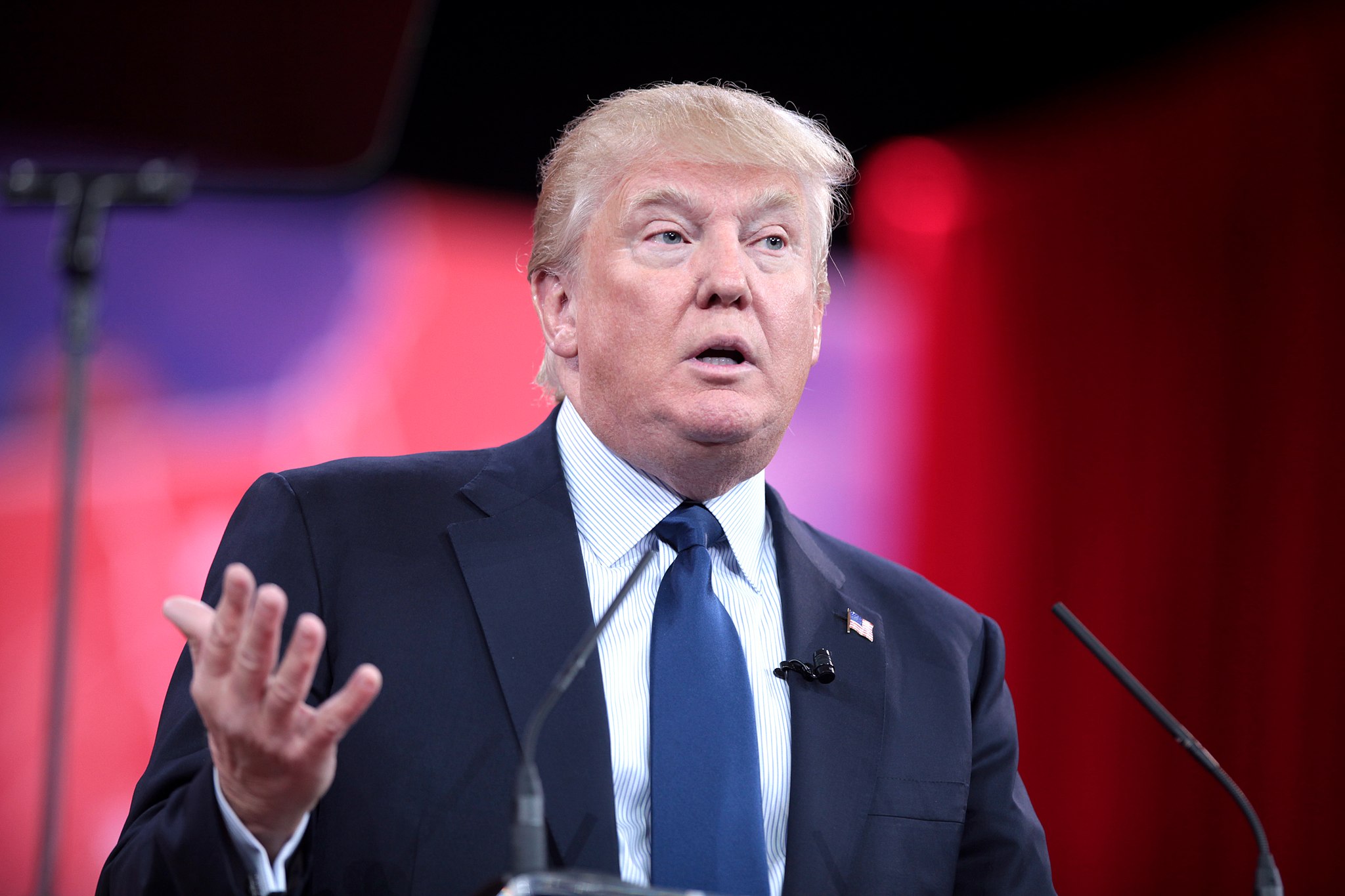
Democrats are now targeting Trump’s Mar-a-Lago over something Trump said will be beneficial for the United States.
Florida Democratic Senate candidate Angie Nixon is calling for tougher restrictions on the rapid expansion of artificial intelligence data centers — and she brought President Donald Trump’s Mar-a-Lago estate into the debate.
Nixon, a Florida state representative running against Republican Sen. Ashley Moody, said the United States should consider temporarily stopping construction of new AI data centers until officials better understand their effects on electricity prices, water supplies, local infrastructure and surrounding communities.
“I think there needs to be a moratorium until more research is done,” Nixon told Newsweek. “Or if people want to build a data center, they should put it on Mar-a-Lago.”
The remark was a political jab rather than a formal proposal involving Trump’s Palm Beach property, but it highlights a larger issue becoming increasingly important across the country.
As artificial intelligence companies invest billions of dollars in new computing facilities, Americans are asking who will pay for the enormous amounts of electricity, water and infrastructure those projects require.
AI Data Centers Raise Questions About Electricity Costs
Artificial intelligence systems require enormous computing power.
That demand has accelerated construction of large data centers containing thousands of servers operating around the clock.
Supporters say these facilities are essential for American technological leadership, economic growth and competition with China.
But residents in several states have raised concerns about whether data centers could increase pressure on electrical grids and contribute to higher utility bills.
Those concerns are particularly significant for retirees and households living on fixed incomes.
For older Americans already paying more for housing, food, insurance and healthcare, even modest increases in monthly electricity bills can have a noticeable impact on household budgets.
Nixon says government officials should examine those costs before allowing construction to continue at its current pace.
Nixon Calls for a Data Center Moratorium
Nixon has said she supports artificial intelligence and technological innovation but believes stronger protections are necessary.
Her concerns include energy use, water consumption, consumer privacy, employment and the economic effects of large technology projects on nearby communities.
She has proposed temporarily stopping new data center construction while more research is conducted.
A moratorium would represent a significant intervention in one of America’s fastest-growing industries.
Trump, by contrast, has generally supported rapid development of artificial intelligence infrastructure and has argued against regulations that he believes could weaken America’s position in the global AI race.
That creates a clear policy disagreement over how aggressively the government should regulate emerging technology.
Should Communities Receive Money From AI Companies?
Nixon has also raised another idea: compensating communities that host large data centers.
She compared the concept to Alaska’s system of sharing investment earnings associated with natural-resource revenues.
Under Nixon’s general proposal, communities affected by large AI facilities could potentially receive payments, tax benefits, utility credits or other financial compensation.
She has not released a detailed plan explaining how such a program would operate.
Still, similar concepts are already being discussed around the country.
Some lawmakers have proposed requiring data center operators receiving tax incentives to provide financial benefits to surrounding communities.
Others have suggested electricity-bill credits or infrastructure improvements.
The debate ultimately comes down to a basic economic question: If technology companies benefit from large-scale development, should nearby residents receive a direct financial benefit as well?
Mar-a-Lago Becomes Part of the Political Fight
Nixon’s reference to Mar-a-Lago immediately brought Trump into the discussion.
Trump has made the Palm Beach property his primary Florida residence and one of the most recognizable locations associated with his political career.
Nixon’s remark suggested that political leaders who support rapid data center expansion should be willing to accept the facilities near their own homes.
There is no proposal currently under consideration to build an AI data center at Mar-a-Lago.
The statement was rhetorical, but it gave Nixon a high-profile way to draw attention to a complicated technology and energy issue.
Florida Senate Race Draws National Attention
The AI dispute comes during Nixon’s campaign against Republican Sen. Ashley Moody.
Florida has moved significantly toward Republicans in recent elections.
Trump carried the state comfortably in the 2024 presidential election, and Republicans now hold a substantial advantage in registered voters.
Those numbers make Nixon’s Senate campaign challenging.
Recent polling, however, has produced dramatically different results.
Some surveys have shown Nixon and Moody nearly tied.
Others have shown Moody ahead by seven points or more, while another recent survey gave the Republican an 11-point advantage.
The wide variation means voters should be cautious about treating any individual poll as definitive.
Different surveys can produce different results depending on methodology, turnout assumptions and the voters included in the sample.
Florida’s Political Landscape Has Changed
Florida was once considered one of America’s most competitive presidential battleground states.
That has changed considerably.
Republicans now control the governor’s office, both chambers of the state legislature and both U.S. Senate seats.
The GOP has also built a major voter-registration advantage.
At the same time, Democrats have pointed to several recent special-election victories as evidence that some voters remain willing to cross party lines.
Those lower-turnout contests do not necessarily predict what will happen in a statewide general election, but they have given Democrats hope that dissatisfaction over economic issues could make some races more competitive.
Nixon’s DSA Membership Becomes a Campaign Issue
Another major issue in the Senate race is Nixon’s membership in the Democratic Socialists of America.
Nixon joined the organization but says she does not consider herself a socialist and does not support its entire political platform.
She has rejected proposals to eliminate police departments and abolish prisons, although she supports ending privately operated prisons.
Nixon says she joined the organization because she agrees with some of its priorities involving healthcare, housing and education.
Moody and Republicans have repeatedly highlighted the affiliation.
That issue could have particular resonance in South Florida, which is home to large Cuban, Venezuelan and Latin American communities with family histories connected to socialist or communist governments.
Nixon argues that voters should evaluate her individual policy positions rather than judge her solely by organizational membership.
Social Security Could Matter With Florida’s Older Voters
Nixon has also focused on an issue likely to receive significant attention from Florida’s large retiree population: Social Security.
She supports eliminating federal taxes on Social Security benefits.
Nixon has discussed her own mother’s financial difficulties after retirement, saying her mother returned to work at age 70 because retirement benefits were not sufficient to cover expenses.
Social Security taxes have become an increasingly important political issue as millions of Americans enter retirement.
For seniors living on fixed incomes, taxes on benefits can affect how much money remains available for housing, groceries, prescription drugs, insurance and utility bills.
Both parties are likely to continue emphasizing retirement security as the election approaches.
Healthcare and Childcare Are Central to Nixon’s Campaign
Nixon says affordability is the central theme of her Senate campaign.
She has identified three major policies she believes could reduce household expenses:
- Expanding government-supported healthcare
- Eliminating tariffs she believes increase consumer prices
- Expanding childcare assistance
Nixon argues that healthcare expenses are pushing some families into financial hardship.
She also says high childcare costs can prevent parents from returning to the workforce.
Republicans generally dispute the idea that larger federal programs are the best solution.
They argue that lower taxes, domestic investment, economic growth and reduced regulation can improve household finances without dramatically expanding government spending.
The competing approaches represent one of the clearest economic divides in the race.
Tariffs Could Become Another Major Issue
Nixon has criticized Trump’s tariff policies, arguing that import taxes can eventually result in higher prices for consumers.
Trump and his supporters argue that tariffs can protect American industries, encourage domestic manufacturing and give the United States greater leverage in trade negotiations.
Economists have long debated how tariff costs are distributed among importers, businesses and consumers.
For voters, however, the issue is often much simpler.
They want to know whether trade policies will raise or lower the prices they pay for everyday products.
That makes inflation and consumer prices particularly important campaign issues.
Moody Targets Nixon’s Progressive Agenda
Moody has sought to portray Nixon as significantly more progressive than the typical Florida voter.
Her campaign has highlighted Nixon’s DSA membership as well as her positions on healthcare, immigration and government spending.
Nixon counters that the campaign should focus on household economics rather than political labels.
That disagreement is likely to remain central to the race.
Moody is attempting to connect Nixon to the national progressive movement, while Nixon is trying to frame herself as a candidate focused on working families and affordability.
Nixon Also Criticizes Democratic Leaders
Nixon has occasionally criticized her own party.
She has said national and state Democratic organizations could provide more support for her Senate campaign.
She has also suggested that establishment politicians from both parties are sometimes influenced by the same wealthy donors and corporate interests.
At the same time, Nixon has received support from prominent Democratic and progressive politicians.
Her comments reflect a broader debate inside the Democratic Party between establishment leaders and candidates aligned with the party’s progressive wing.
That internal dispute has become increasingly visible as younger candidates challenge longtime political figures.
Trump Remains a Major Factor in Florida Politics
Although Trump is not running in the Florida Senate election, his political influence remains significant.
Florida is his home state, and Mar-a-Lago continues to serve as one of the most recognizable symbols of his presidency and political movement.
Nixon has repeatedly criticized Trump’s economic policies but says her Senate campaign is not primarily built around opposing him.
Instead, she says she wants voters to focus on healthcare, housing, childcare, energy bills and the overall cost of living.
Moody’s campaign is likely to emphasize Florida’s recent Republican voting record and Nixon’s progressive policy positions.
AI Debate Could Affect Household Utility Bills
The argument over artificial intelligence data centers may sound highly technical, but it could eventually affect ordinary household expenses.
Large data centers can consume enormous quantities of electricity.
If utilities must build new power plants, transmission lines or other infrastructure to serve those facilities, regulators and lawmakers will have to determine who pays those costs.
Technology companies could be required to cover more of the expense.
Utility customers could pay part of it.
Or governments could create tax incentives and subsidies designed to encourage development.
Those decisions could affect millions of electricity customers.
That is why the debate is moving beyond Silicon Valley and into state legislatures, city councils and political campaigns.
The Bigger Question Facing Voters
Nixon’s Mar-a-Lago comment generated attention because of its connection to Trump.
But the larger issue is far more consequential.
Artificial intelligence is expanding rapidly, and the infrastructure needed to support it will require enormous investments in electricity, water, land and transmission capacity.
The central policy questions are becoming increasingly clear:
Who should pay for that expansion?
How should communities be compensated?
Should governments temporarily restrict development while studying the consequences?
And how much regulation is appropriate without weakening America’s ability to compete internationally?
Nixon favors greater government oversight and stronger community protections.
Trump and many Republicans favor faster AI development with fewer regulatory barriers.
Those competing approaches give voters a substantive policy debate that extends far beyond a single comment about Mar-a-Lago.
Florida Voters Have the Final Say
The Senate contest between Nixon and Moody gives Florida voters sharply different choices on technology regulation, healthcare, immigration, government spending, energy policy and the role of the federal government.
Nixon is betting that concerns about affordability can attract voters who may not agree with every part of her progressive agenda.
Moody is emphasizing Florida’s conservative political shift and warning voters about policies associated with the progressive wing of the Democratic Party.
The polling remains mixed, and Florida’s Republican voter-registration advantage remains substantial.
But Nixon’s latest comments show that AI data centers, electricity prices and the cost of living could become surprisingly important issues before voters head to the polls.
And by bringing Mar-a-Lago into the conversation, she has ensured that Trump remains part of the political debate surrounding Florida’s closely watched Senate race.





Leave a Reply