
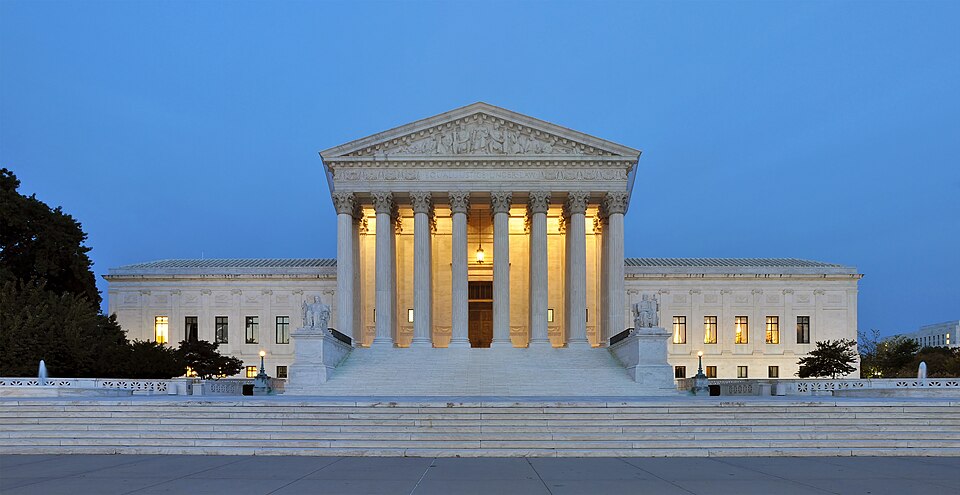
Here’s what they appear to be planning.
Former Vice President Kamala Harris is calling for sweeping changes to the United States Supreme Court, setting the stage for another political showdown over President Donald Trump’s conservative judicial majority ahead of the 2026 midterm elections.
Harris wants Congress to expand the number of Supreme Court justices, a proposal that could eventually change the ideological makeup of America’s highest court.
But her ambitions do not stop there.
The former vice president is also advocating changes to the Electoral College and supporting statehood for Washington, D.C., and Puerto Rico, proposals that would significantly alter the nation’s political landscape.
Her comments come as Democrats are working to regain control of Congress in November, making the future of the Supreme Court another major issue in an already contentious election season.
Kamala Harris Calls for Expanding Trump’s Supreme Court
During an appearance on the “Baby, This Is Keke Palmer” podcast, Harris discussed what Democrats should prioritize if they win control of the House and Senate.
One of her most significant proposals involves expanding the Supreme Court beyond its current nine justices.
Harris argued that adding more justices would help create a court that better reflects the Constitution’s underlying principles.
The proposal immediately raises questions about the future of the conservative majority established during Trump’s first administration.
Trump appointed three Supreme Court justices between 2017 and 2021: Neil Gorsuch, Brett Kavanaugh, and Amy Coney Barrett.
Those appointments helped create the court’s current 6-3 conservative majority, which has played a decisive role in several landmark rulings.
The court has issued major decisions concerning abortion, federal regulatory authority, religious freedom, and presidential immunity.
For Democrats who disagree with those rulings, changing the court’s composition has become a subject of continuing debate.
However, Harris did not outline how many additional justices she believes should serve on the court.
That unanswered question could become increasingly important if Democrats make Supreme Court expansion a central part of their political agenda.
Could Democrats Actually Change the Supreme Court?
Although expanding the Supreme Court would represent a major institutional change, the proposal is not automatically unconstitutional.
The Constitution established the judicial branch but left Congress responsible for determining the number of Supreme Court justices.
Congress has changed the court’s size multiple times throughout American history.
However, the number has remained at nine since 1869.
That longstanding arrangement has continued through Republican and Democratic administrations, including periods when presidents strongly disagreed with Supreme Court decisions.
Supporters of expansion argue that additional justices could improve representation of competing judicial philosophies and restore confidence in the institution.
Critics believe expanding the court in response to unfavorable rulings could undermine its independence.
They warn that once one political party increases the number of justices, the opposing party could respond by adding even more seats after returning to power.
Such a cycle could leave the Supreme Court increasingly vulnerable to political pressure.
The controversy resembles a major confrontation during President Franklin D. Roosevelt’s administration.
In 1937, Roosevelt proposed expanding the court after several decisions threatened important elements of his New Deal policies.
His proposal encountered substantial resistance and ultimately failed.
The historical comparison illustrates why changing the Supreme Court’s membership remains one of the most controversial proposals in American politics.
Trump’s Supreme Court Appointments Remain a Lasting Legacy
The Supreme Court has been one of the most consequential areas of Trump’s political influence.
His three appointments shifted the balance of the judiciary and helped establish a conservative majority that could shape constitutional law for decades.
One of the most significant rulings came in 2022, when the Supreme Court overturned Roe v. Wade and returned considerable authority over abortion regulations to individual states.
The court has also addressed questions involving executive authority, government regulations, and the relationship between federal agencies and Congress.
These decisions have made the judiciary a recurring source of political disagreement.
Conservative legal scholars frequently emphasize judicial restraint, constitutional text, and the original public meaning of the Constitution.
Liberal legal scholars often disagree with particular applications of those approaches and emphasize other constitutional principles and precedents.
Expanding the court could eventually influence how those competing legal philosophies are represented.
Nevertheless, adding more seats would not automatically produce a liberal majority. The political party controlling the presidency and the Senate would also affect which nominees could be confirmed.
Harris Also Wants Changes to the Electoral College
In addition to her Supreme Court proposal, Harris called for changes to the Electoral College system used to elect American presidents.
She argued that the national popular vote should carry greater weight in presidential elections.
The Electoral College has been part of the country’s presidential election process since the founding era.
Under the current system, each state receives electoral votes based on its representation in Congress, while Washington, D.C., receives three electoral votes under the 23rd Amendment.
A presidential candidate generally needs at least 270 electoral votes to win.
Supporters of the system believe it preserves the constitutional role of states in choosing the president.
Critics argue that the system can produce results in which the candidate receiving the most votes nationally does not win the election.
Harris herself lost both the popular vote and the Electoral College to Trump in the 2024 presidential election.
Changing the Electoral College through a constitutional amendment would require approval from two-thirds of both chambers of Congress and ratification by three-fourths of the states.
Consequently, even a Democratic victory in the upcoming midterm elections would not provide enough authority to eliminate the system through ordinary legislation.
Democrats Discuss Adding New States
Harris also expressed support for granting statehood to Washington, D.C., and Puerto Rico.
Both proposals have generated considerable debate because of their potential consequences for congressional representation.
Every state receives two senators, regardless of its population.
Adding Washington, D.C., and Puerto Rico as states would therefore create four additional Senate seats.
The political implications could be substantial, although the future party affiliations of those seats cannot be guaranteed.
Washington, D.C., has historically voted overwhelmingly Democratic in presidential elections, while Puerto Rico has a distinct political environment and a longstanding debate over its territorial status.
Supporters argue that residents should enjoy fuller representation in the federal government.
Opponents have raised constitutional, political, and practical objections, particularly regarding the special status of the nation’s capital.
Puerto Rico’s future also depends on complex questions about self-determination and the preferences of its residents.
Harris’ support for statehood demonstrates that her proposed changes extend well beyond the Supreme Court.
Together, the proposals would affect major institutions responsible for determining political power in Washington.
Could the 2026 Midterms Change Everything?
The November 3, 2026, midterm elections will determine which party controls Congress during the final two years of Trump’s second presidential term.
Democrats hope to make gains in the House and Senate, while Republicans are attempting to preserve their congressional majorities.
Harris has identified congressional control as an important factor in pursuing her proposed reforms.
However, winning congressional majorities would not necessarily translate into immediate legislative success.
Supreme Court expansion would require Congress to pass legislation changing the number of authorized justices.
Such legislation would face political and procedural obstacles, including Senate rules.
And with Trump serving as president, any bill passed by Congress could face a presidential veto.
Overriding that veto would require a two-thirds majority in both chambers.
This means Democrats could win control of Congress without gaining the power to implement Harris’ Supreme Court proposal.
Nevertheless, control of Congress could still influence judicial oversight, federal spending, and the direction of future legislative debates.
Harris’ Political Future Remains Uncertain
The former vice president’s remarks come as questions continue about whether she will seek the Democratic presidential nomination in 2028.
Harris has not formally announced another campaign for the White House.
Her defeat in the 2024 presidential election remains a significant consideration as Democrats evaluate potential future candidates.
Some party members see her continuing public appearances as an opportunity to help Democrats organize around major policy priorities.
Others have questioned whether another Harris presidential campaign would appeal to enough voters to win a general election.
Her recent proposals could become important elements of those discussions.
Supreme Court expansion, Electoral College changes, and statehood proposals are all subjects likely to attract strong reactions from across the political spectrum.
Whether Harris ultimately runs again or supports another Democratic candidate, her latest comments suggest she intends to remain involved in debates about the country’s political institutions.
The Supreme Court Debate Could Shape America’s Future
The controversy surrounding Harris’ proposal goes beyond the number of Supreme Court justices.
It raises broader questions about constitutional government, judicial independence, and how much authority elected officials should have to restructure longstanding national institutions.
Supporters believe reforms are necessary to address what they view as problems with the current political and judicial systems.
Opponents argue that changing established institutions to alter political outcomes could create dangerous precedents for future administrations.
Trump’s Supreme Court appointments have already had a lasting influence on American constitutional law.
Harris’ latest comments make clear that the court’s current structure remains a subject of debate among Democrats.
For now, no expansion has been enacted, and the Supreme Court continues to operate with nine justices.
As the 2026 midterm elections approach, Americans face an important debate over whether the Supreme Court should retain its traditional structure or undergo major changes that could reshape the nation’s highest judicial institution for generations.







Leave a Reply