
Here’s what happened.
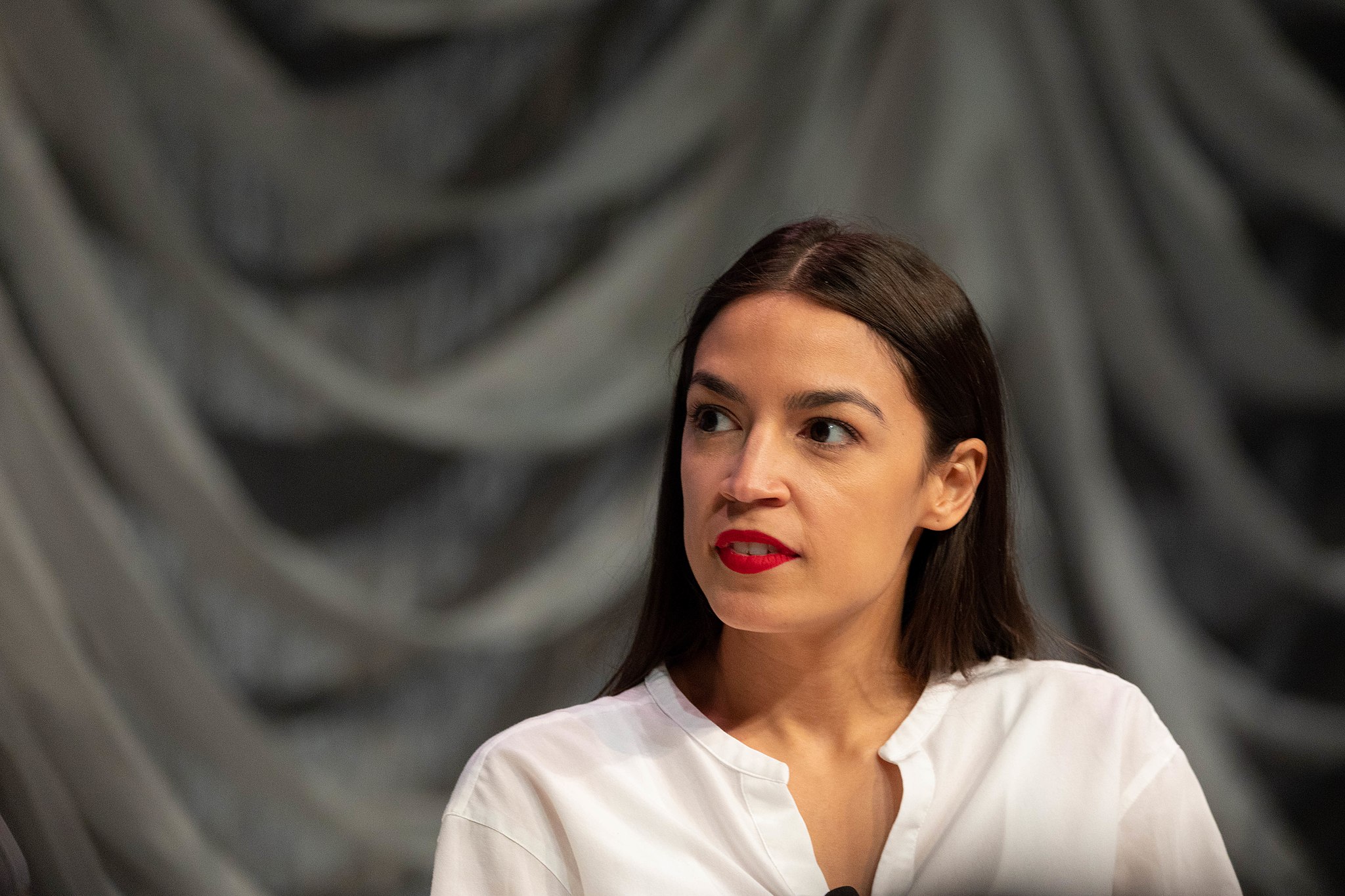
House Republicans are pushing back against Rep. Alexandria Ocasio-Cortez as a growing political battle over government surveillance threatens to put the outspoken New York Democrat at odds with Republican lawmakers who have already been working to protect Americans’ privacy.
The controversy centers on Flock Safety, a technology company responsible for operating tens of thousands of automated surveillance cameras across the United States.
While Ocasio-Cortez has recently joined the effort to restrict these systems, Republicans are moving forward with their own legislation, potentially denying Democrats the opportunity to take the lead on an issue involving government overreach and constitutional rights.
House Speaker Mike Johnson has confirmed that Republicans intend to address the controversial technology following the November midterm elections.
Republicans Take Action Against Government Surveillance
According to an October 10 New York Post report, Johnson announced that the House would consider legislation targeting automated surveillance cameras during the congressional session following the elections.
The legislation, introduced by Republican Rep. Tim Burchett of Tennessee, would prevent federal agencies from purchasing or accessing certain automated license plate surveillance systems.
Johnson discussed the proposal while visiting Michigan, where Republican Rep. Tom Barrett, a cosponsor of the measure, faces a competitive reelection campaign.
The announcement represents another effort by congressional Republicans to address concerns about technology that can collect information about Americans’ daily movements.
For supporters of stronger privacy protections, the debate raises important questions about the government’s ability to gather information on law-abiding citizens.
Ocasio-Cortez Joins the Fight After Republican Proposals
Ocasio-Cortez has also entered the surveillance debate, joining independent Vermont Sen. Bernie Sanders and Democratic Oregon Sen. Jeff Merkley in introducing legislation known as the Ban Flock Act.
Their proposal would prohibit federal agencies from using automated license plate readers and restrict certain federal funding for state and local governments that continue using the technology.
However, Republicans had already introduced separate measures targeting these surveillance systems.
In September, Republican Rep. Thomas Massie of Kentucky introduced the Flock-Off Act, legislation designed to stop federal taxpayer dollars from supporting certain automated surveillance cameras.
According to Massie’s official congressional announcement, the proposal would prohibit federal funding for purchasing, installing, maintaining, or operating covered surveillance systems.
The legislation would also establish requirements for removing federally funded equipment and ending certain surveillance arrangements within 180 days.
These earlier Republican proposals demonstrate that conservative lawmakers were already addressing the issue before Ocasio-Cortez introduced her competing legislation.
Why Are Americans Concerned About Flock Cameras?
Flock Safety operates an extensive surveillance network featuring more than 120,000 cameras across 49 states, according to the New York Post.
These devices use automated license plate recognition technology to capture vehicle information and make it searchable through connected databases.
Law enforcement agencies can use the technology to investigate crimes, locate stolen vehicles, and identify suspects.
However, critics warn that the same systems could potentially allow authorities to monitor people’s movements on a massive scale.
Unlike traditional security cameras that record a specific location, interconnected license plate readers can help investigators establish where a vehicle has traveled.
That capability has raised concerns about privacy, data retention, and potential misuse.
As Axios reported, Republican Sen. Josh Hawley of Missouri launched an investigation into Flock Safety’s practices, questioning how information is collected, stored, and shared.
Hawley has also introduced legislation intended to strengthen safeguards against abuse.
The controversy has created an unusual situation in Washington, with lawmakers from both parties questioning whether surveillance technology has expanded beyond acceptable limits.
Republicans Highlight Constitutional Protections
For Republicans supporting the proposed restrictions, the issue involves more than a disagreement over technology.
It also concerns the government’s responsibility to respect constitutional freedoms.
The Fourth Amendment protects Americans against unreasonable searches and seizures, making government surveillance an important subject for lawmakers and courts.
Critics argue that advanced camera networks could create opportunities for tracking citizens without adequate safeguards.
Supporters of the technology counter that automated surveillance can provide law enforcement with valuable investigative assistance and help keep communities safe.
Flock Safety has defended its products and expressed a willingness to work with policymakers on appropriate regulations.
The challenge for Congress will be determining how to preserve legitimate public safety benefits while preventing improper access to personal information.
Republican lawmakers believe their proposals offer an opportunity to establish clearer limits on federal involvement in these systems.
A Political Showdown Takes Shape in Washington
The debate has become increasingly political as both parties advance competing legislation.
Ocasio-Cortez and her Democratic allies are calling for broad restrictions, while Republicans are promoting their own proposals to limit federal surveillance and taxpayer funding.
Although their approaches overlap in several areas, the competing bills have created questions about which lawmakers will ultimately shape the government’s response.
The Republican-controlled House could consider Burchett’s proposal following the midterm elections.
However, congressional approval is far from guaranteed.
Lawmakers would still need to resolve differences over enforcement, federal funding, local law enforcement authority, and the potential consequences for public safety.
The upcoming elections could also influence the legislation’s prospects.
What Happens Next for Republicans and Ocasio-Cortez?
Republican leaders are preparing to move forward with their own surveillance proposal despite Ocasio-Cortez’s entrance into the debate.
Whether Congress ultimately passes new restrictions remains uncertain, but the issue is drawing increased attention from lawmakers concerned about government accountability.
For Americans who value individual liberty, the controversy raises a fundamental question about how much surveillance power government agencies should possess.
Technology has dramatically changed what authorities can monitor, but longstanding constitutional protections remain central to the discussion.
With Republicans preparing legislative action and Ocasio-Cortez promoting a competing proposal, the battle over America’s surveillance cameras could become another significant political fight in Washington.



Leave a Reply