
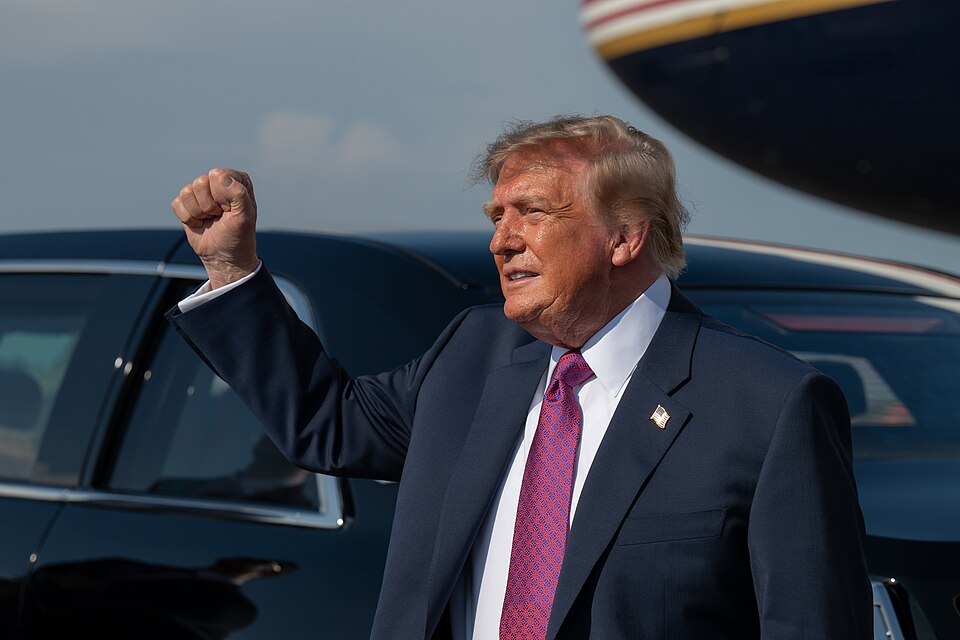
Democrats are making some shocking accusations.
President Donald Trump is facing fresh attacks from Democrats over the state of the American economy after a new inflation report revealed that consumer prices are continuing to rise. However, the White House is strongly rejecting those accusations, arguing that Trump’s economic agenda is producing meaningful results for American workers and families.
The latest dispute comes just weeks before the November midterm elections, when voters will decide whether Republicans maintain control of Congress.
Democrats are attempting to make inflation and the cost of living central campaign issues, while the Trump administration insists its economic policies are helping Americans recover from years of financial pressure.
At the center of the controversy is a simple question: Is Trump’s economic agenda working, or are Americans still paying too much for everyday necessities?
Democrats Accuse Trump of Failing on Inflation
The political confrontation intensified Wednesday after the Bureau of Labor Statistics released its September 2026 Consumer Price Index report.
According to the government, consumer prices increased 0.6% in September, following a 0.4% increase in August.
Overall inflation reached 3.7% over the previous 12 months, demonstrating that rising prices remain a challenge for American households.
Democratic lawmakers quickly seized on those numbers to criticize the president.
The House Democratic Caucus accused Trump of failing to deliver on his campaign promises to reduce inflation and lower consumer costs.
Representative Pete Aguilar of California also attacked the administration, arguing that families are struggling with gasoline, groceries, and other household expenses.
House Democratic Whip Katherine Clark similarly blamed Republican economic policies for continued affordability problems.
Democratic leaders believe concerns about rising prices could influence voters in competitive congressional races this November.
However, the White House argues that Democrats are overlooking important economic improvements under Trump’s leadership.
White House Pushes Back Against Democratic Attacks
The Trump administration responded to the criticism by emphasizing economic growth, job creation, and policies designed to strengthen American businesses.
White House spokesman Matthew Middleton defended the president’s approach, saying Trump’s economic agenda has helped increase wages, encourage private-sector employment, and restore opportunities in industries that previously experienced significant job losses.
According to the administration, more than one million private-sector jobs have been created under Trump’s policies.
The White House also highlighted tax reductions, prescription drug pricing initiatives, and nearly 20 trade agreements as examples of the administration’s efforts to strengthen the economy.
Officials maintain that Trump inherited serious inflation problems from the Biden administration and has been working to bring prices under control.
The administration further argues that international economic disruptions, including the ongoing conflict involving Iran, have complicated efforts to provide immediate relief.
While those challenges remain, White House officials insist the president’s economic strategy is focused on long-term growth and financial stability.
One Important Detail in the Inflation Report
Despite the latest increase in overall consumer prices, the September inflation report contained one development that could provide some encouragement to American families.
The government’s food price index remained unchanged during September.
That followed modest increases of 0.1% in both July and August.
For consumers who have watched their grocery bills climb over recent years, a month without additional overall food price increases represents a welcome development.
However, stable food prices during one month do not necessarily mean groceries are becoming cheaper.
The distinction is important because inflation measures how quickly prices are changing, not whether those prices have returned to their previous levels.
For example, even if inflation slows substantially, Americans may continue paying considerably more for products than they did several years ago.
This helps explain why affordability remains a major political concern despite positive economic indicators in other areas.
What Rising Prices Mean for Retirees and Seniors
For millions of older Americans, the debate over inflation is more than another disagreement between Republicans and Democrats.
It directly affects their financial security.
Retirees who rely on Social Security, pensions, and retirement savings often have limited flexibility when everyday expenses increase.
Higher electricity bills, insurance premiums, transportation expenses, and medical costs can gradually reduce household purchasing power.
Americans approaching retirement may face similar difficulties as they attempt to save enough money to maintain their standard of living.
Even relatively modest inflation can become a financial burden when it continues year after year.
For example, an item costing $100 would cost $103.70 after a 3.7% price increase.
While that difference might appear small individually, repeated increases across groceries, utilities, insurance, and other necessities can add up quickly.
That is why many Americans judge the economy based on their household expenses rather than broader government statistics.
Although economic growth and job creation remain important, consumers also want reassurance that their incomes can keep pace with rising prices.
Democrats Make the Economy a Midterm Election Issue
The inflation report arrives at a politically sensitive moment for Republicans.
With the 2026 midterm elections approaching, Democrats are attempting to convince voters that the president’s economic policies have not delivered sufficient relief.
Senate Minority Leader Chuck Schumer criticized Trump’s economic priorities, arguing that Americans continue facing higher living costs.
Former Transportation Secretary Pete Buttigieg also blamed administration decisions involving tariffs, taxes, and foreign policy for increasing economic pressure.
Those claims have become part of a broader Democratic argument that Republicans should be held accountable for consumer prices.
However, the Trump administration rejects the suggestion that its policies are responsible for all current inflationary pressures.
White House officials continue to emphasize that inflation was a serious problem during the Biden presidency and that Trump’s policies are intended to strengthen domestic economic activity.
The disagreement reflects a larger debate about the causes of inflation.
Consumer prices can be influenced by government spending, monetary policy, energy markets, global conflicts, international trade, and changes in consumer demand.
As a result, determining responsibility for higher prices is often more complicated than political campaign messages suggest.
Trump Highlights Jobs, Taxes, and Economic Growth
While Democrats focus on inflation, the White House is emphasizing several economic priorities that Republicans believe will benefit American families.
One major component is tax policy.
The administration argues that reducing taxes on working Americans can allow households to retain more of their earnings.
Another priority involves encouraging businesses to invest in the United States rather than moving jobs and production overseas.
Trump has also emphasized trade agreements and domestic manufacturing as important components of his broader economic strategy.
Supporters believe these initiatives can strengthen American competitiveness and create additional employment opportunities.
However, the benefits of economic growth do not always reach every household immediately.
Wage increases, lower taxes, and job creation can improve financial conditions, but continued inflation can offset some of those gains.
The administration faces the challenge of demonstrating that its policies can produce improvements Americans actually notice in their daily lives.
Why the November Elections Matter
The political consequences of the inflation debate could extend far beyond the upcoming election.
Republicans currently control both chambers of Congress, giving the party an important role in shaping the federal government’s legislative agenda.
Democrats are hoping to change that balance of power.
If Republicans maintain their congressional majorities, Trump could have greater opportunities to advance additional elements of his economic program.
If Democrats gain control of either chamber, legislative negotiations could become more difficult.
That could affect future debates over federal spending, taxation, energy production, and other economic priorities.
For voters, the outcome could influence the direction of economic policy during the remainder of Trump’s presidency.
Both parties recognize that concerns about affordability could play a decisive role in closely contested races.
Can Trump Bring Inflation Down?
Despite the heated political accusations, the latest inflation figures do not provide a complete picture of the American economy.
The September report demonstrates that consumer prices are still increasing, but it also shows that certain expenses, including food prices, remained stable during the month.
The administration points to private-sector job creation, wage growth, tax policies, and business investment as evidence of progress.
Democrats argue that the continued rise in overall prices shows Americans need more immediate economic relief.
Ultimately, the success of Trump’s economic agenda will depend on whether inflation slows, incomes keep pace with expenses, and American households experience greater financial stability.
For seniors, working families, and Americans living on fixed incomes, those results will matter far more than the political arguments taking place in Washington.
As the November elections approach, both parties will continue presenting competing interpretations of the economy.
But voters will have an opportunity to evaluate those claims based on their own financial experiences.
For President Trump, the central challenge is proving that economic growth can translate into something Americans have been demanding for years: lower financial pressure and greater confidence in their economic future.



Leave a Reply