
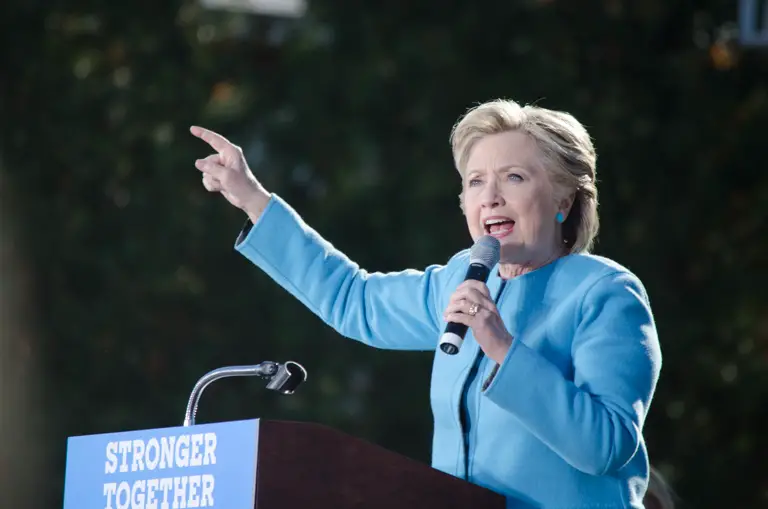
Here made a surprising confession.
Former Secretary of State Hillary Clinton is acknowledging a major mistake from her unsuccessful 2016 presidential campaign against Donald Trump, revisiting an embarrassing incident that raised serious questions about her health and the way her campaign handled public scrutiny.
Nearly ten years after losing the presidential election, Clinton admitted that she ignored her doctor’s advice while suffering from pneumonia, a decision that resulted in one of the most widely discussed moments of her campaign.
The controversy began when Clinton appeared to nearly collapse while leaving a September 11 memorial ceremony in New York City. Video of the incident quickly spread nationwide, fueling questions about her physical condition and whether her campaign had been sufficiently transparent with American voters.
Now, Clinton is admitting that continuing to campaign while sick was a mistake.
Clinton Reveals What Happened Behind the Scenes
During an October 14, 2026, podcast discussion with journalist Kara Swisher, Clinton explained why she continued attending campaign events despite being diagnosed with pneumonia.
According to Clinton, medical professionals recommended that she take approximately five or six days away from campaigning to recover.
However, the former Democratic presidential nominee believed stepping away from the campaign trail was not an option.
At the time, Clinton was facing Trump in an increasingly competitive presidential election. Every public appearance attracted attention, and the pressure to maintain an active campaign schedule was considerable.
Clinton also felt a personal obligation to attend the September 11 memorial because she had represented New York in the U.S. Senate during the 2001 terrorist attacks.
Despite her doctor’s recommendation, she attended the ceremony.
Looking back, Clinton acknowledged that she should have made a different decision.
Her comments provide a rare acknowledgment of poor judgment surrounding an incident that became a defining controversy during the final months of the 2016 election.
The Moment That Sparked Nationwide Concern
On September 11, 2016, Clinton attended a memorial service honoring Americans who lost their lives during the terrorist attacks 15 years earlier.
However, she left the ceremony early after experiencing health difficulties.
As Clinton approached her waiting vehicle, cameras captured her appearing unsteady and requiring assistance from members of her security detail.
The footage circulated rapidly across news outlets and social media, prompting widespread speculation about her health.
Clinton’s campaign later explained that she had been diagnosed with pneumonia and became overheated during the event.
But the explanation did not immediately resolve the controversy.
Questions emerged about why the campaign had not disclosed the diagnosis sooner and whether the American public was receiving complete information about a major presidential candidate’s condition.
Although pneumonia is a treatable illness, the handling of the situation became a separate political issue.
For many observers, the larger concern was not simply that Clinton had become sick. It was how her campaign responded when questions about her health began attracting national attention.
Clinton’s Campaign Faced Criticism Over Transparency
The September 2016 incident placed Clinton’s campaign under additional scrutiny during an already contentious presidential race.
Members of the media criticized her campaign for its delayed disclosure of the pneumonia diagnosis and its initial handling of questions about the episode.
Clinton maintained that she was attempting to fulfill her responsibilities as a presidential candidate.
Nevertheless, the controversy demonstrated how quickly public confidence can be affected when important information is not communicated clearly.
Presidential candidates face significant demands, including lengthy travel schedules, public appearances, debates, and meetings with supporters.
But voters also expect candidates to exercise sound judgment and provide accurate information about matters that could affect their ability to serve.
Clinton’s latest admission acknowledges the personal decision that contributed to the episode, even as questions about the campaign’s response remain part of the historical record.
Hillary Clinton Also Criticizes President Trump
Although Clinton accepted responsibility for ignoring medical advice, she also directed criticism toward President Donald Trump during the conversation.
Clinton questioned Trump’s medical transparency, arguing that he had not provided the public with sufficiently candid information about his health.
Swisher also raised questions about the differences in public scrutiny surrounding Clinton and Trump.
The discussion prompted a sharp response from the White House.
White House spokesman Davis Ingle defended Trump’s physical condition, work schedule, and accessibility, while criticizing Clinton for continuing to discuss the 2016 presidential election.
Ingle maintained that Trump remains in excellent health and is focused on carrying out his responsibilities as president.
The exchange demonstrated that political disagreements between Clinton and Trump continue nearly a decade after their historic presidential showdown.
Trump defeated Clinton in November 2016 by winning the Electoral College, securing a victory that surprised many political analysts and reshaped American politics.
Clinton won the national popular vote, but Trump’s victories in several competitive states secured his path to the White House.
Why Clinton Is Revisiting the Controversy Now
Clinton’s remarks came during a broader conversation about speculation surrounding the health of political candidates.
The discussion included Texas Democratic Senate nominee James Talarico, whose absence from the campaign trail after reporting that he had contracted the flu sparked an unfounded online rumor.
Clinton compared the speculation involving Talarico to the public reaction surrounding her own health during the 2016 election.
She argued that political opponents and commentators can sometimes exaggerate health concerns for political purposes.
However, the controversy surrounding Clinton also raised legitimate questions about the responsibilities candidates have to disclose relevant medical information.
There is an important difference between spreading unsupported rumors and asking reasonable questions about a candidate’s confirmed illness.
That distinction remains relevant as Americans evaluate candidates seeking positions of national leadership.
What Clinton’s Admission Means Nearly Ten Years Later
Clinton’s acknowledgment provides another opportunity to examine the decisions that shaped the 2016 presidential campaign.
Her decision to attend the September 11 ceremony reflected the importance she placed on honoring the victims and maintaining her campaign commitments.
At the same time, her admission demonstrates that she now recognizes the consequences of disregarding professional medical advice.
It remains unclear whether the health controversy significantly affected the final election results.
Trump’s victory involved numerous political factors, including economic concerns, immigration policy, voter dissatisfaction, and the candidates’ competing messages.
Still, the incident became one of the most memorable moments of Clinton’s campaign and intensified an existing debate about public trust in political leadership.
With the 2026 midterm elections approaching, questions involving transparency, accountability, and the judgment of elected officials remain important to American voters.
Clinton’s admission ultimately confirms that she made a decision she now regrets during one of the most consequential presidential elections in recent history.
And while the 2016 election is long over, the controversy surrounding that moment continues to offer lessons about political pressure, public confidence, and the importance of sound judgment from those seeking America’s highest office.

Leave a Reply