
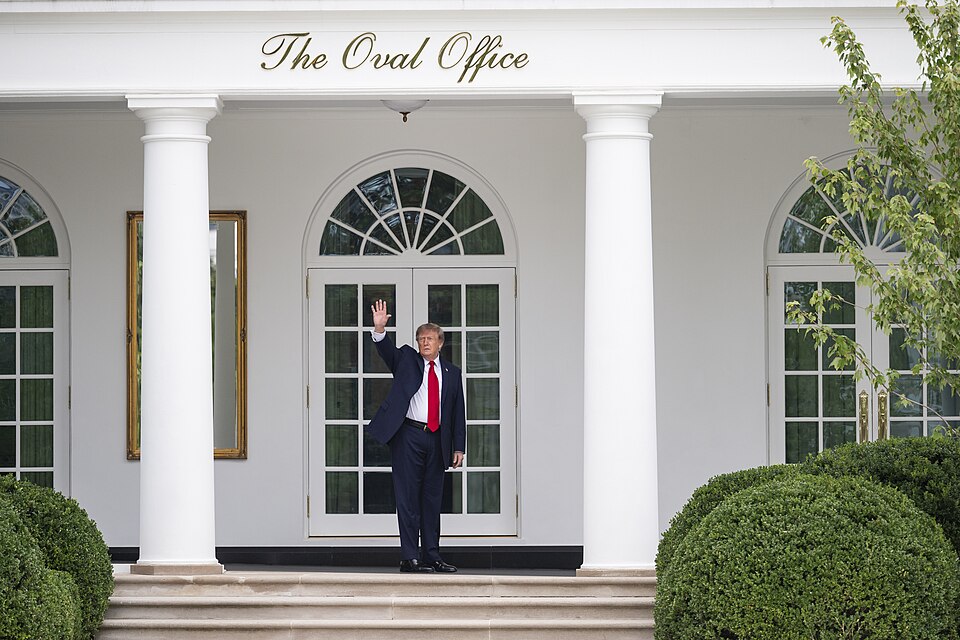
Decades of GOP control is at risk.
Republicans are receiving an unexpected election warning as several traditionally conservative states show signs of becoming competitive ahead of the November 2026 midterm elections.
With President Donald Trump back in the White House, GOP leaders are confronting a political landscape that could threaten decades of Republican victories in states once considered reliable conservative strongholds.
Recent polling and election forecasts suggest Democrats are gaining ground in Kansas, Texas, and South Carolina, raising concerns about whether Republicans can maintain their advantage in the U.S. Senate.
Some of these Republican winning streaks stretch back nearly a century, making the developments particularly significant as voters prepare to head to the polls.
And the warning signs extend beyond Senate races.
Several gubernatorial and congressional contests are also attracting national attention, potentially forcing Republicans to defend territory they previously considered secure.
Kansas Republicans Face a Historic Election Challenge
Kansas has been one of the Republican Party’s most dependable states in U.S. Senate elections.
In fact, Democrats have not won a Senate election in Kansas since 1932, when George McGill secured another term.
That remarkable streak is now facing an unexpected challenge.
Republican Senator Roger Marshall is running against Democrat Adam Hamilton, a Methodist pastor whose campaign has attracted considerable financial support.
Hamilton has outraised Marshall, providing Democrats with additional resources to compete in a state where Republican candidates have historically enjoyed a substantial advantage.
Recent polling suggests the contest is extremely competitive.
The Cook Political Report has classified the Kansas Senate race as a tossup, indicating that neither candidate holds a clear advantage.
For Republicans, the possibility of losing a Senate seat in Kansas is especially concerning because the state has been a cornerstone of the party’s electoral strength for generations.
Although a competitive race does not guarantee a Democratic victory, it could require Republicans to spend additional money and resources defending a seat they would ordinarily expect to win.
Texas Senate Race Delivers Another Warning
Texas is presenting another unexpected challenge for Republican leaders.
Democrats have not won a U.S. Senate election in Texas since 1988, when Lloyd Bentsen secured reelection.
For decades, the state has played a major role in Republican efforts to maintain influence in Washington.
However, the 2026 Senate race is proving considerably more competitive than many political observers anticipated.
Republican Texas Attorney General Ken Paxton is facing Democratic state Representative James Talarico in a closely watched election.
Recent surveys have shown Talarico holding narrow leads in some matchups, although the differences remain small.
The Cook Political Report currently rates the contest as a tossup.
For President Trump and Republican leaders, Texas represents a particularly important state because of its size, electoral influence, and longstanding support for conservative candidates.
A Republican defeat in the Senate contest would end a winning streak stretching back nearly four decades.
Still, Republicans retain significant political advantages throughout Texas, and the outcome remains uncertain.
South Carolina Republicans Encounter Unexpected Competition
Another closely watched election is unfolding in South Carolina, where Republicans are working to preserve decades of success in U.S. Senate races.
The last Democrat to win a Senate election in the state was Fritz Hollings in 1998.
Since then, Republican candidates have maintained control of South Carolina’s Senate seats.
This year, Republican Senator Darline Graham is facing Democrat Annie Andrews in a race that has become more competitive than expected.
Graham was appointed to the Senate following the death of her brother, longtime Senator Lindsey Graham, in July.
Recent polling has shown Graham leading Andrews by relatively narrow margins.
Meanwhile, Andrews has raised substantial campaign funds, giving Democrats additional resources to challenge Republican dominance.
Despite the closer-than-expected polling, election analysts continue to favor the Republican candidate.
The Cook Political Report classifies the race as likely Republican.
That rating suggests Republicans maintain an advantage, even though the contest is receiving considerably more attention than a typical South Carolina Senate election.
Republican Governors Face Political Pressure
The election concerns extend beyond the U.S. Senate.
Several Republican-held governor’s offices are also facing competitive challenges from Democratic candidates.
In Texas, Republican Governor Greg Abbott is seeking another term against Democrat Gina Hinojosa.
Abbott has previously won statewide elections by comfortable margins, but this year’s contest appears closer.
The Cook Political Report currently rates the race as leaning Republican.
Georgia presents another important gubernatorial contest.
Democrat Keisha Lance Bottoms is attempting to become the first Democratic governor elected in Georgia since 1998.
Election analysts consider that race a tossup, demonstrating how competitive the state’s political environment has become.
Meanwhile, Alaska Democrats are attempting to end another longstanding Republican winning streak.
Democratic candidate Jonathan Kreiss-Tompkins is competing in a gubernatorial race that the Cook Political Report currently rates as leaning Democratic.
Florida Republicans are also defending their control of the governor’s office.
Republican Byron Donalds is facing Democrat David Jolly in a contest currently classified as leaning Republican.
Although these races involve different candidates and local political issues, they collectively demonstrate how Democrats are attempting to expand their electoral opportunities beyond traditional battleground states.
Democrats Target Longtime Republican Congressional Districts
Republicans are also facing potential challenges in several congressional districts with lengthy histories of supporting GOP candidates.
Nevada’s 2nd Congressional District is one example.
Democrats have never won the district since its creation in 1983, although its boundaries have changed over time.
This year, Democrat Teresa Benitez-Thompson is challenging Republican Dave Flippo.
While Republicans remain favored, Democrats believe the contest presents an opportunity to compete in territory that has historically supported conservative candidates.
The Cook Political Report rates the Nevada race as likely Republican.
Montana offers another notable example.
Democrat Sam Forstag is competing against Republican Aaron Flint in the state’s 1st Congressional District.
Democrats have not won a U.S. House seat in Montana since 1994.
However, election analysts currently classify the contest as a tossup.
These congressional races could become particularly important if control of the House of Representatives is decided by a narrow margin.
Even a small number of unexpected Democratic victories could have significant consequences for the Republican majority.
Republicans Still Have Opportunities to Make Gains
Despite the concerning developments in conservative states, Republicans are not without opportunities.
The GOP is also competing in states where Democrats have maintained longstanding political advantages.
Michigan is one example.
Republican Mike Rogers is running against Democrat Abdul El-Sayed in a competitive U.S. Senate race.
If Rogers wins, he would become the first Republican elected to the Senate from Michigan since 1994.
Oregon is another state where Republicans are attempting to end a lengthy Democratic winning streak.
Republican Christine Drazan is challenging Democratic Governor Tina Kotek.
A Drazan victory would give Republicans their first gubernatorial election win in Oregon since 1982.
These contests demonstrate that both political parties are attempting to break historical voting patterns.
For Republicans, victories in Democratic-leaning states could potentially offset losses elsewhere.
What These Election Warnings Mean for President Trump
The growing number of competitive elections creates important challenges for President Trump as Republicans work to maintain control of Congress.
The outcome of the November midterms will help determine whether the president can continue advancing his legislative priorities with Republican majorities in Washington.
If Democrats capture enough congressional seats, they could gain greater influence over federal spending, legislative negotiations, and congressional oversight.
Republican leaders must therefore decide where to concentrate campaign resources during the final weeks before Election Day.
Competitive races in historically Republican states could force the party to devote money and attention to contests that were previously considered relatively secure.
At the same time, Republicans are attempting to maintain support among voters concerned about the economy, inflation, immigration, taxes, and federal spending.
These issues could play an important role in determining whether undecided voters support Republican incumbents or choose Democratic challengers.
However, polling provides only a snapshot of public opinion.
Voter turnout, campaign spending, local concerns, and developments during the final weeks of the election could significantly affect the results.
The 2026 Midterm Elections Could Break Decades-Old Political Streaks
The most important takeaway for Republicans is that several longstanding electoral advantages are facing unusually competitive challenges.
Kansas has not elected a Democratic senator since 1932.
Texas has not elected one since 1988.
South Carolina has not elected one since 1998.
Those decades of Republican success demonstrate just how significant a Democratic victory in any of these states would be.
Meanwhile, competitive governor’s races and congressional contests could further reshape the political landscape.
Republicans still maintain advantages in several of these elections, and Democrats face substantial obstacles in traditionally conservative territory.
Nevertheless, the tightening contests suggest that neither party can afford to take historically dependable voters for granted.
With Election Day scheduled for November 3, the final weeks of campaigning will be critical.
For President Trump and Republican leaders, the challenge is clear: protect the party’s traditional strongholds while remaining competitive in states where Republicans are attempting to make gains of their own.
Whether the GOP can preserve its decades-long winning streaks will ultimately depend on the voters who turn out in November.









Leave a Reply