
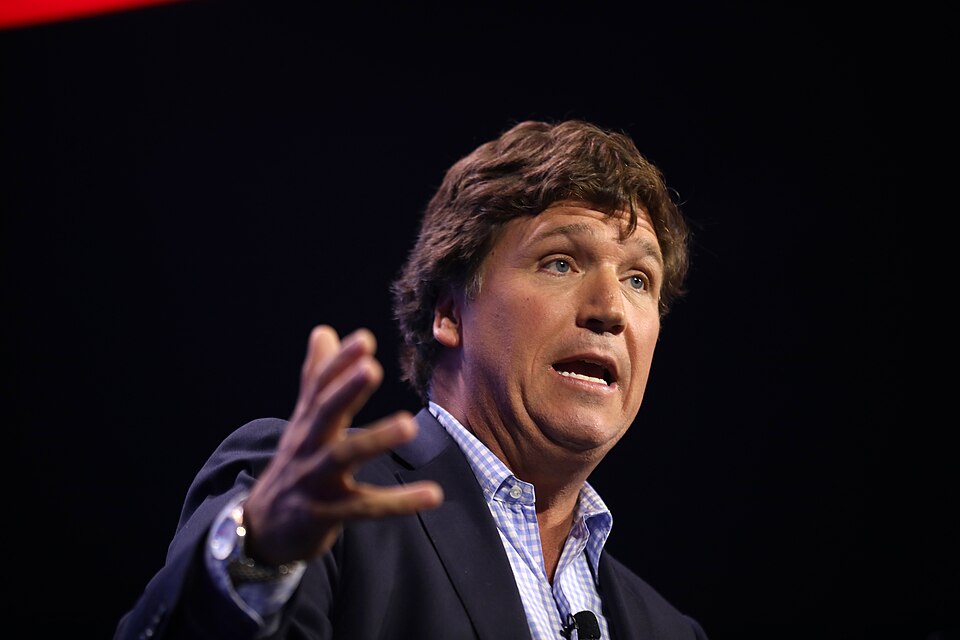
Here’s what happened.
A surprising disagreement involving Tucker Carlson is creating fresh political complications for President Donald Trump’s administration just days before the 2026 midterm elections.
The prominent conservative commentator has taken aim at a Republican Senate candidate backed by the Trump administration, leaving Vice President JD Vance facing uncomfortable questions about one of his longtime political allies.
At the center of the controversy is Michigan’s closely watched Senate race between Republican Mike Rogers and Democrat Abdul El-Sayed.
Carlson’s criticism of Rogers has attracted particular attention because the commentator has shockingly expressed a more favorable opinion of El-Sayed’s foreign policy positions.
And with Election Day approaching, the dispute is highlighting disagreements within the conservative movement over America’s involvement in overseas conflicts.
Tucker Carlson Takes Aim at Trump-Backed Republican
The controversy intensified after Carlson publicly criticized Rogers, a former Republican congressman and chairman of the House Intelligence Committee.
Carlson has strongly opposed American involvement in the war in Iran and has repeatedly questioned Washington’s approach to foreign policy.
Those disagreements appear to be a major reason for his opposition to Rogers.
During commentary about Michigan’s Senate race, Carlson argued that El-Sayed held better foreign policy positions than his Republican opponent.
His remarks quickly became a political talking point.
El-Sayed’s campaign subsequently released an advertisement featuring Carlson’s criticism of Rogers, giving the Democratic candidate an opportunity to showcase opposition from an influential conservative media figure.
The development was unusual because Carlson has maintained close relationships with prominent Republicans, including Vice President Vance.
While Carlson’s criticism does not necessarily represent an endorsement of El-Sayed’s broader political agenda, it has provided Democrats with an unexpected campaign message.
JD Vance Faces Questions About Carlson’s Remarks
The disagreement became a direct issue for the Trump administration on Tuesday, October 27.
Vance was speaking with reporters before traveling to Michigan to campaign for Rogers when a journalist asked whether Carlson’s criticism could affect the Senate election.
Rather than speculate about the outcome, Vance defended Rogers and emphasized why he believed the Republican candidate deserved support.
According to Mediaite, the vice president described Rogers as a decent individual who would serve the public responsibly in Washington.
Vance also sharply criticized El-Sayed, accusing the Democrat of engaging in divisive racial rhetoric.
The vice president’s accusations were forceful, although they represented his characterization of the Democratic candidate rather than an independently established finding.
His response underscored the administration’s continued commitment to Rogers despite Carlson’s objections.
It also demonstrated the difficult position Vance faces when prominent conservative commentators publicly disagree with Republican candidates.
Carlson’s Friendship With Vance Adds Another Complication
The controversy has attracted additional attention because Carlson and Vance have maintained a personal relationship for years.
Carlson was among the influential conservative figures who encouraged Trump to choose Vance as his running mate during the 2024 presidential election.
However, their political positions have not always remained aligned.
Carlson has become increasingly critical of the Trump administration’s foreign policy decisions, particularly concerning military involvement overseas.
At times, those disagreements have produced unusually harsh criticism of the president.
Vance previously addressed the situation during a September White House briefing.
The vice president acknowledged that Carlson was a personal friend while making clear that they disagreed on important political matters.
Vance explained that he did not believe political disagreements should automatically destroy personal friendships.
That position has allowed him to maintain a relationship with Carlson while publicly defending the administration’s policies and political allies.
However, the Michigan Senate controversy has once again placed that relationship under a political spotlight.
Michigan Senate Race Raises Stakes for Republicans
The timing of Carlson’s criticism is particularly important.
Michigan is among the states receiving significant attention as Republicans and Democrats compete for control of Congress in the November 3 midterm elections.
Rogers and El-Sayed represent sharply different approaches to several major national issues, including economic policy, healthcare, and foreign affairs.
Rogers brings extensive national security experience from his years in Congress, while El-Sayed has emphasized progressive policy priorities.
For the Trump administration, the outcome carries consequences beyond Michigan.
The results of Senate elections will help determine how effectively the president can pursue his legislative agenda during the remaining two years of his term.
A Republican victory in Michigan would strengthen the party’s position in that effort.
A Democratic victory would provide the opposition with an important political gain.
Against that backdrop, Carlson’s comments have introduced another complication during the final stretch of campaigning.
Foreign Policy Disagreements Expose Conservative Divisions
Beyond the immediate election, the controversy illustrates an ongoing disagreement about the direction of American foreign policy.
Within conservative politics, debates continue over military intervention, international alliances, and how Washington should balance domestic priorities with overseas commitments.
Carlson has consistently argued against deeper involvement in foreign wars.
Other Republicans have supported a more assertive international posture, maintaining that American military strength and international partnerships remain essential to national security.
Those competing views have occasionally produced disagreements between figures who otherwise share similar political goals.
The Michigan dispute has brought those differences into the open.
It also illustrates how a prominent commentator’s criticism can become campaign material for a candidate from the opposing party.
However, there is no clear evidence yet that Carlson’s statements will change the outcome of the Senate race.
What Happens Next for Trump and Republicans?
With Election Day just around the corner, Vance and other leading Republicans are continuing their efforts to rally support for Rogers.
The vice president campaigned in Howell Township on Tuesday, emphasizing the importance of Michigan to the national Republican agenda.
Carlson, meanwhile, has shown little hesitation about criticizing candidates whose foreign policy positions differ from his own.
That leaves Republicans navigating a disagreement involving one of the country’s most recognizable conservative commentators.
The situation also raises questions about whether disagreements over foreign policy will continue to influence Republican politics after the midterms.
For now, the Trump administration remains focused on helping Rogers secure victory in Michigan.
Whether Carlson’s criticism ultimately affects the election remains uncertain, but the controversy has already demonstrated how divisions among influential conservatives can complicate a closely contested campaign.
With November 3 approaching, Michigan voters will soon determine which candidate represents their state in the U.S. Senate.

Leave a Reply