
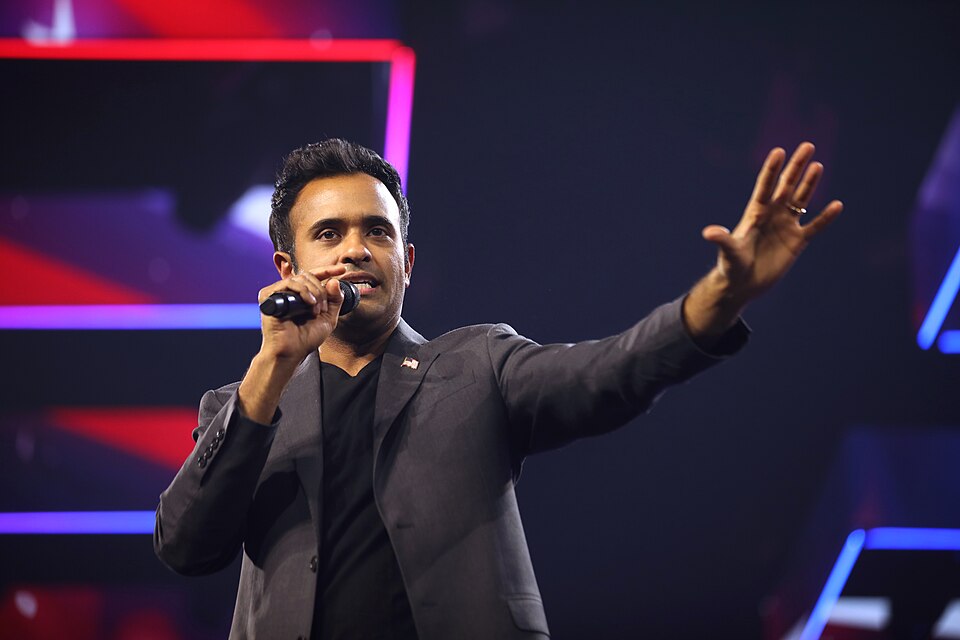
This was surprising to see.
President Donald Trump’s endorsed candidate for Ohio governor is facing a growing campaign controversy after multiple businesses canceled scheduled Republican events, creating new headaches just days before the November 3 election.
Republican gubernatorial nominee Vivek Ramaswamy, one of Trump’s most recognizable political allies, is encountering resistance from Ohio establishments that had been expected to welcome him during the final stretch of his campaign.
The cancellations follow a controversial political advertisement targeting Democratic opponent Amy Acton, whose personal family history has unexpectedly become a major issue in the governor’s race.
According to Newsweek, the backlash has prompted at least two Ohio businesses to withdraw from previously planned campaign appearances.
The situation raises questions about political advertising, the role of private businesses in elections, and whether the controversy could affect Republican efforts to keep control of Ohio’s governor’s office.
Ohio Venues Cancel Events Featuring Vivek Ramaswamy
The controversy has already disrupted campaign plans in multiple Ohio communities.
Old Dog Ale House & Brewery in Delaware canceled a Friday event that was scheduled to feature Ramaswamy.
Another establishment, Elliot’s Wood Fired Kitchen in Newark, declined to host a Republican campaign appearance planned for Tuesday.
The Ohio Republican Party has indicated that it intends to reschedule the affected appearances, allowing the campaign to continue reaching voters at alternative locations.
The cancellations do not constitute a formal statewide blacklist. However, they represent an unusual challenge for a major-party nominee during the critical final days of an election.
Some businesses that previously hosted Republican campaign appearances have also reportedly received negative online reviews.
That development has created an additional concern for establishments deciding whether to host political events.
For business owners, campaign appearances can attract attention and customers. But highly publicized political controversies can also bring unwanted criticism.
Controversial Campaign Advertisement Triggers Backlash
The dispute centers on a political advertisement produced by Ramaswamy’s campaign featuring Donna Arthur, the estranged mother of Democratic candidate Amy Acton.
In the video, Arthur challenges her daughter’s statements about her childhood and questions her credibility.
However, the advertisement quickly faced criticism because of Acton’s publicly documented family history.
Acton has described experiencing serious abuse and instability during her childhood. She and her brother were removed from their mother’s custody after their stepfather was accused of sexually abusing Acton when she was 12.
The family history has drawn renewed attention because Arthur’s statements in the advertisement conflict with portions of Acton’s account.
According to reporting from the Associated Press, Ramaswamy acknowledged that his campaign was responsible for the advertisement and defended its publication.
He argued that questions about Acton’s credibility were legitimate campaign issues.
Critics, including several Republicans, disagreed with the decision to involve Acton’s estranged mother in a political advertisement.
The disagreement has transformed what might otherwise have been an ordinary campaign dispute into a much larger controversy.
Trump Defends Ramaswamy as Republicans Disagree
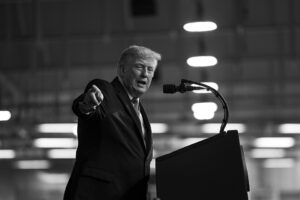
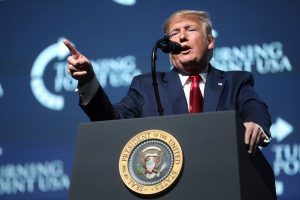
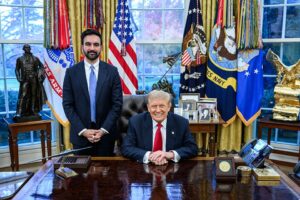
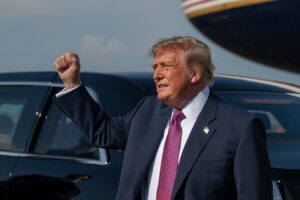
President Trump has publicly supported Ramaswamy despite the criticism surrounding the advertisement.
Trump described the campaign video as powerful and questioned demands that it be withdrawn.
Vice President JD Vance has also defended Ramaswamy.
However, several prominent Republicans have taken a different position.
Ohio Governor Mike DeWine criticized the advertisement and urged the campaign to stop airing it.
Former South Carolina Governor Nikki Haley also condemned Ramaswamy’s handling of the controversy.
The disagreement has exposed divisions within Republican political circles during an important election.
Ramaswamy, who competed for the 2024 Republican presidential nomination before endorsing Trump, has established himself as a prominent conservative political figure.
His campaign has promoted economic growth, education reform, tax policies, and government accountability.
Yet the ongoing controversy has shifted some public attention away from those policy proposals and toward questions about campaign conduct.
Why the Cancellations Matter Before Election Day
The timing of the canceled appearances makes the controversy especially significant.
With the November 3 election approaching, candidates have limited opportunities to appear before voters, encourage supporters to cast ballots, and make their closing arguments.
Political campaigns frequently depend on local businesses, community spaces, and restaurants to host rallies and smaller campaign gatherings.
When a venue withdraws, organizers must find another location, notify supporters, and adjust their schedules.
These challenges do not necessarily mean a candidate is losing voter support.
Nevertheless, they can complicate campaign operations during the final days of a competitive statewide election.
The situation also raises a broader question about the relationship between politics and private businesses.
Business owners generally have the freedom to decide which events they host, while political candidates remain free to seek alternative locations.
For Ohio voters, the controversy presents another issue to consider alongside the candidates’ proposals on jobs, taxes, education, and public spending.
Ohio Governor’s Race Draws National Attention
The race between Ramaswamy and Acton has become an important political contest heading into the 2026 midterm elections.
Republicans are attempting to retain control of the governor’s office as Governor DeWine approaches the end of his term.
Acton, a former director of the Ohio Department of Health, is campaigning to return the office to Democratic control.
The election has drawn national attention because of Ramaswamy’s relationship with Trump and the broader political implications of the contest.
The controversy has also generated criticism from major Ohio newspapers.
The Plain Dealer endorsed Acton after criticizing Ramaswamy’s campaign advertisement.
Despite the negative attention, Ramaswamy continues campaigning and has defended his decision to challenge his opponent’s credibility.
His campaign has also argued that Acton should engage in more direct debate over the issues affecting Ohio residents.
Whether voters agree with that position or believe the advertisement went too far remains an important unanswered question.
What Happens Next for Trump’s Endorsed Candidate?
The canceled campaign appearances represent another obstacle for Ramaswamy as Ohio’s gubernatorial election enters its final days.
However, there is no indication that the cancellations prevent him from continuing his campaign or appearing at other locations across the state.
Republican organizers are working to maintain their campaign schedule, while Democrats are using the controversy to criticize Ramaswamy’s judgment.
For both candidates, the central challenge remains convincing Ohio voters that their plans offer the strongest path forward.
The controversy has created considerable attention, but its actual effect on the election remains uncertain.
With Election Day just around the corner, Ohio residents will ultimately decide whether Ramaswamy becomes the state’s next Republican governor or Acton delivers a Democratic victory.
The November 3 election will reveal whether this controversy becomes a defining moment in the race or fades behind the economic and policy concerns that matter to Ohio voters.
Leave a Reply