
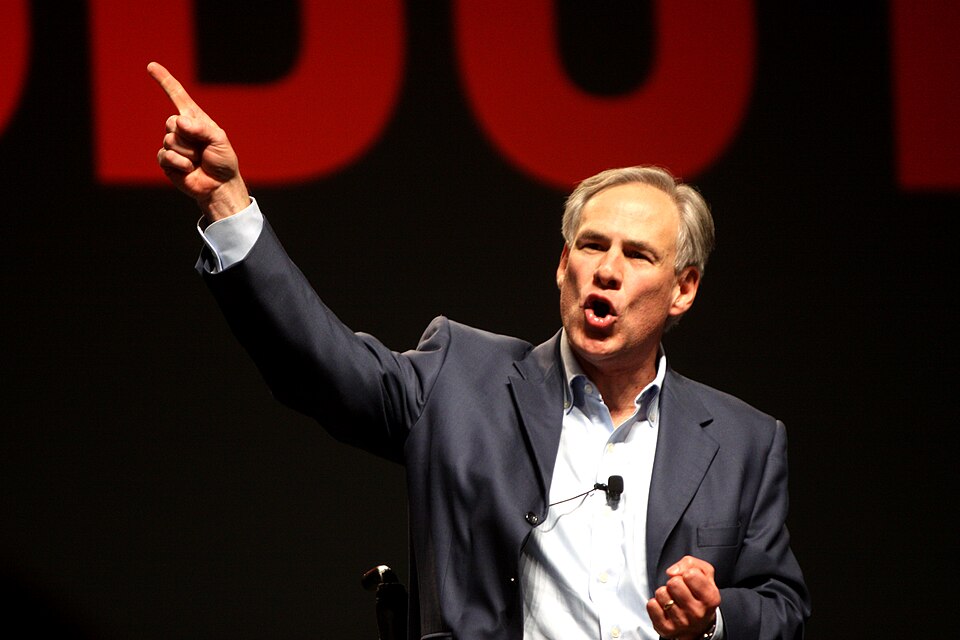
Trump didn’t hold back.
President Donald Trump is taking aim at Texas Governor Greg Abbott after a stunning Republican defeat in the 2026 midterm elections, accusing his longtime political ally of abandoning the conservative principles that helped him rise to power.
The president’s sharp criticism came after Abbott lost his reelection bid to Democrat Gina Hinojosa, ending more than three decades of Republican control of the Texas governor’s office.
For Republicans, the unexpected result represents far more than the defeat of a single governor. It raises serious questions about the future of the GOP in one of America’s most important conservative strongholds.
And Trump’s response suggests that even his closest political allies are not immune from criticism when election results fall short of expectations.
Trump Blames Greg Abbott for Texas Election Defeat
Following Tuesday’s election, Trump delivered a blistering assessment of Abbott’s defeat on his Truth Social platform.
The president accused Abbott of becoming a “RINO,” an abbreviation for “Republican in Name Only,” commonly used to describe politicians viewed as insufficiently conservative.
Trump claimed the Texas governor had changed his political approach during the final six months of his time in office.
According to the president, that change played a significant role in Abbott’s defeat.
The remarks were particularly striking because Trump had strongly supported Abbott earlier in the election cycle.
Rather than blaming national political conditions or Democratic campaign spending, Trump placed responsibility directly on the outgoing Republican governor.
His comments immediately drew attention as Republicans across the country began examining what went wrong during the midterm elections.
Trump’s Sudden Reversal Raises Questions
Perhaps the most surprising aspect of Trump’s criticism was how dramatically his position on Abbott changed in a matter of hours.
Earlier on Election Day, Trump had publicly encouraged Texans to support the Republican governor.
The president described Abbott as a respected leader who had worked to strengthen border security, reduce regulations, support American energy production, and defend conservative priorities.
Trump had also praised Abbott’s record on immigration enforcement, an issue that helped establish the governor as a nationally recognized Republican figure.
Throughout their political relationship, the two leaders frequently supported similar policies involving illegal immigration, federal authority, and economic development.
Abbott also backed Republican efforts to redraw Texas congressional districts in hopes of improving the party’s representation in Washington.
That history made Trump’s postelection criticism especially significant.
The president’s comments demonstrated how quickly political alliances can become strained following a major electoral setback.
Democrats Deliver Historic Upset in Texas Governor’s Race
Abbott’s defeat marks a turning point in Texas politics.
Democratic state Representative Gina Hinojosa defeated the three-term Republican governor in the November 3 election, becoming the first Democrat elected to the position since Ann Richards.
Hinojosa will also become Texas’ first Latina governor when she takes office in January 2027.
The outcome was particularly remarkable because Abbott entered the election with substantial financial resources and a history of convincing statewide victories.
He had previously won three consecutive gubernatorial elections and was seeking an unprecedented fourth term.
Despite those advantages, Hinojosa built a campaign focused on concerns about household expenses, public education, government accountability, and the influence of major corporations.
Her campaign also challenged Abbott’s education policies, including his support for private school vouchers.
The election took place amid broader voter dissatisfaction with the political and economic direction of the country.
For Texas Republicans, losing the governor’s office represents a major setback in a state that has played a central role in conservative national politics for decades.
Trump and Abbott Had Already Disagreed on Major Policy
Although Trump and Abbott maintained a largely cooperative political relationship, disagreements had begun emerging before the election.
One notable dispute involved the expansion of large data centers across Texas.
Trump has promoted investment in artificial intelligence and technology infrastructure as part of his administration’s broader economic agenda.
Abbott, however, moved to pause certain data center approvals while officials examined concerns involving electricity consumption and water availability.
The disagreement highlighted competing priorities between encouraging technological investment and protecting local resources.
Texas has experienced substantial growth in technology infrastructure, creating questions about how rapidly expanding facilities could affect energy supplies and public utilities.
For residents already concerned about electricity prices and infrastructure reliability, those issues became part of the broader political debate.
Still, Trump did not establish that this particular disagreement caused Abbott’s defeat.
His criticism instead focused on what he characterized as the governor’s broader departure from conservative politics.
Republican Losses Extend Beyond Texas Governor’s Race
The defeat of Abbott was part of a much larger Democratic victory in Texas.
Democrat James Talarico also defeated Republican Ken Paxton in the closely watched U.S. Senate election.
Democrats additionally made major gains in other statewide contests, signaling widespread changes in voter preferences.
The election results have raised concerns among Republicans about the party’s ability to maintain its longstanding advantages in Texas.
For years, Republican candidates benefited from strong support in rural communities, suburban areas, and conservative regions throughout the state.
However, the 2026 election revealed that those advantages were not enough to guarantee victory.
The results have prompted questions about Republican campaign strategies, candidate appeal, voter turnout, and the importance of economic concerns.
Texas remains especially important because of its large population, substantial number of electoral votes, and influence over national policy.
Any sustained change in the state’s political direction could have major consequences for future presidential and congressional elections.
What Went Wrong for Texas Republicans?
Trump has offered one explanation for Abbott’s loss, arguing that the governor moved away from the conservative approach that previously brought him success.
Other factors may also have contributed to the election outcome.
Hinojosa focused heavily on affordability and public education while presenting herself as an alternative to a Republican administration that had controlled the governor’s office for more than three decades.
Abbott, meanwhile, faced the challenge of defending his record at a time when many voters were dissatisfied with the cost of living.
Even well-established incumbents can struggle when voters believe their financial circumstances are not improving.
The Republican Party also faced broader political headwinds nationally.
Democrats captured control of Congress in the midterm elections, creating new challenges for the Trump administration.
Trump has argued that his personal popularity does not necessarily translate into victories for other Republican candidates.
He has also pointed to the difficulty Republicans face when his name is not on the ballot.
Whether those explanations fully account for the party’s losses remains a subject of debate.
For Republican strategists, the Texas election provides a significant example of how economic frustrations and changing voter priorities can affect even traditionally conservative states.
Texas Election Results Could Shape Trump’s Remaining Presidency
The political consequences of Abbott’s defeat could extend well beyond Texas.
With Democrats gaining control of both chambers of Congress, Trump faces a more difficult legislative environment during the final two years of his presidency.
The administration may encounter greater resistance on spending proposals, immigration legislation, government reforms, and other major priorities.
Meanwhile, Republicans will need to develop a strategy for regaining congressional seats and rebuilding support before the 2028 presidential election.
The loss of the Texas governorship adds another challenge to that effort.
Texas Republicans must now prepare to work under a Democratic governor while determining how to regain statewide voter support.
For conservatives concerned about border security, government spending, taxation, and economic growth, the direction of Texas politics will remain an important issue.
Hinojosa’s administration will face its own challenges, particularly if Republican lawmakers resist portions of her legislative agenda.
Her ability to deliver on campaign promises will depend partly on cooperation with the state Legislature.
Trump’s Abbott Criticism Signals Larger Republican Reckoning
Trump’s public criticism of Abbott illustrates the growing pressure facing Republican leaders after the 2026 midterm elections.
The president had spent years praising Abbott’s leadership, particularly his policies on immigration and border enforcement.
Yet the governor’s defeat prompted Trump to question his political judgment and conservative credentials.
The disagreement highlights a broader debate within the Republican Party over how candidates should respond to changing voter concerns without abandoning the principles that define their political platform.
Some Republicans may conclude that the party needs to place greater emphasis on economic affordability and everyday household expenses.
Others may argue that candidates must maintain a more consistent conservative message to motivate their traditional supporters.
For now, Trump’s reaction has made one thing clear: Republican losses are likely to produce substantial disagreements over political strategy and accountability.
Abbott’s defeat is already one of the most consequential Republican setbacks of the 2026 midterm elections, and Trump’s criticism has turned the Texas governor’s race into a larger debate about the future of conservative leadership.
As Republicans begin preparing for the next election cycle, the central question is whether they can rebuild support among dissatisfied voters while maintaining the policies and political identity that helped make Texas a Republican stronghold for more than three decades.






Leave a Reply