
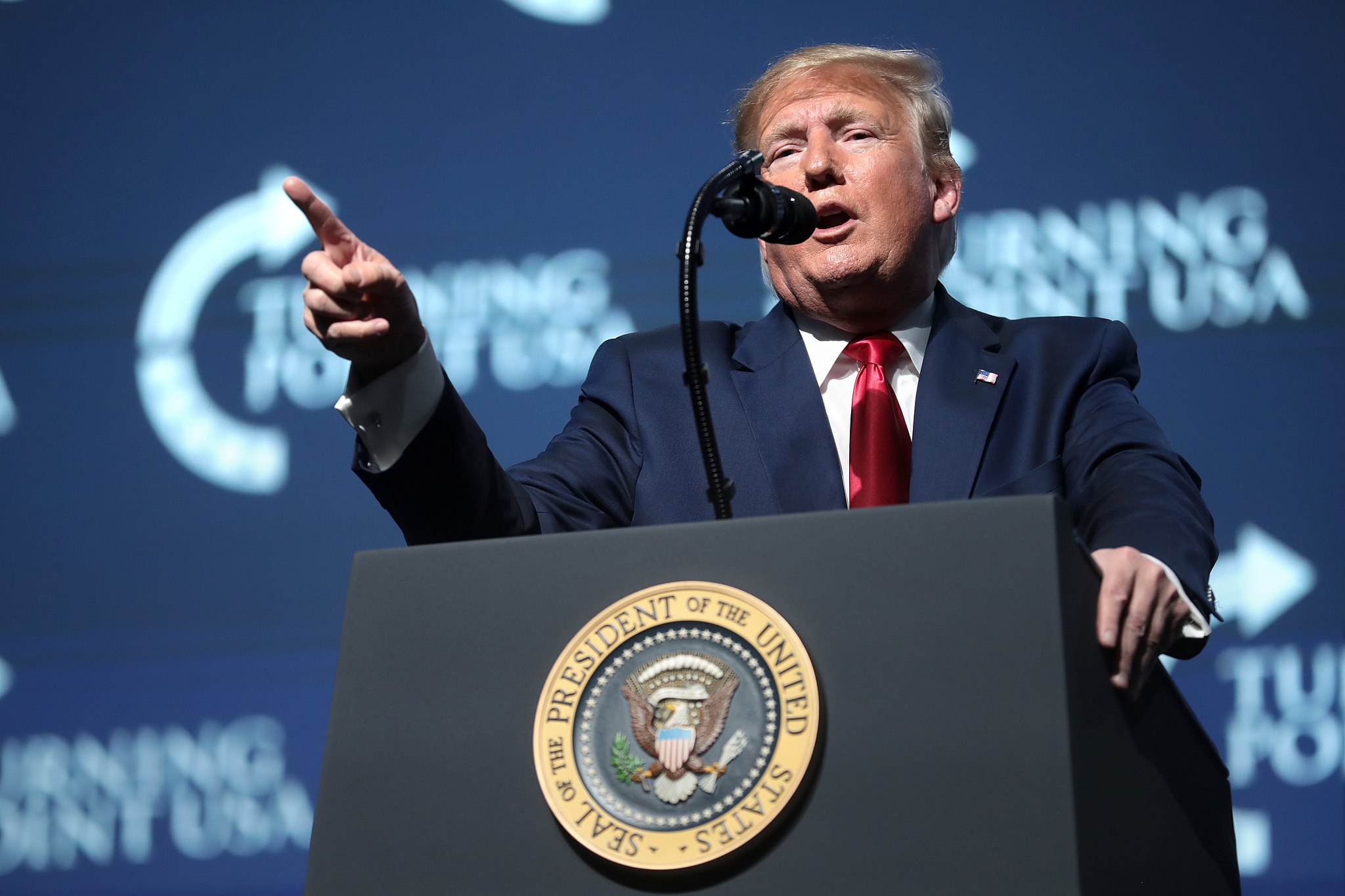
Here’s what Trump is thinking.
President Donald Trump has revealed that he is prepared to use his presidential pardon powers to protect members of his administration and political allies if Democrats regain control of Congress in the November 3 midterm elections.
The president’s comments have raised new questions about how far he might go to protect those who served alongside him, including billionaire entrepreneur Elon Musk and other individuals connected to his administration.
With Republicans fighting to maintain control of Congress, Trump is already considering how to respond if Democrats launch investigations into his administration.
And his latest remarks suggest that presidential pardons could become an important part of that strategy.
Trump Makes Major Announcement About Presidential Pardons
During a November 2 appearance on the Pod Force One podcast with New York Post columnist Miranda Devine, Trump discussed the possibility of issuing preemptive pardons to members of his administration.
The president was asked whether he would consider protecting officials and political allies from potential federal prosecutions if Democrats regained congressional power.
Trump did not dismiss the idea.
“I would if I needed to. Sure,” the president responded.
When the discussion turned to whether those protections could extend to people who had worked for him, Trump indicated that he would be willing to take action.
His remarks come amid growing concerns within Republican circles that a Democratic-controlled Congress could pursue extensive investigations into the Trump administration.
However, Trump has not announced any new preemptive pardons, and no official list of potential recipients has been released.
Elon Musk Could Be Among Those Protected
One of the most recognizable names mentioned during the interview was Elon Musk, the billionaire businessman who played a prominent role in the Trump administration’s government efficiency efforts.
Musk helped lead the Department of Government Efficiency, commonly known as DOGE, which focused on reducing federal spending, identifying waste, and restructuring government operations.
The initiative drew substantial criticism from Democratic lawmakers, particularly over its approach to federal agencies, government employees, and taxpayer-funded programs.
During the podcast, Devine discussed the possibility of Democrats pursuing investigations involving Musk and his business interests.
Trump appeared doubtful that some of the more extreme proposals discussed by his political opponents would become reality.
Nevertheless, he made clear that he would consider protecting Musk and others if necessary.
The president also discussed concerns involving Edward Coristine, a former DOGE staffer who attracted national attention during the administration’s government reform efforts.
While neither Musk nor Coristine has been granted a pardon as a result of these comments, the discussion demonstrated Trump’s willingness to consider using his executive authority to defend political allies.
Trump Brings Up Joe Biden’s Controversial Pardons
Trump also pointed to former President Joe Biden’s use of presidential pardons before leaving office in January 2025.
Biden issued preemptive pardons to several individuals who had faced criticism from Trump and other Republicans.
Among those receiving protections were former White House medical adviser Dr. Anthony Fauci, retired Gen. Mark Milley, and members and staff of the congressional committee that investigated the January 6, 2021, Capitol attack.
Biden also issued pardons covering several members of his own family.
The former president defended those decisions by arguing that the recipients could face politically motivated investigations or prosecutions.
Republicans criticized the pardons, questioning whether such extensive protections were appropriate.
Trump has now cited those same decisions while discussing whether to grant similar protections to individuals associated with his own administration.
The comparison has brought renewed attention to the constitutional authority presidents possess when granting federal pardons.
It has also raised questions about whether preemptive pardons could become more common when presidential administrations face the prospect of investigations by political opponents.
Democrats Prepare For Possible Congressional Investigations
The president’s warning comes as Democratic lawmakers discuss how they might use congressional investigative authority if their party wins control of the House or Senate.
Michigan Democratic Sen. Elissa Slotkin has expressed support for pursuing accountability involving individuals who helped implement Trump administration policies.
She has argued that future officials should understand the potential consequences of participating in government conduct that could warrant legal scrutiny.
Maryland Democratic Rep. Jamie Raskin has also discussed investigating allegations of corruption involving the administration.
If Democrats regain control of the House, Raskin could play a significant role in determining the direction of congressional oversight through the House Judiciary Committee.
Democrats maintain that such investigations are necessary to ensure government accountability and determine whether federal laws have been violated.
Trump and his allies have raised concerns that the investigations could instead become politically motivated efforts targeting Republican officials.
The disagreement reflects a broader debate in Washington over the balance between legitimate congressional oversight and partisan investigations.
Can Trump Legally Issue Pardons Before Charges Are Filed?
The Constitution grants the president broad authority to issue pardons for federal offenses.
Importantly, a person does not necessarily have to be charged with a crime before receiving a presidential pardon.
This means Trump could potentially grant preemptive pardons covering certain past federal conduct, even if no criminal charges had been filed.
However, presidential pardons have significant limitations.
They do not prevent state-level prosecutions, eliminate civil legal liability, or automatically stop congressional investigations.
Presidential pardons also cannot protect individuals from prosecution for future crimes.
These restrictions mean that even sweeping pardons would not necessarily end every legal or political challenge facing members of an administration.
Furthermore, Congress itself cannot simply order federal criminal prosecutions. Congressional committees can investigate possible misconduct, but criminal prosecution decisions generally belong to federal or state law enforcement authorities.
That distinction could become especially important if Democrats regain congressional control.
Trump Points To His January 6 Pardons
During the conversation, Trump also referenced his decision to pardon approximately 1,500 people facing federal charges or convictions connected to the January 6, 2021, Capitol attack.
Those pardons were issued when Trump returned to the White House in January 2025.
The decision generated considerable controversy, with supporters arguing that some defendants had received excessive punishment and critics maintaining that the pardons undermined accountability for the events at the Capitol.
Trump cited his previous use of presidential clemency as an example of his willingness to exercise the power when he believes it is justified.
The president’s latest comments suggest he could take a similarly expansive approach if he concludes that members of his administration face politically motivated federal prosecutions.
Still, any future pardons would depend on decisions Trump has not yet formally announced.
Midterm Elections Could Change The Balance Of Power
The timing of Trump’s remarks is significant.
Americans are preparing to vote in the November 3, 2026, midterm elections, which will determine control of the House of Representatives and Senate.
Republicans are seeking to preserve their congressional majorities, while Democrats hope to gain enough seats to challenge the president’s agenda and expand oversight of his administration.
A Democratic victory in the House could give the party control of congressional committees, including the power to issue subpoenas, conduct hearings, and investigate executive branch activities.
Republican control, meanwhile, would allow GOP lawmakers to continue setting the congressional agenda and directing committee investigations.
Trump has expressed confidence in Republican candidates and questioned polling suggesting Democrats could make significant gains.
The election results will help determine whether the president faces a more confrontational Congress during the remainder of his term.
That political outcome could also influence whether Trump eventually moves forward with the preemptive pardons he discussed.
What Happens Next For Trump And His Allies?
For now, the president has made clear that he is willing to consider pardons, but he has not announced a sweeping clemency plan.
There is no confirmed timetable for issuing additional pardons, and the administration has not publicly identified everyone who might qualify for such protection.
Supporters of Trump’s position argue that presidential clemency could help protect government officials from politically motivated prosecutions.
Critics contend that broad preemptive pardons could weaken accountability if they are used to shield individuals from legitimate federal investigations.
The issue also places Biden’s previous pardons back in the political spotlight, as both administrations have raised concerns about potential prosecutions by political opponents.
Ultimately, the debate involves more than the president’s personal allies.
It raises larger questions about executive authority, the justice system, congressional oversight, and the limits of presidential power.
With the midterm elections approaching, Trump is preparing for the possibility of a major shift in Washington.
And if Democrats regain control of Congress, the president’s willingness to issue preemptive pardons could become one of the next major political battles facing his administration.






Leave a Reply