
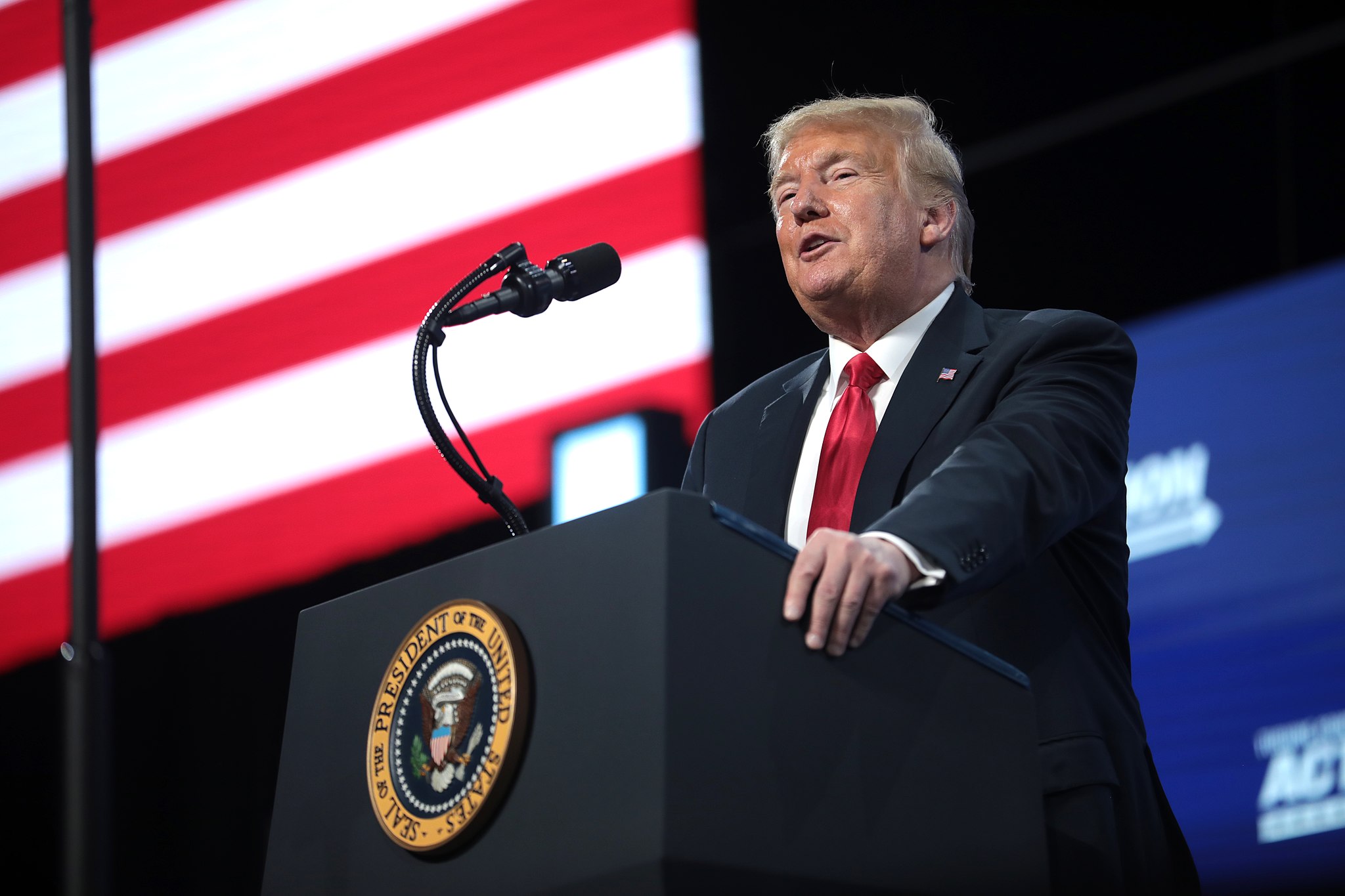
Blaming President Trump is never a good idea.
Republican Steve Hilton is pointing to President Donald Trump’s unpopularity in California as a major factor behind his devastating defeat in the state’s 2026 gubernatorial election.
Hilton, a former Fox News host who entered the race promising to shake up California’s Democratic-controlled government, lost decisively to former Biden administration official Xavier Becerra on Tuesday.
The defeat represents another setback for Republicans following a difficult midterm election cycle and raises fresh questions about Trump’s influence on candidates running in traditionally Democratic states.
Although Hilton campaigned on lowering taxes, reducing government bureaucracy, and addressing California’s soaring cost of living, he ultimately struggled to separate his political message from the president’s reputation among California voters.
Now, the Republican candidate is acknowledging that his association with Trump created challenges his campaign could not overcome.
Hilton Admits Trump’s Unpopularity Hurt His Campaign
Hilton entered the California governor’s race with Trump’s endorsement, a significant advantage among conservative voters who strongly support the president.
However, winning over California’s broader electorate proved considerably more difficult.
Trump remains deeply unpopular among many Democratic and independent voters in the state, giving Becerra an opportunity to tie Hilton directly to the president’s administration.
That strategy became a central part of the Democratic campaign.
Rather than allowing Hilton to focus exclusively on state government, Becerra repeatedly highlighted his Republican opponent’s relationship with Trump.
Hilton had recognized this vulnerability well before Election Day.
During the campaign, he attempted to appeal to Californians who opposed Trump but were frustrated with the state’s high living costs and Democratic leadership.
His message was that voters could disagree with the president while still supporting a Republican governor.
Despite those efforts, the election results demonstrated just how difficult that argument was to make in one of America’s most Democratic states.
Trump’s unpopularity was not necessarily the only reason Hilton lost, but it became a significant obstacle in his attempt to expand Republican support.
Democrats Deliver Crushing Defeat In California
Becerra defeated Hilton by a substantial margin in the November 3 election.
With millions of ballots counted, Becerra held approximately 64% of the vote, compared with roughly 36% for Hilton.
The victory ensures that Democrats will retain control of California’s governor’s office after outgoing Democratic Governor Gavin Newsom completes his term.
Becerra previously served as California’s attorney general and as secretary of Health and Human Services under former President Joe Biden.
Throughout the campaign, he presented himself as an experienced public official prepared to challenge Trump administration policies.
Hilton offered voters a different vision.
He argued that California needed fundamental changes after years of Democratic leadership, particularly when it came to housing affordability, taxation, homelessness, and the cost of everyday necessities.
However, those arguments were not enough to overcome Becerra’s advantage.
The outcome reinforced the considerable difficulties Republicans face when competing for statewide office in California.
Hilton Promised Major Changes To California Government
One of Hilton’s central campaign themes was making California more affordable for working families, retirees, and small-business owners.
He repeatedly criticized the state’s high cost of living and argued that government policies had made it increasingly difficult for ordinary residents to get ahead.
His proposals included reducing taxes, cutting unnecessary regulations, lowering gasoline prices, and restructuring government agencies.
One of his most ambitious promises involved eliminating California’s Department of Motor Vehicles and replacing its operations with a more efficient system.
Hilton also pledged to bring gasoline prices down to approximately $3 per gallon.
Those proposals were intended to distinguish his campaign from the Democratic establishment and appeal to Californians frustrated with the direction of their state.
For residents living on retirement savings or fixed incomes, rising housing expenses, utility bills, insurance premiums, and transportation costs remain major concerns.
Hilton hoped those economic pressures would encourage voters to consider a Republican alternative.
Instead, the election became heavily influenced by national political divisions.
Trump’s Endorsement Became A Double-Edged Sword
Trump’s support helped Hilton establish himself as a leading Republican contender during California’s primary election.
However, the endorsement also provided Democrats with a powerful political argument during the general election.
Becerra’s campaign repeatedly emphasized Hilton’s ties to the president, encouraging voters to view the Republican candidate as an extension of the Trump administration.
Hilton attempted to counter that message by focusing on California-specific problems.
He maintained that voters should judge his candidacy based on his proposals for the state rather than their opinions about national politics.
But public opinion surveys suggested that opposition to Trump remained an important factor for many California voters.
A late-October poll found that 40% of likely voters identified opposing Trump administration policies as their leading priority, while 34% prioritized reducing the cost of living.
Those findings underscored the difficulties Hilton faced in turning economic dissatisfaction into Republican votes.
The results also raised broader questions about how Republican candidates can appeal to voters who may support conservative economic policies but oppose the president personally.
California Republicans Face An Uncertain Future
Hilton’s defeat is especially disappointing for California Republicans because his campaign attempted to focus on several issues that directly affect voters’ finances.
High housing costs, expensive gasoline, and concerns about government efficiency remain important challenges regardless of which party controls Sacramento.
Yet dissatisfaction with individual policies does not automatically translate into support for the opposing party.
California Democrats continue to benefit from a substantial voter-registration advantage and strong support in major metropolitan areas.
Republicans, meanwhile, have struggled for years to win statewide elections.
Hilton’s loss illustrates how difficult it can be to overcome those structural disadvantages, particularly when national political controversies dominate the campaign.
The outcome could encourage Republicans to reconsider how they approach elections in traditionally Democratic states.
Some party members may argue for greater independence from national political figures, while others may favor a renewed emphasis on economic concerns and government accountability.
Either approach would require Republicans to persuade a much broader coalition of voters than the party currently attracts in California.
Hilton Responds After Election Defeat
Despite the disappointing outcome, Hilton offered a conciliatory message after the election.
Speaking to supporters on election night, he acknowledged Becerra’s victory and wished the incoming governor well.
He also expressed hope that Becerra would govern California effectively.
Hilton encouraged Republicans not to abandon their political efforts and suggested that the party should continue organizing for future elections.
His response reflected the challenge facing Republicans who want to remain competitive in a state that has consistently favored Democrats.
California’s next governor will inherit major responsibilities involving housing, taxes, public safety, homelessness, and the state’s financial outlook.
Becerra’s administration will now be responsible for addressing those problems.
For Hilton and California Republicans, however, the election delivers a difficult lesson about the limits of campaign promises when broader political sentiment works against a candidate.
What Hilton’s Loss Means For Trump And The GOP
The California governor’s race offers a revealing example of the political challenges facing Republicans after the 2026 midterms.
Trump’s endorsement helped Hilton build support within the Republican Party, but that relationship became a liability when the campaign expanded to the general electorate.
Hilton’s defeat does not prove that a different Republican candidate would have won California, where Democrats already possess a significant political advantage.
Nevertheless, it highlights the challenge of appealing to voters who may be dissatisfied with Democratic leadership but remain reluctant to support a candidate closely associated with Trump.
For Republicans hoping to rebuild support in competitive and Democratic-leaning states, that distinction could become increasingly important.
Meanwhile, California voters will now look to Becerra to deliver results on the economic and government issues that dominated the campaign.
The central question is whether Republicans can develop a message strong enough to overcome opposition to Trump, or whether the president’s political influence will continue to shape the party’s fortunes in future elections.
Hilton’s defeat suggests that answering that question may be essential to the GOP’s long-term electoral strategy.




Leave a Reply