
What’s AOC really trying to do?
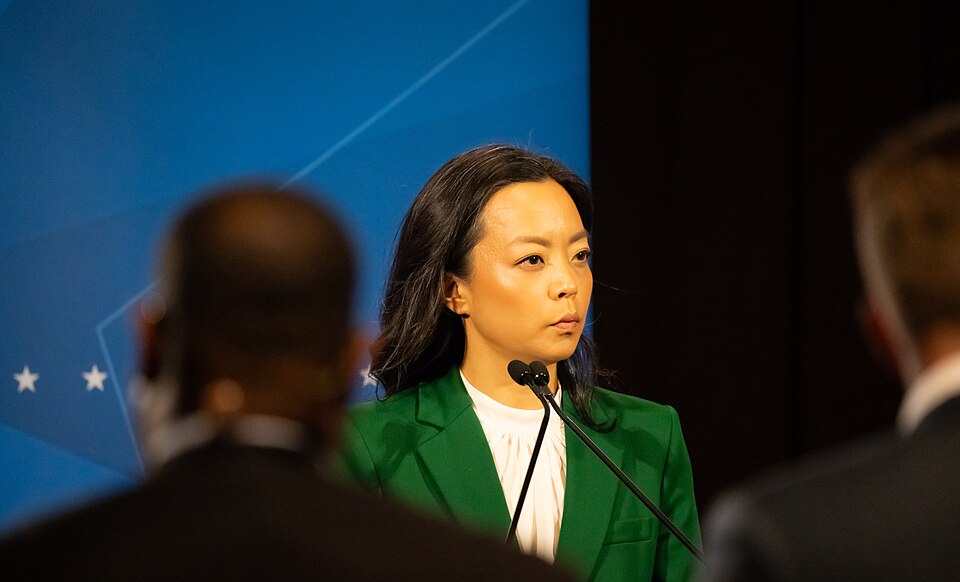
Rep. Alexandria Ocasio-Cortez is keeping her distance from a closely watched Wisconsin governor’s race, declining to endorse progressive Democratic candidate Francesca Hong as questions continue to surround Hong’s past positions on policing, prisons and other controversial issues.
The New York Democrat addressed the race Sunday during an appearance on ABC News’ “This Week,” where she made it clear that she has not endorsed Hong in the Democratic contest for Wisconsin governor.
“I haven’t endorsed in that race,” Ocasio-Cortez said.
Instead, Ocasio-Cortez said her political attention is focused on the larger battle for control of Congress.
“My focus has been in winning back the Congress, winning back the House, and positioning ourselves to have the best chance possible to win the Senate,” she said.
The decision is significant because Ocasio-Cortez has become one of the most prominent voices in the progressive wing of the Democratic Party. Hong, a Wisconsin state representative, has similarly built a reputation as a progressive and democratic socialist.
Yet Ocasio-Cortez is not the only major figure on the left who has stopped short of backing Hong.
Vermont Sen. Bernie Sanders has not endorsed her in the Wisconsin governor’s race, and neither has the national Democratic Socialists of America.
Hong Faces Questions Over Past Positions
Hong’s political history has become a major part of the debate surrounding her campaign.
According to published reports, Hong previously shared statements supporting controversial ideas involving the abolition of prisons and defunding police departments. She has also faced scrutiny over past remarks concerning Thanksgiving.
Hong has since indicated that her views have changed.
That evolution became an important part of Ocasio-Cortez’s response when she was questioned about the Wisconsin candidate.
Rather than directly defending every position Hong previously embraced, Ocasio-Cortez argued that candidates should be able to explain to voters how their views have developed over time.
She also cautioned against viewing every state and local election entirely through the lens of national politics.
Ocasio-Cortez said that while these contests often attract national attention, they are ultimately decided by local issues and the priorities of voters in the communities they affect.
Ocasio-Cortez added that her understanding is that Hong has moved away from some of her earlier positions.
AOC Questioned About Defunding the Police
The interview soon turned back on Ocasio-Cortez herself.
ABC News host Jonathan Karl pressed the congresswoman about her own history with the “defund the police” movement, which became a major national controversy following protests and unrest in 2020.
Ocasio-Cortez responded by arguing that the COVID-19 pandemic created an extraordinary political environment in which Americans were considering a much wider range of policy ideas.
She pointed to widespread shutdowns and high unemployment during the pandemic as factors that changed the political debate.
Ocasio-Cortez described the period as a major expansion of the “Overton window,” a political term referring to the range of ideas considered acceptable for mainstream public discussion.
“We were shut down,” she said.
“There was some of the highest unemployment rates that we have seen because of those shutdowns, and I think that the doors were really open in trying to entertain any and every policy that was going to get us to a better place.”
Ocasio-Cortez said she believes some of the policy discussions from that period were productive.
At the same time, she acknowledged that the national debate surrounding crime and public safety has changed.
Crime and Public Safety Take Center Stage
Crime remains a major concern for voters, making the issue politically important for candidates seeking statewide office.
Ocasio-Cortez acknowledged that the way politicians discuss crime today is different from the political environment that existed during the pandemic.
“I think that when we talk about crime today, it’s fundamentally different than the way that we talked about crime in bringing crime down,” she said.
Ocasio-Cortez added that Americans across the political spectrum share the goal of reducing crime as much as possible.
She also conceded that some of the rhetoric used during the intense political debates of the pandemic era would not necessarily be used today.
That acknowledgment could receive considerable attention as Democrats continue confronting questions over how the party handled the policing debate that erupted in 2020.
Republicans have repeatedly highlighted progressive calls to defund police departments when campaigning on law enforcement, crime and public safety.
Democrats, meanwhile, have increasingly emphasized funding law enforcement, reducing violent crime and improving public safety while continuing to advocate changes to the criminal justice system.
Can Candidates Leave Old Positions Behind?
The larger question raised by Ocasio-Cortez’s comments goes beyond one Wisconsin election: How much should a politician’s previous statements matter when that candidate says his or her views have changed?
Ocasio-Cortez argued that voters should hear directly from candidates about what they currently believe.
She said she was “grateful” candidates have the opportunity to explain who they are today, what they support and what they intend to do if elected.
That approach allowed Ocasio-Cortez to defend Hong’s right to change her positions without giving the Wisconsin Democrat the valuable political boost of a formal endorsement.
For Hong, convincing voters that her current platform should carry more weight than her previous rhetoric could become an important challenge as the campaign moves forward.
Wisconsin Governor’s Race Draws National Attention
Wisconsin has long been one of America’s most competitive political battlegrounds.
Presidential, congressional and statewide elections in the state frequently attract national attention and significant campaign spending from both parties.
That makes the Democratic contest for governor about more than personalities. It could also provide another indication of where Democratic voters stand on the ideological direction of their party.
Hong’s progressive background could appeal to voters seeking a more aggressive left-wing agenda.
At the same time, her previous positions on policing and other issues could give opponents ammunition in both the Democratic primary and a potential general election.
The absence of endorsements from nationally recognized progressives including Ocasio-Cortez and Sanders therefore stands out.
Neither development means Hong cannot win, but it does leave her responsible for making her case directly to Wisconsin voters without the backing of some of the progressive movement’s biggest political names.
AOC Keeps Her Distance — For Now
Ocasio-Cortez did not attack Hong during the ABC News interview.
She did not, however, endorse her either.
Instead, the congresswoman defended the idea that candidates can change their views while emphasizing that Wisconsin voters should evaluate Hong based on the campaign she is running today.
For Ocasio-Cortez, the exchange also revived questions about her own previous rhetoric surrounding policing and the dramatic political debates that emerged during the pandemic.
Those questions could continue to matter as Democrats attempt to win competitive elections while balancing the priorities of progressive activists with the concerns of a broader electorate.
For voters, the Wisconsin governor’s race now offers another test of whether controversial positions from the political battles of 2020 still carry the same weight in 2026 — or whether candidates can successfully convince the public that they have moved on.



Leave a Reply