
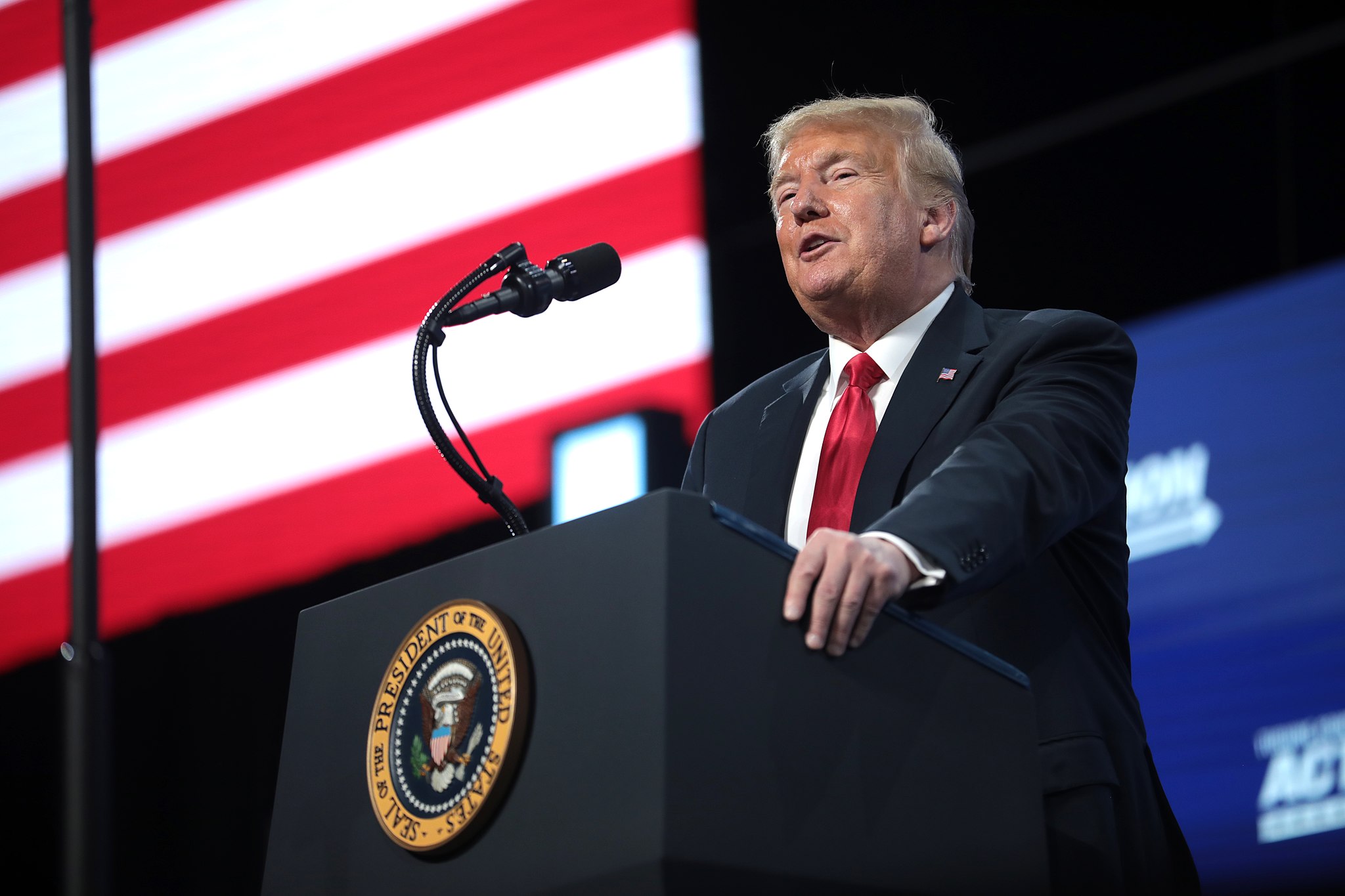
Can you believe world leaders are crying over memes?
Canadian Prime Minister Mark Carney is escalating his war of words with President Donald Trump, telling Americans to “quit making memes” and get serious if the two countries are going to make progress on a new trade agreement.
The remarkable criticism comes as the United States and Canada remain locked in an increasingly tense economic dispute involving tariffs, trade, manufacturing and billions of dollars in cross-border commerce.
Carney says Canada remains willing to negotiate. But his latest remarks make clear that he is not amused by Trump’s unconventional approach to dealing with America’s northern neighbor.
And behind the jokes, memes and political insults is a much bigger issue for ordinary Americans: jobs, prices and the future of one of America’s most important trading relationships.
Carney Tells Americans to “Stop Doing Memes”
Speaking to reporters Tuesday, Carney said his government’s priority remains protecting Canadian interests.
“Our plan has always been first and foremost standing up for Canada,” Carney said.
At the same time, the prime minister acknowledged that Canada and the United States could still reach an agreement benefiting both countries.
Carney said there remains a “positive opportunity” for a mutually beneficial trade agreement that respects Canadian sovereignty.
Then came the jab at the United States.
Carney said serious discussions could resume when Americans “stop doing memes,” “stop throwing shade,” “stop trying to be tough” and instead become serious about negotiations.
He called the current approach “not constructive.”
The comments amount to another public challenge aimed at the Trump administration as the two longtime allies struggle to resolve their growing economic differences.
Trump Isn’t Backing Down From Canada
President Trump has taken a dramatically different approach to the dispute.
Rather than limiting the fight to negotiating rooms and official statements, Trump has repeatedly used social media to ridicule Canada and its political leadership.
One of the biggest flashpoints came when Trump signed an executive order changing the U.S. government’s designation for Lake Ontario to “Lake America.”
Canadian officials were not impressed.
Trump has since continued trolling the country with AI-generated social-media posts.
One bizarre video depicted an army of Canada geese carrying rifles and sporting Trump-style hair.
Another AI-generated video showed Trump knocking over a “Lake Ontario” sign, replacing it with a “Lake America” sign and then performing his familiar “YMCA” dance.
Carney’s latest comments suggest the posts are getting under the skin of Canada’s political leadership.
But the public feud also risks overshadowing a far more important question: Can Washington and Ottawa reach a trade agreement that protects American economic interests?
50% Tariffs Raise the Stakes
The dispute isn’t merely about social-media jokes.
Trade negotiations between the United States and Canada collapsed last month, leading Washington to impose tariffs as high as 50% on certain Canadian goods.
Carney responded with a pledge that Canada would fight back “dollar for dollar.”
That could have serious economic consequences if the confrontation continues.
The United States and Canada share an enormous trading relationship involving automobiles, energy, agriculture, lumber, manufacturing and numerous other industries.
American companies rely on Canadian customers, while Canadian businesses depend heavily on access to the massive U.S. economy.
Tariffs can be used as leverage to win better trade terms, protect domestic industries or pressure foreign governments. But prolonged retaliatory tariffs can also increase costs for businesses that depend on imported materials and products.
That means this diplomatic fight could eventually reach the wallets of ordinary consumers.
What It Could Mean for American Workers
For Trump, the larger battle fits into his longstanding “America First” economic agenda.
The president has repeatedly argued that the United States should use its enormous economic power to demand better trade agreements, rebuild domestic manufacturing and prevent American jobs from moving overseas.
Supporters of Trump’s tariff strategy see the tougher approach as long overdue after decades of trade policies they believe favored foreign competitors at the expense of American workers.
Critics argue that aggressive tariffs can create their own economic problems, particularly if foreign governments retaliate against U.S. products.
Canada’s promise to match American tariffs raises precisely that possibility.
If the confrontation continues, industries on both sides of the border could find themselves caught between two governments refusing to back down.
Trump Administration Says Politics May Be Behind Dispute
Commerce Secretary Howard Lutnick has offered another explanation for Canada’s tough stance.
He has suggested Carney may be using the confrontation with Washington to benefit himself politically ahead of Canada’s elections.
Lutnick said the Trump administration made repeated efforts to reach an agreement before negotiations collapsed.
Lutnick said he had met with Canadian Trade Minister Dominic LeBlanc at least 10 times over the previous month.
According to Lutnick, he also spoke directly with Carney twice during the final 24 hours before negotiations ended.
The commerce secretary predicted Canada could return to negotiations once its elections are finished.
If that assessment proves correct, the current standoff may involve more than disagreements over tariffs and trade policy. Canadian domestic politics could also be influencing how aggressively Carney confronts Trump.
Carney Faces a Difficult Economic Reality
Canada may talk tough, but geography and economics give the United States considerable leverage.
The American economy represents an enormous market for Canadian companies, making access to U.S. consumers critically important for many industries north of the border.
At the same time, the relationship works both ways.
American farmers, manufacturers and other businesses also benefit from selling products to Canadian customers.
That makes a prolonged trade war potentially painful for both countries.
The challenge for Trump is using America’s economic leverage to secure better terms without allowing retaliatory measures to unnecessarily hurt American businesses and consumers.
For Carney, the challenge is demonstrating that Canada will stand its ground without damaging the economic relationship his country depends upon.
From Trade Negotiations to Political Theater
What began as a serious disagreement over trade has increasingly become a public political spectacle.
Trump has memes and AI videos.
Carney has accusations that Americans are “throwing shade” and “trying to be tough.”
Meanwhile, billions of dollars in trade and potentially thousands of jobs are connected to what happens next.
For Americans over 50 who have watched factories close, manufacturing jobs move overseas and the country’s trade policies change dramatically over several decades, the underlying debate is much more important than the online theatrics.
It comes down to whether tougher trade policies can produce better opportunities for American workers without driving up costs for American families.
What Happens Next?
Despite Carney’s sharp criticism, neither side appears to have permanently closed the door on negotiations.
Carney himself acknowledged that a mutually beneficial agreement remains possible.
The Trump administration also appears to believe Canada will eventually return to the table.
The question is who blinks first.
Trump has made tariffs and economic leverage central pieces of his negotiating strategy. Carney, meanwhile, appears determined to demonstrate that Canada will not simply accept Washington’s demands.
That could mean more political fireworks before an agreement is reached.
But once the memes, AI videos and insults are stripped away, the stakes are serious.
Will Trump and Carney find common ground on a deal that protects American jobs and keeps prices under control — or is the U.S.-Canada trade battle just getting started?








Leave a Reply