
[ad_1]
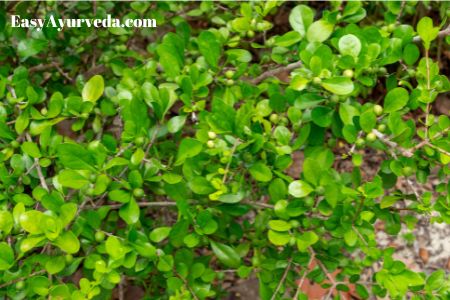
1st chapter of Charaka kalpa sthana offers with “pharmaceutics of madana (Randia dumetorum)”. The chapter title is Madanakalpam.


Now we will expound the chapter coping with the “pharmaceutics of madana (Randia dumetorum)”. Thus, stated lord Atreya. [1-2]
Learn – Madanaphala – Randia dumetorum – Advantages, Qualities, Facet Results
Goal of composing this part
Within the earlier part on the “remedy of illnesses”, a number of recipes for emesis and purgation are prescribed within the context of the remedy of varied illnesses. Within the current chapter on “pharmaceutics”, these recipes will probably be described intimately together with their applicability within the remedy of varied illnesses. Thus, this can be a part on recipes (kalpa).

Wants for describing this part earlier than Siddhi Sthana
Basti (medicated enema), and so on. are additionally described for the remedy of illnesses within the earlier part i.e. part coping with remedy of illnesses. Due to this fact, the part coping with numerous points of this enema remedy (siddhi- sthana) can be required to be described as part of the remedy of illnesses. However whereas administering Pancha- karma (5 specialised elimination therapies) usually emetic (vamana) and purgation (virechana) therapies are to be administered earlier than the administration of basti (medicated enema remedy). Due to this fact, Kalpa- sthana coping with these emetics and purgatives is positioned earlier than the outline of basti remedy. Basti remedy will probably be described later within the siddhi part.
Learn – Vamana Virechana – Emesis and Purgation – Ashtanga Hridayam Sutrasthana 18
Goal of describing emetics earlier than purgatives
Typically, purgation remedy is run solely after the administration of emetic remedy. Due to this fact, the chapters describing emetic remedy are positioned earlier than the earlier than the coping with the purgative remedy on this part.
Purgation of describing madanaphala within the first chapter
Among the many emetic medication, madana-phala is the most effective as a result of it doesn’t produce any hostile impact (vide para no 13). Due to this fact, the chapter coping with the recipes containing this drug is positioned to start with of this part.
Learn – Emetic Nut – Madanaphal Cures: Eczema, Stomach Ache
Objects of kalpa –sthana
O, Agnivesha! Hereafter, kalpa-sthana (part on pharmaceutics) will probably be described by me (refers to preceptor Atreya) for the suitable processing of the recipes with the next targets:
Preparation of recipes for emesis and purgation which incorporates most important medication added with the subsidiary ones of the likes of sura (alcohol), suvira (vinegar) and kovidara having essentially the most helpful results to facilitate emetic and purgative actions together with their varieties and proportions;
Preparation of those recipes appropriately by means of completely different pharmaceutical course of to facilitate simple motion are defined. [3]
Definition of vamana and Virechana
Vamana i.e., therapeutic emesis is the method of expelling morbid materials by means of the upward tract (mouth).
Virechana i.e., therapeutic purgation is the method of expelling morbid materials by means of the downward tract (anus).
Virechana is the frequent time period used to explain each these therapies / processes since each expel the morbid materials from the physique. [4]
Mode of motion of emetics and purgatives
Medication used for emesis and purgation are ushna (scorching), tikshna (sharp), suksma (refined), vyavayi (these pervading the complete physique earlier than of joints) in nature. By the advantage of their very own efficiency these medication attain the center, and flow into by means of the vessels.
Due to their agneya nature (predominance of Agni mahabhuta i.e. fireplace ingredient), they liquefy the compact (adhered) doshas (morbid materials).
They separate the adhered doshas positioned within the gross and appropriate channels of the complete physique owing to their tikshna guna i.e. sharpness attribute.
The morbid materials, after separation from the channels, strikes floating with out adhesion within the physique which has been subjected to oleation i.e. lubrication remedy, identical to the honey stored in a pot smeared with the fats floats with out getting adhered to the pot.
Due to its nature to maneuver by means of refined channels and to circulation (in the direction of the gastro- intestinal) this morbid materials reaches the abdomen, and will get propelled by udana Vayu.
The morbid materials will get expelled by means of the upward tract (mouth) due to the predominance of Agni and Vayu mahabhutas (fireplace and air components) in these emetic medication and due to their particular motion to maneuver upwards.
However, the purgative medication owing to the predominance of Prithvi and Jala mahabhutas (earth and water components), and due to their prabhava i.e. particular actions transfer downwards to expel the morbid materials by means of the downward tract (anus).
Mixture of each these attributes ends in the expulsion of the morbid materials by means of each the upward and downward tracts. That is the temporary description of the mode of actions of emetic and purgation. [5]
Learn – Advantages of Vamana and Virechana Remedy – Charaka Sutrasthana 16


Innumerability of recipes
[Emetic drugs, viz] Phala, Jimutaka, Iksvaku, Dhamargava, Kutaja and Krtavedhana, and purgative medication, viz., Shyama, Trivrt, Chaturangula, Tilvaka, Mahavrksa, Saptala, Sankhini, Danti and Dravanti are of various sorts relying upon the under talked about points –desha – habitat,
kala – time of their availability,
sambhava – origin,
ashvada – palatability,
rasa – style,
virya – efficiency,
vipaka – the style that emerges after digestion and
prabhava – particular motion
Sufferers for whom these medication are for use are additionally of various sorts relying upon the character of their physique, situation of the doshas, structure, age, power, energy of digestion and metabolism, liking for a selected sort of recipe, wholesomeness, stage of the illness and so on. Due to this fact, with the intention to cater to the requirement of all these components the recipes of medicine change into innumerable in sorts. Particular person description of the recipes with permutation and mixture is inconceivable. Due to this fact, by means of illustration, we will confine our description solely to 6 hundred recipes with a number of scent, color, style and contact that are useful with rapid results. [6]
Selling therapeutic efficacy of medicine
These medication used for emesis and purgation change into able to producing most therapeutic results when their efficiency is augmented by –
desha-sampat (amassing the crops from the suitable habitat),
kala- sampat (amassing these crops within the applicable season),
guna- sampat (amassing crops when these are enriched with wonderful attributes) and
bhajana-sampat (robust these crops in applicable containers) [7]
Learn – Assortment And Preservation Of Ayurvedic Herbs
Styles of habitat
Habitats (desha) are of three sorts, viz jangala (dry forest land), anupa (marshy land) and sadharana (regular land).
1. The jangala- desha (dry forest land) is characterised as follows:
It abounds in open sky
It has deep forests consisting of bushes like kadara, khadira, asana, ashva-karna, dhava, tinisa, sallaki, sala, soma-valka, vasari, tinduka, ashvattha, vata and amalaki;
It’s principally surrounded by bushes of shami, kakubha and simsapa in massive quantity.
The tender branches of those tress dance, being swayed by the pressure of steady dry wind;
It abounds in skinny, dry and sands in addition to gravels which give rise to mirages;
This space is inhabited by lava, tittiri and cakora and the individuals inhabiting one of these land are dominated by Vayu and pitta and most of them are sturdy and hardy.
2. The anupa- desha (marshy land) is characterised as follows:
It comprises deep forests of bushes like hintala, tamala, narikela, and kadali;
It’s positioned typically on the banks of rivers and sea;
Largely chilly wind blows right here;
Such a land is positioned within the neighbourhood of rivers whose banks are beautified by crops like vanjula and vanira.
It has mountains lined with lovely creepers;
The bushes on this thick forest weave with the light breeze;
The realm is surrounded by thick forest with lovely and blossoming tress
It’s lined with tender branches of bushes;
The branches of bushes positioned listed below are echoed with the sound produced by birds like hamsa, cakravaka, balaka, nandi_ mukha, pundarika, kadamba, madgu, bhrngaraja, satapara, and inebriated kokila and
Folks inhabiting one of these land are of tender physique, and usually they’re dominated by Vayu and kalpha.
3. The sadhrana- desha(regular land) is characterised as follows:
It has creepers, vanaspati (bushes having fruits with out obvious flowers), vanaspatya (bushes having each fruits and flowers) birds and beasts described above in respects of jangala desha (dry forest land) and anupa desha(marshy land) and;
Individuals inhabiting this land are research, tender, endowed with power, complexion and compactness, in addition to different attributes of individuals inhabiting within the land of normal nature. [8]
Learn – Examination of Desha: Habitat / Human Physique

Acceptable habitat for drug assortment
Medicinal crops, for producing wonderful therapeutic results, are collected from locations having the next attribute options:

These are to be collected from sadharana desha (forests of regular land) or jangala desha (dry land forests)
Vegetation ought to have been uncovered to seasonal chilly, solar, wind and rain appropriately;
Vegetation ought to have been grown over plains and clear land surrounded by water reservoirs, rivers and so on on the proper facet;
Vegetation shouldn’t have been grown in a crematorium, caitya (scared tomb), prayer floor, meeting floor, pits, parks, ant-hills and saline soil;
The land ought to have monumental development of kusa and rohisa grass;
The soil is unctuous, black in color and candy in style or golden in color and candy in style
The land shouldn’t have been ploughed, and
There shouldn’t be different massive bushes within the neighborhood over- shadowing the medicinal crops. [9]
Acceptable time and technique of drug assortment
Medication are collected within the applicable season once they have attained maturity in respect of their measurement, style, efficiency and scent. Their scent, color, style, contact and particular motion ought to have remained unaffected by time (like over maturity), extreme publicity to sun-rays, fireplace, water and wind, and parasites. They’re endowed with all attributes. They’re collected from the northern facet.
Contemporary branches and tender leaves are culled within the wet season and spring season. Their roots are collected in summer season or late winter (Shishira) when the leaves of the bushes have ripened and withered out. Their barks, rhizomes and latex are collected in hemanta (early winter), wooden together with exudates are collected throughout applicable seasons [when flowers and fruits appears in the plant]
One ought to gather the assorted elements of those crops whereas dealing with in the direction of the east or north after performing auspicious rites in a spirit of compassion, whereas dwelling a pure life, whereas sporting white gown, after providing prays to the gods, asvins, cows and brahmins, and whereas observing quick. [10]
Learn – Relationship Of Doshas With Seasons
Correct storage
The collected plant merchandise are stored in applicable containers properly lined with a lid and held on a swing. The shop-room ought to have doorways dealing with in the direction of the east or the north. The room is resistant to the wind or storm and there is just one window for air flow. Flower- choices and sacrificial rituals are carried out within the store-room day-after-day. It’s free from the hazards of fireside, water, moisture, smoke, mud, mice and quadrupeds. [11]
Adjuvants in response to doshas
Completely different adjuvants are required for use together with these medication in accordance with the doshas concerned within the causation of the illness.
For treating the illnesses attributable to Vayu – these medication are impregnated and combined with sura, sauviraka, maireyaka, medaka, dhanyamla, phalamla (juice of bitter fruits like pomegranate), dadhyamla (bitter yogurt), and so on.
For the remedy of illnesses attributable to pitta, these medication are for use by including mrdvika, amalaka, honey, madhuka, parusaka, phanita, milk and so on.
For the remedy of illnesses attributable to kapha, these recipes are to be added with honey, murta (urine), kashaya (decoctions of kapha- assuaging medication), and so on.
Thus, the adjuvants are described briefly.
We will hereafter describe them intimately in relation to completely different classes of dravya (nature of drug), deha (requirement of varied sorts of physique), doshas (aggravated to trigger the illness) and satmya (homologation). [12]

Assortment, storage and recipes of madanaphalam
Fruits of madana are thought of to be the most effective among the many emetic medication as a result of they’re free from any hostile negative effects. These fruits are to be collected throughout the center of the spring and summer season in a maitra muhurta (auspicious interval of the day) when the moon is within the constellation of pushya, asvini or mrgasiras. These fruits are totally matured, not perforated not inexperienced however yellowish white in color, not rotten, not infested with parasites and never small in measurement. These fruits are cleaned and tied up inside a bundle of barley husk, masha, sali sort of paddy, kulattha or mudga for eight nights.
Afterwards, once they have change into smooth and are endowed with fascinating scent like that of honey, these fruits are taken out of the bundle and dried up. When these are properly dried up their seeds are taken out. These seeds are rubbed with ghee, curd, honey and oil-cake, and dried once more. These seeds are stored in a brand new jar cleaned of sand and mud particles and stuffed as much as its brim. This jar is correctly lined with a lid, and after the efficiency of protecting rituals, is positioned in a swing. [13]
Learn – Ritucharya – Ayurvedic Seasonal Routine – third Chapter – Ashtang Hriday
Process of administering emetic remedy
- The particular person is subjected to oleation and fomentation therapies for 2 or three days previous to the administration of emetic remedy.
- Throughout the evening earlier than the day of administration of the emetic remedy, he’s given the weight-reduction plan consisting of the soup of the meat of gramya (domesticated), anupa (marshy land- inhabiting) and audaka (aquatic) animals, milk, curd, masha, sesame seeds, greens, and so on, for the excitation of kapha.
- On the following morning when the meals taken within the earlier evening is digested, after performing bali (spiritual sacrifices), homa (scared ritual of providing oblations of ghee to fireside), mangala (auspicious rituals) and prayascitta (rituals for neutralizing results of doable sinful acts), and when the abdomen is empty, the affected person who’s anati snigdha (has not been given with extreme oleation), is given gruel added with some ghee for consumption.
- Seeds of madana phala, a fistful in amount or in a amount as could also be discovered applicable, could also be crushed, added with the decoction of both yasti-madhu, kovidara (which flowers within the autumn), karbudara (kanchanara which flowers within the spring), nipa (kadamba), vidula (vetasa), bimbi, sanapuspi (ghantarava), sada-puspi (arka- puspika) or pratyakpuspi (ghantarava), sada-puspi (arka puspika) or pratyakpuspi (apamarga), and stored in a single day. Within the morning, this obtained, is stirred with hand and filtered. The liquid, thus obtained, is added with honey and rock-salt, made barely heat, stuffed as much as the brim in a consuming pot, and impregnated with the next mantra. [The mantra has to be recited in its original language for which the script is Romanised below. The translation is furnished thereafter only for the comprehension of its connotations].
- Authentic mantra:
“om brahma- daksasvirudrendra-bhu-candrarkanilanah|
Rsayah sausadhigrama bhutasanghasca pantu te||
Rasayanamivarsinam’devanam amrtam yatha|
Sudhevottamanaganam
Bhisajyam idam astu te||
Translation of the mantra: Might brahma, daksha, the asvins, rudra, indra, the earth, the moon, the solar, the wind, the hearth, the sages, all of the medication and all of the dwelling beings defend you. Let the recipe produce results on you because the rejuvenating recipes have performed to the sages, because the ambrosia has performed to the gods, and as sudha (a kind of ambrosia) has performed to the chief of the nagas. - After the recipe has been impregnated with the mantra described above, it’s administered to the affected person whereas he’s dealing with in the direction of the east or the north repeatedly. It needs to be given until the bile comes out together with the vomited materials. That is important, particularly for the sufferers affected by kaphaja sort of fever, gulma, (phantom tumour) and pratishyaya (power chilly). By this technique, emesis takes place correctly.
- If the urge for vomiting is weak, then that is augmented by the repeated administration of the paste of pippali, amalaka, sarsapa and vacha added with salt and heat water until the bile seems within the vomited materials.
- That is the strategy of administering all sorts of emetic recipes. [14]

Use of honey and rock- salt
In all of the emetic recipes, honey and rock-salt is added with the intention to facilitate the liquefaction and chedana (separation of adhesion) of kapha. The emetic recipe ought to at all times be administered scorching. This honey added to scorching emetic recipes shouldn’t be incompatible with warmth (i.e. taken after it’s added to scorching water which typically merchandise poisonous reactions) as a result of this honey is thrown out undigested together with vomited materials, and helps within the elimination of morbid doshas. [15]
Learn – Vamanopaga Gana: Emesis Aiding Herbs: Evaluate, Advantages, Formulations
Eight recipes of madana phala in capsule from
Two (out of three) elements of the seeds of madana phala is added with (six occasions of) the decoctions of kovidara, and so on (together with karbudara, nipa, vidula, bimba, sana-puspi, sada-puspi, and pratyak –puspi- these eight medication are described in para no. 14), and strained for twenty one occasions. With this liquid, the (remaining) third a part of the seeds is triturated and made to stick. From out of this paste, drugs of the dimensions of haritaki, bibhitaka or amalaki are ready. One or two of those drugs are given by rubbing with one anjali (roughly 192 ml) of the decoction both of the eight medication (described above) to a affected person affected by praseka (salivation), granthi (tumour or nodules), jvara (fever), udara (obstinate stomach illnesses together with ascites) and aruchi (anorexia).
The remaining process as described above (in para no 14) is adopted for these recipes additionally. [16]
Learn – Vamana And Virechana In The Remedy Of Kushta
Recipes of madan phal ready with milk
The 4 recipes of madana phala ready by boiling with milk are as follows:
- In accordance with the process prescribed for ksira-paka, the seeds of madana phala are cooked by including milk.
- Gruel is ready by including this milk. Each the above talked about recipes are helpful as emetics for sufferers affected by adhoga raktapitta (a illness characterised by bleeding by means of the downward tracts) and hrd-daha i.e. burning sensation within the cardiac area.
- Cream is taken out of the yoghurt ready of the above talked about medicated milk. That is helpful in kaphaja sort of chardi (vomiting), tamaka (bronchial asthma) and praseka (ptyalism).
- The milk described in merchandise no.1 above is cooled, and the cream from this milk is taken out. This cream is run within the dose of 1 anjali (192 ml). That is helpful when pitta is aggravated, and the chest, throat in addition to coronary heart is adhered with skinny layer of kapha.
- The remainder of the process, to be adopted on this connection is as described earlier than (within the paragraph no. 14) [17]
Recipe of madana phala ready with butter
The butter collected from the milk boiled with the seeds of madana-phala is cooked by including the paste and decoction of madana-phala, (jimutaka, iksvaka, dhamargava, kutaja and krta- vedhana). This medicated ghee is run in applicable dose to a affected person affected by the suppression of Agni (enzymes accountable for digestion) by kapha, and dehydration of the physique.
The remainder of the process to be adopted on this connection is as described earlier (in para no. 14). [18]
Learn – Emetic Nut – Madanaphal Cures: Eczema, Stomach Ache
Recipe of madanphal for inhalation
Seeds of madana-phala is properly impregnated with the decoction of phala, (jumutaka, iksvaku, dhamargava, kutaja and krta-vedhana) for twenty one occasions, and made to high quality powder resembling the pollens of flowers. Within the night, a giant lotus flower rising in a pond is sprinkled with this powder and stored there, in a single day. Within the subsequent morning, the identical powder is as soon as once more sprinkled over the lotus flower petals and the flower is plucked. This powder (sprinkled on the lotus petals) is given for inhalation to a affected person who’s of tender nature, in whom pitta and kapha are excited and who has an aversion to taking drugs orally. This inhalation remedy is run after the affected person is totally fed (as much as the throat) with turmeric krshara (a kind of gruel preparation containing rice and lentils), milk or gruel after including rock-salt, jaggery and phanita (treacle).
The remainder of the method to be adopted on this connection is similar as described earlier than (in para no. 14). [19]
Recipes of madanfal within the type of treacle and powder
The juice of madana-phala is extracted in response to the process already described for extracting the essence of bhallataka (vide cikitsa 1:3:14). It ought to then be cooked until it’s decreased to the consistency of treacle, and until threads seems when a portion of the paste is pulled out. This linctus is taken by the affected person.
The seeds of madana-phala are dried within the solar, added with the decoction of jimutaka, and so on, made to a powder, and administered to the affected person who’s affected by illnesses attributable to the migration of the morbid pitta to the place (seat) of kapha.
The remainder of the process to be adopted on this connection is as described earlier than (in para no. 14)
Recipes of madanaphala within the type of varti
The decoction of any of the six medication, viz, madana-phala, jimutaka, iksvaka, dhamargava, kutaja and krtavedhana and made into vartis (enlongated drugs). These are to be taken combined with the decoction of madana–phala and so on.,
The remainder of the process to be adopted on this connection is as described earlier than (in para no 14). [21]
Recipes of madanaphal within the type of linctus
Seeds of madana-phala is made into linctus by boiling with the decoction of one of many under talked about –
Aragvadha
Vrksaka (kutaja)
Svadukantaka (vikankata)
Patha
Patala
Sarngesta (gunja)
Murva
Saptaparna
Naktamala
Picumarda
Patola
Susavi (karvellaka)
Guduchi
Somavalka
Dvipika
Pippali
Pippalimula
Hastipippali
Chitraka
Srngavera [and to the patient for emesis]
The remainder of the process to be adopted on this connection is as described earlier than (in para no 14). [22]

Preparation of madanaphala within the type of utkarika nd modaka
Seeds of madana-phala are cooked with the decoction of one of many twenty medication, viz
Ela
Harenuka
Satapuspa
Kustumburu
Tagara
Kustha
Tvak
Coraka
Marubaka
Aguru
Guggulu
Elavaluka
Srivestaka
Paripelava (kaivarta –mustaka)
Mamsi
Saileyaka
Sthauneyaka (granthiparnaka)
Sarala
Paravata padi and
Ashoka-rohini (katurohini)
With the pastes, thus obtained (twenty sorts every of), utkarika (pancake) and modaka (sweetmeat) is ready, following the process prescribed for utkarika and modaka respectively. These are to be administered on accordance with the aggravated doshas, the character of the illness, and liking of the affected person.
The remainder of the process to be adopted on this connection is as described in para no. 14. [23]
Preparation of madanaphala within the type of saskuli and pupa
The paste of tila and shali-rice are ready by including the juice or decoction or the seeds of madana-phala. This paste is additional processed by including the decoction of the seeds of madana-phala. From this paste, saskuli (a kind of pan-cake) and pupa (preparation of sweetmeat) is ready, and administered to the affected person.
The remainder of the process to be adopted on this connection is as described earlier 9 in para no. 14)
[the paste of tila and sali-rice prepared with the juice or decoction of the seeds of madana-phala may be further processed by adding the] decoction of [one of the fifteen drugs, viz,]
Sumukha
Surasa
Kutheraka
Kandira
Kalamala
Parnasaka
Ksavaka
Phanijjhaka
Granjana
Kasamarda
Bhrngaraja
Pota
Iksuvalika
Kalankataka
Dandairaka (gundra or nala) from this paste, saskulis and pupas could also be ready [and administered to the patient following the procedure earlier described in the paragraph no. 14] [24-25]
Preparation of madanaphala within the type of badara-sadava and so on.
Seeds of madana-phala could also be added to one of many preparations like –
Badara-sadava (title of a bitter liquid preparation of jujube fruit)
Raga (an appetiser having bitter and pungent tastes)
Leha (linctus)
Modaka (candy meat)
Utkarika (pan-cake)
Tarpana (demulcent drink)
Panaka (syrup)
Mamsa-rasa ((meat-soup)
Yusa (vegetable soup)
Madya (alcohol) and given to the affected person, relying upon the state of the doshas, nature of the illness and likings. By these preparations the affected person vomits properly. [26]
Learn – Ayurvedic Well being Advantages Of Modak, Preparation Methodology
Synonymous of madanaphala
The recipes described within the earlier paragraphs are these of the drug whose synonyms are: madana, karahata, ratha, pinditaka, phala and svasana.

Contents of the chapter
To sum up: –
On this chapter the good sage (Atreya) has described 133 recipes ready with madana phala. They’re as follows –
9 recipes within the type of decoction (vide para no 14)
Eight recipes within the type of matra (drugs)
5 recipes within the type of medicated milk and medicated ghee (vide para no 17-18)
One recipe for use for inhalation (vide para no 19)
Two recipes within the type of treacle and powder; (vide para no 20)
Six recipes within the type of varti (elongated capsule) (vide para no 21)
Twenty recipes within the type of linctus (vide para no. 23)
Twenty recipes within the type of utkarika (pan-cake) (vide para n 23)
Twenty recipes within the type of modaka (sweet-meat) (vide para no. 23)
Sixteen recipes of saskuli (a kind of pancake) and (vide para no. 24-25)
Sixteen recipes of pupa (a kind of sweet-meat) and (vide para no. 24-25)
Ten recipes ready by including madana-phala to badara –sadava and so on. (vide para no 26)

Colophon
Thus, ends the primary chapter of kalpa- part coping with the “pharmaceutics of madana-phala” of Agnivesha’s work as redacted by charaka, and due to its non- availability supplemented by drdhabala.
Associated
[ad_2]







Leave a Reply