
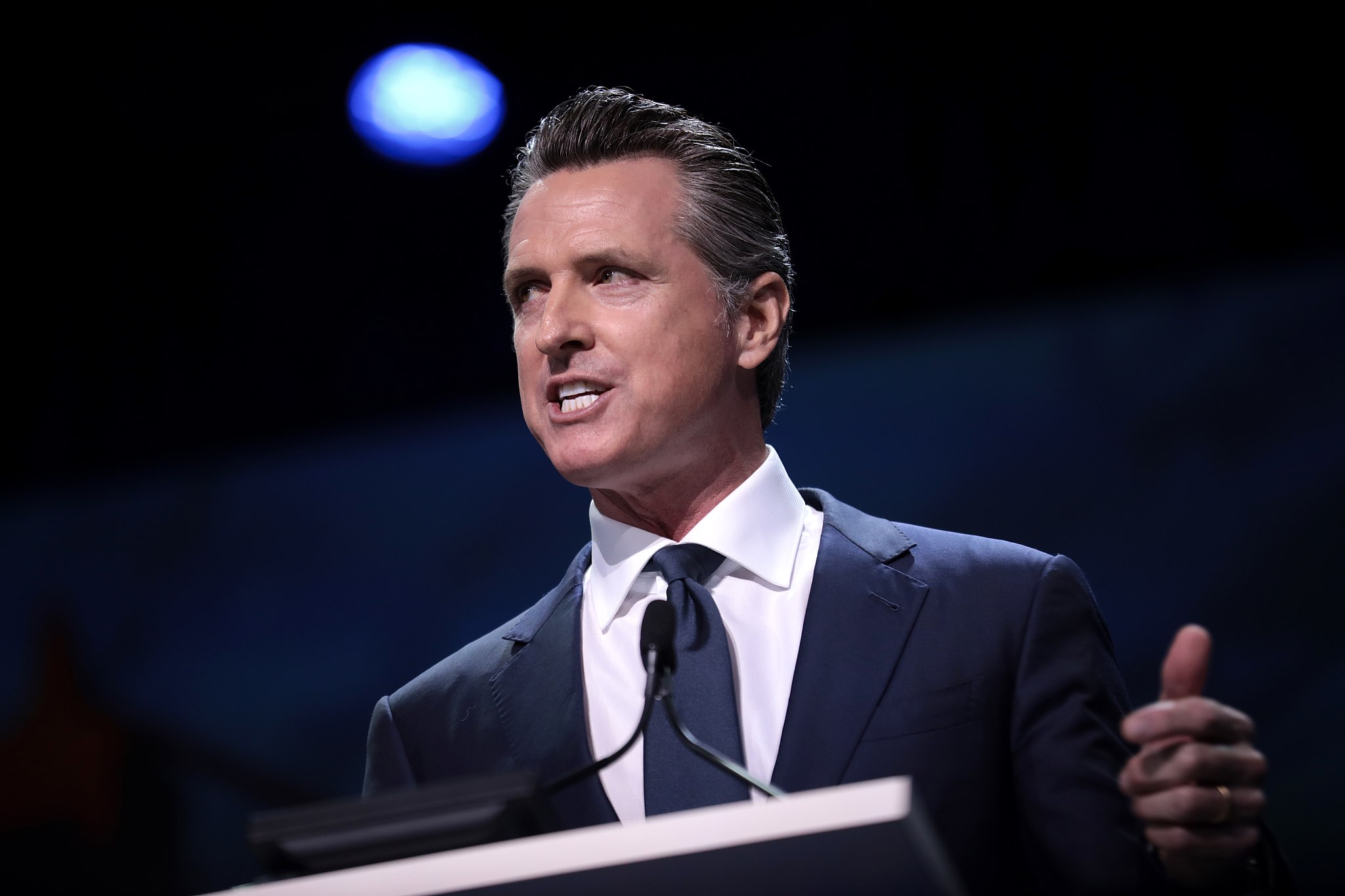
Even Democrats are stunned by this move.
California Governor Gavin Newsom is facing growing criticism from fellow Democrats after unveiling a proposal for a nationwide billionaire tax while continuing to oppose a similar tax measure that California voters are expected to decide on later this year.
The disagreement has exposed divisions within the Democratic Party over tax policy, economic strategy, and how governments should address wealth inequality. It has also drawn attention because both Newsom and Democratic Congressman Ro Khanna are frequently mentioned as possible contenders in the 2028 presidential election.
Democratic Leaders Clash Over Billionaire Tax
Newsom recently argued that the wealthiest Americans should pay more in taxes through a federal policy rather than through individual state initiatives. His proposal came after California lawmakers failed to reach an agreement that would have kept a separate state tax measure off the November ballot.
The California proposal would impose a one-time 5% tax on the state’s wealthiest residents, with supporters saying the revenue could help protect healthcare funding and other public programs.
However, Newsom has consistently opposed the state proposal, warning that California could lose wealthy residents, businesses, and investment if it acts alone.
Instead, the governor says any major wealth tax should be implemented at the national level, where it would apply more evenly across the country.
Ro Khanna Accuses Newsom of Mixed Messaging
Congressman Ro Khanna sharply criticized Newsom’s position, arguing that supporting a federal billionaire tax while rejecting a California version sends conflicting signals.
Khanna said leaders should be willing to defend the same policies in their own states that they advocate nationally. In his view, California has an opportunity to lead on the issue rather than waiting for Congress to act.
He also argued that Newsom’s federal proposal differs substantially from the California ballot initiative, claiming it would raise significantly less revenue than a traditional wealth tax.
The public disagreement highlights an increasingly visible policy divide among Democrats over how aggressively the nation’s wealthiest individuals should be taxed.
Why Newsom Opposes a California-Only Tax
Newsom has repeatedly said his concerns are centered on California’s long-term economic competitiveness.
According to the governor, implementing a billionaire tax in only one state could encourage wealthy individuals and businesses to relocate to states with lower tax burdens. He argues that such migration could ultimately reduce tax revenue, investment, and job creation.
Because of those concerns, Newsom believes Congress—not individual states—is the appropriate place to pursue major tax reforms affecting high-net-worth Americans.
His proposal seeks to create a nationwide framework that would avoid placing California at a competitive disadvantage.
Supporters Say Economic Fears Are Overstated
Backers of the California ballot measure disagree with Newsom’s assessment.
Dave Regan, president of SEIU-United Healthcare Workers West, said predictions of large-scale “capital flight” are exaggerated. Supporters believe a one-time tax on billionaires would have only a limited impact on relocation decisions while generating billions of dollars for healthcare and other public priorities.
Advocates argue the proposal would help offset reductions in federal funding and provide additional financial stability for California’s healthcare system.
The campaign supporting the initiative has framed the measure as asking the state’s wealthiest residents to make a temporary contribution toward preserving essential public services.
A Debate That Could Shape the Democratic Party
Political analysts say the disagreement extends well beyond California.
The billionaire tax debate reflects broader questions facing Democrats about how the party should balance progressive economic policies with concerns about business investment and economic growth.
Some Democratic leaders believe stronger taxes on extreme wealth are necessary to reduce income inequality and expand funding for government programs.
Others support raising taxes on high-income Americans but remain cautious about policies they believe could discourage investment or push businesses to relocate.
The California vote could become one of the earliest tests of which approach resonates more strongly with voters.
Potential 2028 Political Implications
The dispute is receiving additional attention because Newsom and Khanna are both viewed by many political observers as possible Democratic presidential candidates in 2028.
While neither has formally announced a campaign, their differing positions on tax policy could offer an early preview of debates that may shape the party’s future platform.
Political communications professor Dan Schnur of the University of Southern California said Newsom appears to be trying to balance support for taxing billionaires while distancing himself from California’s specific proposal.
His message, analysts say, is that he supports higher taxes on the nation’s wealthiest individuals—but believes the policy should be enacted federally rather than state by state.
What’s Next?
California voters are expected to decide the billionaire tax proposal in November, setting up what is likely to become one of the state’s most expensive and closely watched ballot campaigns.
Supporters say the measure would generate critical funding for healthcare and other public services. Opponents argue it could create long-term economic challenges by encouraging wealthy taxpayers to move elsewhere.
Whatever the outcome, the debate is expected to influence future discussions about wealth taxes, state tax policy, and the Democratic Party’s economic agenda. It could also become an important issue for national political figures as attention gradually shifts toward the 2028 presidential election.
As the campaign unfolds, both supporters and critics are expected to make their case to voters, making California’s decision one of the most closely watched economic policy debates in the country this year.


Leave a Reply