
This was surprising to see.
Democratic heavyweights are rapidly lining up behind Michigan Senate candidate Abdul El-Sayed as the party tries to unite after a divisive primary and strengthen its chances of challenging President Donald Trump’s agenda in Washington.
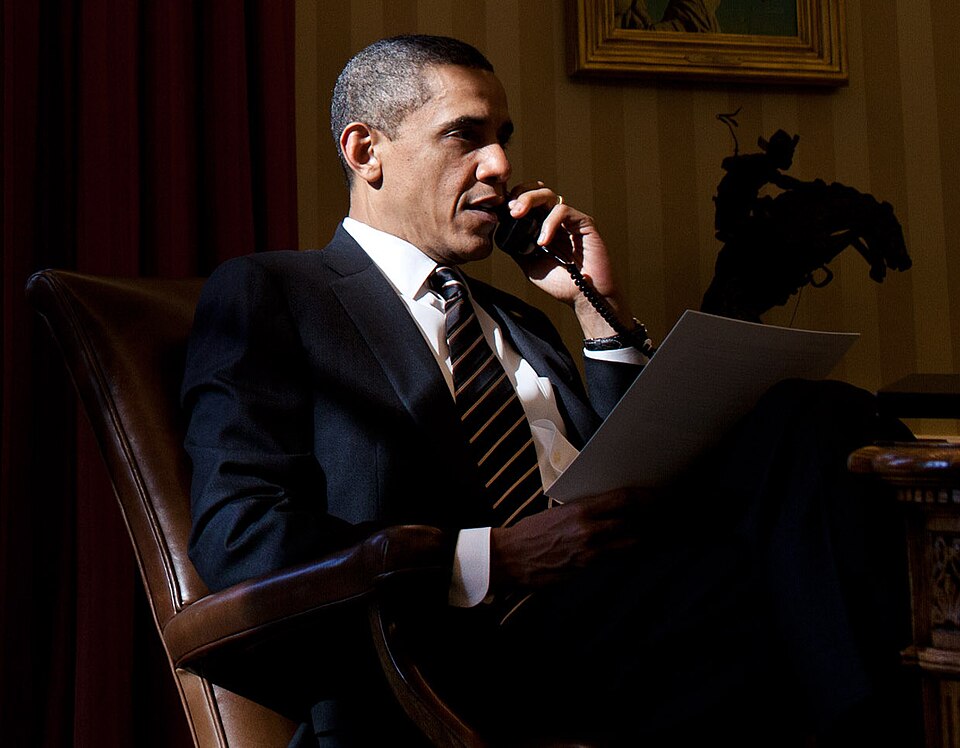
Former President Barack Obama has personally spoken with El-Sayed, while California Gov. Gavin Newsom is making his own push to support the Democratic nominee.
The sudden involvement of two of the Democratic Party’s biggest names underscores just how important Michigan could become in the battle for control of the U.S. Senate.
For Republicans, however, the Democratic show of unity could also create an opportunity.
El-Sayed emerged from a contentious primary representing the party’s progressive wing, and Republicans are expected to make his record, positions and political associations major issues as the general election campaign heats up.
Obama and Newsom Rally Behind El-Sayed
Newsom traveled to Michigan and publicly encouraged Democrats to unite behind El-Sayed, describing the Senate candidate as a “fighter.”
The California governor also acknowledged that Democrats are preparing for a difficult general election.
“House races are important, but the Senate is in play, and it will go through this state,” Newsom told reporters. “So, getting behind him is going to be important.”
“It’s going to be a very tough race in November,” he added.
Those comments reveal the national stakes surrounding Michigan.
With control of the Senate potentially hanging in the balance, Democratic leaders appear determined to prevent lingering disagreements from the primary from weakening El-Sayed heading into November.
A Democratic Primary Exposed a Bigger Divide
El-Sayed defeated Rep. Haley Stevens in a primary that became a larger argument about the direction of the Democratic Party.
Stevens was viewed as the more conventional Democratic candidate, while El-Sayed appealed heavily to progressive voters seeking a different direction.
That ideological divide may now become one of the central questions of the general election.
Can Democrats who preferred Stevens quickly unite behind El-Sayed?
Republicans hope the answer is no.
The GOP is likely to focus heavily on El-Sayed’s progressive record and his associations with controversial political figures as it attempts to win over Michigan’s independents and moderates.
Hasan Piker Could Become a Campaign Issue
Among the potential vulnerabilities Republicans could highlight is El-Sayed’s association with progressive online personality Hasan Piker.
Piker has faced years of criticism for inflammatory political commentary, including his notorious past statement that “America deserved 9/11.”
That history gives Republicans an obvious line of attack as they attempt to portray El-Sayed as outside Michigan’s political mainstream.
Newsom, however, rejected the suggestion that supporting El-Sayed puts him at odds with his own political image.
“This notion of insurgency over incumbency is the real message here,” Newsom said.
According to the California governor, voters are looking for candidates with “conviction, strength, sincerity.”
Newsom even described himself as an “established insurgent.”
The comment comes as Newsom continues attracting national attention as a possible future Democratic presidential contender.
Obama Personally Reaches Out
Former President Barack Obama has also entered the picture.
Obama spoke with El-Sayed following the primary, providing another major boost as Democrats work to put their internal battle behind them.
El-Sayed discussed the conversation during an appearance on NBC’s “Meet the Press.”
“It was a really warm and inspiring conversation,” he said.
El-Sayed said the former president recognizes Michigan’s importance in the Democratic effort to regain control of the Senate and oppose Trump’s agenda.
Newsom indicated that Obama’s outreach helped inspire his own effort to support El-Sayed.
The involvement of both men sends a clear message: national Democrats don’t intend to sit on the sidelines in Michigan.
Pete Buttigieg Joins the Effort
Former Transportation Secretary Pete Buttigieg has joined the Democratic unity campaign as well.
Michigan Democrats recently held a unity rally featuring Buttigieg, another indication that party leaders want to move beyond the bitter primary as quickly as possible.
But repairing political divisions after a contentious election isn’t always easy.
Some voters who supported Stevens may have significant ideological disagreements with El-Sayed, while El-Sayed must simultaneously maintain the enthusiasm of the progressive voters who helped propel him to victory.
That balancing act could define his general election campaign.
Republicans See an Opening
Republican Senate candidate Mike Rogers believes Democrats could have difficulty putting their coalition back together before voting begins.
“Whoever comes out of it is going to have a coalition problem,” Rogers said following the Democratic primary.
He also emphasized how little time remains before voters begin casting ballots.
“Remember, voting starts in about five or six weeks,” Rogers said. “We’re in an election cycle now.”
For Republicans, the strategy is straightforward.
Rather than allowing Democrats to turn the general election exclusively into a referendum on Trump and the Republican Party, the GOP can force El-Sayed to defend his own record, political positions and alliances.
That could be especially important when competing for older voters, independents and suburban residents who often play a major role in Michigan elections.
Schumer Changes Course After Primary
Senate Minority Leader Chuck Schumer is now backing El-Sayed as well, despite supporting Haley Stevens during the Democratic primary.
Schumer’s original endorsement of Stevens suggested that Democratic Senate leadership viewed her as the preferable candidate heading into the general election.
Once El-Sayed won, however, Schumer moved behind the Democratic nominee.
There is still an interesting political wrinkle.
El-Sayed has not committed to supporting Schumer as the Democratic leader in the Senate.
Despite that uncertainty, Schumer has said he believes El-Sayed can win.
His advice to the Michigan candidate has been to concentrate heavily on kitchen-table economic concerns.
“Keep talking about jobs, talking about lower costs, talking about corruption,” Schumer said.
That strategy suggests Democratic leaders recognize that appealing beyond the party’s progressive base will be essential in November.
Newsom’s Support Carries 2028 Implications
Newsom’s involvement is particularly noteworthy because the California governor continues to attract speculation about a possible future presidential campaign.
Supporting El-Sayed gives Newsom another opportunity to strengthen his relationship with progressive activists, a constituency that could become extremely important in a future Democratic presidential primary.
Newsom has sometimes clashed with progressives during his years as California governor, including over legislation and proposals involving taxes and other economic policies.
His enthusiastic embrace of El-Sayed therefore carries implications extending beyond Michigan.
It allows Newsom to demonstrate that he is willing to support a progressive candidate even when that candidate emerged from a primary fight against the Democratic establishment’s preferred choice.
Why Michigan Matters So Much
Michigan has repeatedly been one of America’s most important political battlegrounds.
Now the state’s Senate contest could help determine which party controls one of the most powerful institutions in Washington.
That explains why Democrats are bringing out some of their biggest political names.
Obama is making personal calls.
Newsom is campaigning in Michigan.
Buttigieg is helping promote party unity.
Schumer has endorsed the nominee despite backing his opponent during the primary.
The objective is increasingly clear: Democrats want their voters united behind El-Sayed before Republicans can capitalize on the divisions exposed during the primary.
The Bigger Challenge for Democrats
The central question is whether endorsements from nationally prominent Democrats will be enough to convince skeptical Michigan voters.
El-Sayed must hold together the progressive coalition that delivered his primary victory while expanding his appeal to Democrats, independents and moderates who may have preferred a different nominee.
Republicans will be working to make that task considerably harder.
Expect the GOP to highlight El-Sayed’s progressive politics and controversial associations while arguing that the Democratic Party has moved further to the left.
Democrats, meanwhile, are likely to emphasize economic concerns, opposition to Trump’s policies and the importance of Senate control.
That creates the ingredients for a fierce general election battle.
Michigan Could Help Decide Control of Washington
Obama and Newsom aren’t getting involved simply because of one Michigan candidate.
The larger prize is control of the United States Senate.
A victory in Michigan could provide Democrats with a crucial seat and additional power to challenge Trump’s legislative priorities.
A Republican victory could make it significantly harder for Democrats to regain control of the chamber.
That makes Michigan a national political battleground with consequences extending far beyond the state’s borders.
After a primary that exposed serious disagreements inside the Democratic Party, Obama, Newsom, Buttigieg and Schumer are now attempting to bring those competing factions together.
Republicans are betting those divisions won’t disappear so easily.
And with November approaching, Michigan voters will ultimately decide whether the Democratic unity campaign succeeds or whether the GOP can turn the party’s internal disagreements into a Republican Senate victory.


Leave a Reply