
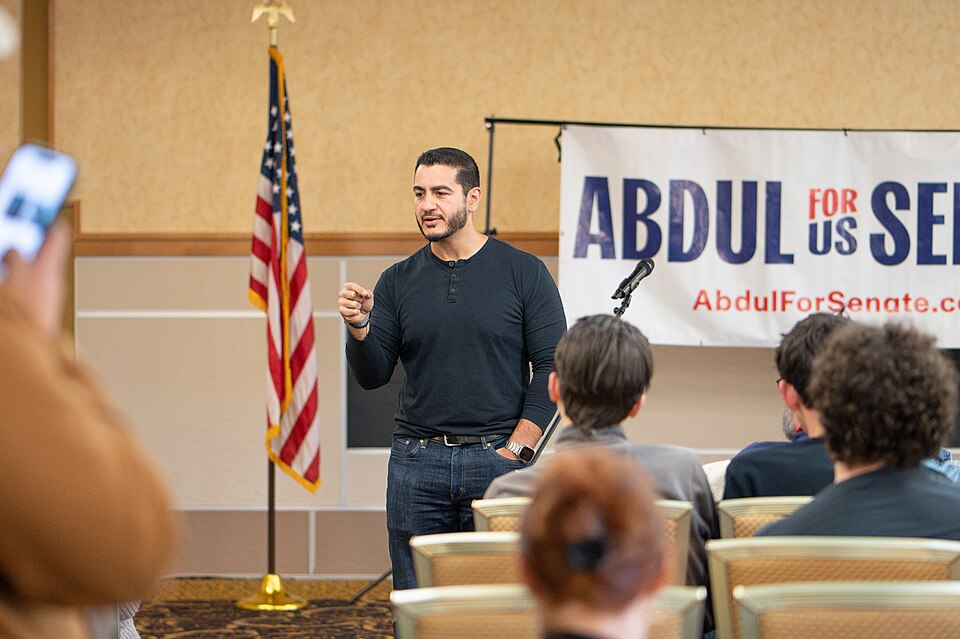
Get a load of this.
Michigan Democratic U.S. Senate candidate Abdul El-Sayed is facing new scrutiny after resurfaced comments revealed that he previously questioned whether American football can be considered “ethical” or “safe.”
The remarks are drawing fresh attention in Michigan, a state where football remains a major part of the culture, from Friday-night high school games to the Detroit Lions and college powerhouses.
El-Sayed’s comments came during a 2023 podcast discussion about the long-term health risks associated with football, particularly chronic traumatic encephalopathy, better known as CTE.
“What is it about this brutal sport that keeps us coming back?” El-Sayed asked during the conversation. He then questioned whether there could be a version of football that is both ethical and safe.
The resurfaced audio has quickly become another political issue surrounding the Michigan Democrat as voters take a closer look at his past statements and his views on American sports culture.
El-Sayed Raises Questions About Football and CTE
El-Sayed’s criticism focused partly on the physical punishment football players endure.
Researchers have spent years examining the connection between repeated blows to the head and CTE, a degenerative brain condition that has been found in some former football players.
El-Sayed used those concerns to raise a broader question about whether the sport can ever become sufficiently safe.
But his criticism did not stop with player health.
He also connected football culture to what he described as problems involving violence and “toxic masculinity,” remarks that are now attracting political attention as he campaigns for a U.S. Senate seat.
The Senate Candidate Once Played Football Himself
The controversy has an unusual twist.
El-Sayed grew up playing football and eventually became captain of his high school team.
He has also described sports as a “lifeline” during his younger years.
That personal history creates a notable contrast with his later criticism of certain elements of football culture.
El-Sayed has not presented himself as someone who simply dislikes sports. Instead, his comments suggest that he believes significant aspects of football—from player safety to its surrounding culture—deserve closer examination.
He Has Also Targeted the High Cost of NFL Games
El-Sayed returned to the subject of football more recently, although this time his focus was financial.
In a video released earlier this month, the Michigan Democrat tossed a football while criticizing the rising cost of attending NFL games.
He argued that tickets, concessions and other expenses have made professional football increasingly difficult for ordinary families to afford.
“It’s gotten way too expensive,” El-Sayed said, arguing that a sport meant to bring people together can instead create a divide between Americans who can afford to attend games and those who cannot.
That argument could resonate with families dealing with higher entertainment costs, but it has also placed El-Sayed back in the middle of a debate over one of America’s most popular sports.
Taxpayer-Funded Stadiums Become Part of the Debate
El-Sayed has also questioned the use of public money to help finance professional sports stadiums.
His concern is straightforward: taxpayers can contribute significant sums toward stadium development while fans are still confronted with expensive tickets, parking, food and merchandise.
That issue stretches well beyond Michigan.
Cities and states around the country have repeatedly debated whether taxpayer-funded stadium projects deliver enough economic benefits to justify their cost.
Supporters of such projects often argue that major sports venues create construction jobs, attract visitors, support nearby businesses and contribute to local development.
Critics argue that taxpayers can shoulder too much of the financial burden while professional franchises and their owners receive substantial benefits.
El-Sayed has positioned himself on the skeptical side of that debate.
Past ‘Toxic Masculinity’ Comments Resurface
The candidate’s previous comments about male sports culture are also receiving renewed attention.
In 2021, El-Sayed wrote that what he described as “toxic masculinity” within football and men’s sports went much deeper than individual controversies involving particular coaches or executives.
Those remarks are potentially significant because El-Sayed has more recently made an effort to talk positively about masculinity.
He has criticized Democrats for sometimes talking down to male voters and has frequently posted fitness-related content as he attempts to connect with men.
That creates a political contrast opponents are likely to emphasize: a candidate who has criticized aspects of male sports culture while also arguing that Democrats need to communicate more effectively with men.
Football Becomes a Political Issue in Michigan
For El-Sayed, the controversy is no longer simply about concussions or ticket prices.
His past remarks are becoming part of a wider debate about culture, masculinity, professional sports and the direction of the Democratic Party.
Supporters can argue that questioning football safety is hardly the same thing as wanting to eliminate the sport. Concerns about concussions and CTE have been debated throughout professional and amateur football for years.
Critics, meanwhile, can point to El-Sayed’s repeated comments about football culture and ask whether his views reflect those of Michigan voters.
Either way, remarks made years before his current Senate campaign are now receiving a much larger audience.
And in a football-loving state like Michigan, what once sounded like a podcast discussion about player safety has turned into a campaign controversy involving one of America’s most recognizable cultural institutions.
The Bottom Line
El-Sayed has not called for football to be abolished.
What he has done is publicly question whether the sport can be made sufficiently safe and ethical, criticize elements of football culture, object to rising NFL costs and challenge the use of taxpayer money for stadiums.
Whether Michigan voters see those positions as reasonable concerns or cultural overreach is something they will ultimately decide for themselves.
For now, however, the resurfaced comments ensure that football—not normally a defining Senate campaign issue—has found its way into Michigan politics.






Leave a Reply