
It’s going to be all or nothing.
Republican leaders are putting President Donald Trump at the center of their strategy for the 2026 midterm elections, betting that his influence with GOP voters can help the party maintain control of Congress.
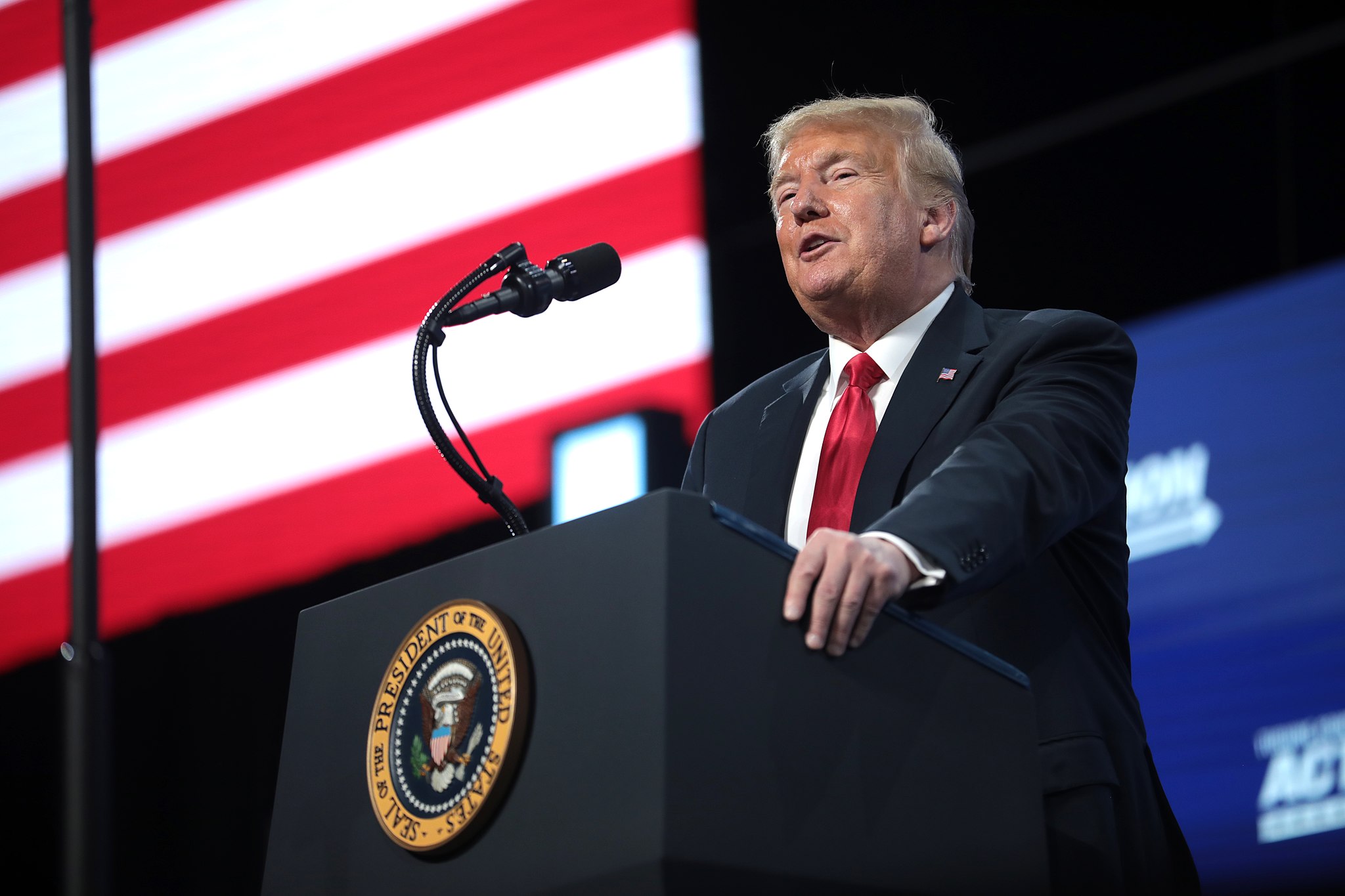
That strategy was impossible to miss at the Republican midterm convention in Dallas, where Trump emerged as the dominant figure and senior party leaders repeatedly stressed that the administration’s agenda depends on Republicans winning in November.
House Majority Leader Steve Scalise urged voters to support Republican candidates throughout the ballot, arguing that Trump’s America First agenda could be jeopardized if Democrats capture Congress.
Trump delivered a similar message, telling supporters to approach the midterms almost as though his own name were appearing on the ballot.
For Republicans, the strategy could help motivate Trump’s most committed supporters. But it also comes as the party confronts concerns about the economy, energy costs, the war with Iran and Trump’s national approval rating.
Republicans Make Trump Central to the 2026 Midterms
Midterm elections frequently become a referendum on the president and the party controlling the White House.
Republican leaders appear to be embracing that reality rather than running away from it.
House Speaker Mike Johnson and other members of Republican leadership took prominent roles at the Dallas gathering, presenting continued GOP control of Congress as necessary to advance the administration’s priorities.
Trump reinforced that argument himself.
He urged supporters to vote as though he were personally on the ballot, warning that Democratic control of Congress could block or reverse Republican policies.
The message leaves little doubt about the GOP’s broader strategy: motivate Trump supporters to participate in an election where control of both chambers of Congress carries major consequences for the remainder of his presidency.
Trump’s Approval Rating Creates a Challenge
The strategy also presents an obvious complication for Republicans competing in closely divided districts.
A Reuters/Ipsos poll released September 14 found Trump’s job approval rating at 35%, improving from 33% in late August but remaining at historically difficult levels for his presidency.
That matters because congressional candidates in competitive districts must attract voters beyond the Republican base.
Some GOP lawmakers facing difficult races stayed away from the Dallas convention. Republican leaders attributed many of the absences to scheduling conflicts and rejected suggestions that candidates were deliberately avoiding Trump.
Rep. Richard Hudson, chairman of the National Republican Congressional Committee, has argued that Trump remains an asset to Republican candidates and that giving the president opportunities to discuss his record benefits the party.
The disagreement reflects a fundamental question facing Republicans: Can Trump’s ability to energize conservative voters outweigh dissatisfaction among independents and other swing voters?
November will provide the answer.
Economy and Cost of Living Remain Major Issues
The economy could ultimately prove more important than any convention speech.
American households continue to pay close attention to grocery bills, gasoline prices, housing costs, interest rates and other everyday expenses.
Republicans are attempting to convince voters that maintaining GOP control will produce stronger economic results while allowing Congress to continue pursuing Trump’s policies on taxes, energy, immigration and government regulation.
Democrats are offering the opposite argument, blaming the administration and congressional Republicans for economic conditions and arguing that voters should give their party control of Congress.
The competing messages ensure that kitchen-table economics will remain near the center of the campaign.
For older Americans and retirees in particular, persistent increases in essential expenses can carry additional significance because many households rely heavily on fixed incomes, retirement savings and Social Security.
Trump’s $5,000 Proposal Shakes Up the Debate
Trump added another major issue to the campaign when he proposed providing American adults with a $5,000 payment if Republicans retain the House and Senate.
“If the Republicans win, you win with us and you get $5,000,” Trump told supporters at the convention.
He has described the proposed payment as a dividend benefiting Americans from the country’s economic success.
But significant questions remain.
Trump initially provided few details about exactly how the program would operate or how the federal government would finance payments that could collectively cost more than $1 trillion.
Speaker Johnson has also said congressional authorization would be required before the government could distribute the money.
That means Republican victories in November would not automatically guarantee that Americans receive $5,000 checks.
The proposal would still have to make its way through Congress.
$5,000 Payments Divide Republicans
Trump’s proposal has also exposed disagreements within the Republican Party over federal spending.
Some Republicans are open to returning additional money to Americans, but fiscal conservatives have questioned whether Washington can afford another massive federal expenditure when the national debt is already approaching $40 trillion.
Rep. Chip Roy of Texas has been among the Republican critics of the proposal.
The debate presents an unusual challenge for a party that has traditionally emphasized limiting government spending.
Supporters can argue that taxpayers should benefit directly when federal revenues exceed expectations.
Critics can counter that distributing more than $1 trillion could increase deficits and potentially create additional inflationary pressure.
Those questions are likely to remain part of the debate unless the administration releases a detailed financing plan.
Trump Wants Republicans to Treat the Midterms as a National Election
The Dallas convention also demonstrated that Republican leaders want voters thinking about national issues when they enter the voting booth.
Vice President JD Vance reportedly urged Republicans to “nationalize” the election.
That means emphasizing broad differences between Republicans and Democrats on issues such as immigration, taxes, energy, crime, federal spending and cultural debates rather than allowing every congressional race to revolve primarily around local concerns.
The strategy could benefit Republicans in districts where Trump remains highly popular.
Candidates in closely divided districts, however, may still emphasize local concerns and their individual records as they seek support from independents.
Democrats See an Opening
Democrats believe economic dissatisfaction and Trump’s approval numbers provide an opportunity to capture congressional seats.
Their strategy has increasingly focused on connecting Republican candidates to decisions made by Trump and the GOP-controlled Congress.
House Minority Leader Hakeem Jeffries and other Democratic leaders have emphasized affordability and the cost of living while arguing that Republicans have not delivered the economic improvements voters were promised.
Republicans counter that Democratic control would threaten tax, immigration, energy and other policies enacted under Trump.
Those sharply different arguments are likely to dominate campaign advertising as Election Day approaches.
Why Control of the House Matters for Trump
The political stakes are particularly high in the House of Representatives.
Republicans need to maintain their majority if they want to give Trump the strongest opportunity to move legislation through Congress during the second half of his term.
Losing the House could dramatically change Washington.
A Democratic majority would control House committees, determine which legislation reaches the floor and gain substantial authority over congressional investigations and oversight.
Keeping Republican control would give Johnson and Trump a better opportunity to pursue their legislative priorities.
The Senate carries similarly important consequences because senators vote on legislation and presidential nominees, including federal judges.
Trump’s Political Influence Faces Another Test
Republican leaders have ultimately made a consequential strategic decision.
Instead of attempting to separate congressional candidates from the president, they are making Trump a central figure in the campaign and asking voters to view the midterms as a decision about the future of his agenda.
Trump appears comfortable with that approach.
His message to supporters is that November’s election will determine whether Republicans can continue implementing the policies they have pursued since he returned to the White House.
Democrats are equally eager to make the election a referendum on Trump’s record.
That creates unusually clear stakes for voters.
The battle for Congress will determine far more than which party controls Capitol Hill. It could determine how much of Trump’s agenda can realistically move forward during the remainder of his presidency.
For Republicans, that means the 2026 midterms are increasingly tied to one political figure above everyone else: Donald Trump.







Leave a Reply