
What are Democrats going to do?
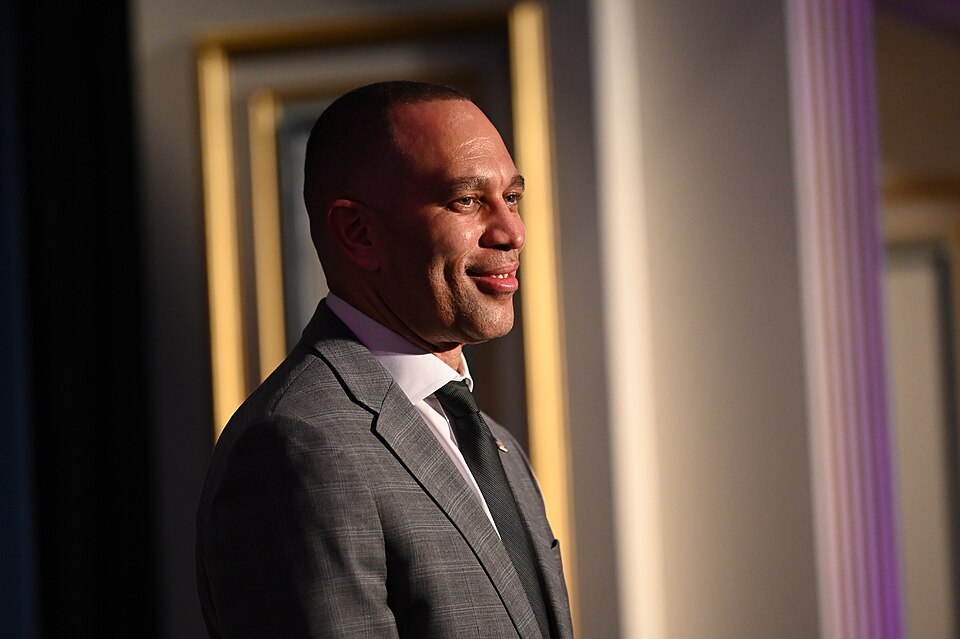
House Minority Leader Hakeem Jeffries faced tough questions Sunday about the direction of the Democratic Party, and one exchange highlighted the growing divide between the party’s leadership and its increasingly influential progressive wing.
During an appearance on NBC’s “Meet the Press,” Jeffries was pressed about Medicare for All and the Democratic Socialists of America, two issues that could become increasingly important as Democrats battle Republicans for control of Congress in the 2026 midterm elections.
While Jeffries made clear that he does not currently support Medicare for All legislation, he stopped short of declaring that democratic socialists have no place inside the Democratic Party.
That distinction quickly triggered criticism from progressive activists and commentators.
Jeffries Pressed on Medicare for All
Jeffries was first asked directly whether he supports Medicare for All, the sweeping health care proposal championed by progressive Democrats.
His answer marked a significant shift from his previous position.
“No,” Jeffries responded before explaining that he has not cosponsored Medicare for All legislation introduced in recent years.
“I do think we need to figure out how to fix our broken health care system and then build something better once we repair the damage that has been done,” Jeffries said.
Jeffries previously cosponsored Medicare for All legislation in 2019 and again in 2021, making his current position particularly noteworthy as Democrats debate how far the party should move to the left.
For American taxpayers, the debate involves enormous amounts of money and fundamental questions about the future of health insurance.
What Would Medicare for All Cost Taxpayers?
Medicare for All proposals generally seek to establish a single-payer national health insurance system in which the federal government assumes a dramatically larger role in financing medical care.
Previous analyses have estimated that such a transformation could require tens of trillions of dollars in additional federal spending over a decade.
Supporters counter that Americans would no longer pay many of the premiums, deductibles and other expenses associated with private health insurance, meaning some existing private spending would effectively be transferred to the federal government.
That leaves taxpayers with a critical question: How would Washington raise enough money to pay for the program?
Proposals discussed over the years have included payroll taxes, income-based premiums, taxes on businesses and wealthy Americans, and other significant changes to the federal tax system.
The issue could be particularly important to Americans over 50 who are approaching Medicare eligibility or already planning their retirement around the existing program.
Traditional Medicare has been part of American life for decades. Medicare for All would represent something substantially different by potentially placing nearly every American into a government-financed health care system.
Jeffries Faces Another Question About Democratic Socialists
Jeffries was also asked whether democratic socialists belong within the Democratic Party.
Rather than issuing a simple yes-or-no answer, the House Democratic leader rejected the Democratic Socialists of America’s agenda while acknowledging that DSA-aligned politicians who win Democratic primaries could ultimately become members of the House Democratic Caucus.
“I don’t support the DSA agenda as has been articulated by the DSA itself,” Jeffries said.
He then described Democrats as a broad political coalition.
“There will be progressives. There will be New Dems. There will be Blue Dogs,” Jeffries said.
The answer underscores a growing challenge for Democratic leaders.
Progressive and socialist-backed candidates have gained influence in Democratic politics, while party leaders are simultaneously attempting to win moderate and independent voters who could decide competitive House races in November.
Jeffries Rejects Several Progressive Positions
Although Jeffries would not push democratic socialists entirely outside the Democratic coalition, he was considerably more direct about several controversial policies associated with the political left.
“I do not support defunding the police,” Jeffries said. “I do not support open borders; I do not support abolishing the Senate.”
Those declarations could become politically significant heading into the midterm elections.
Republicans have repeatedly focused their campaigns on crime, border security, immigration enforcement, taxes and government spending — issues that can resonate strongly with middle-class families, retirees and older voters.
Jeffries appears determined to create some distance between House Democratic leadership and policies that Republicans could portray as extreme.
At the same time, completely rejecting the party’s progressive wing could create another problem for Democrats by angering activists and younger voters who want the party to move further left.
ICE Creates Another Problem for Democrats
Immigration and Customs Enforcement is another issue exposing divisions within the Democratic coalition.
Some progressive activists have supported abolishing ICE, while Jeffries has instead called for major reforms to the federal immigration enforcement agency.
That difference could receive considerable attention during the 2026 campaign.
President Donald Trump and Republicans have made border security and immigration enforcement major priorities, giving GOP candidates an opportunity to contrast their policies with Democrats who support reducing or eliminating ICE’s authority.
For voters concerned about illegal immigration, public safety and the cost of government services, candidates’ positions on immigration enforcement could become an important factor at the ballot box.
Progressive Backlash Erupts
Jeffries’ comments immediately generated criticism from prominent voices on the left.
Progressive journalist Mehdi Hasan accused Jeffries of being disconnected from Democratic voters and argued that Medicare for All enjoys substantial support among Democrats.
“Breaking Points” co-host Krystal Ball also mocked Jeffries’ response, while political commentator Kyle Kulinski went even further and called for the Democratic leader to step down.
Former political commentator Briahna Joy Gray similarly criticized Jeffries and the Democratic establishment.
The angry reaction demonstrates the difficult political position facing Democratic leadership.
Move too far toward the progressive wing, and Democrats risk losing moderate and independent voters.
Move toward the political center, and party leaders risk provoking activists who want major changes involving health care, policing, immigration and government spending.
A Democratic Party Divided Before November?
The larger question is what Democratic candidates will actually campaign on as Americans prepare to vote in November.
Jeffries is trying to lead a coalition that includes moderates, traditional liberals, progressives and democratic socialists — factions that frequently disagree about some of the biggest issues facing the country.
Medicare for All is one example.
Immigration enforcement is another.
Policing, taxes, federal spending and the size of government could create additional disagreements.
Republicans will almost certainly attempt to make those divisions part of their midterm message, particularly in competitive congressional districts where independent voters could determine which party controls the House.
Jeffries says Democrats should instead focus on affordability.
“We’re focused on actually solving the problems hard-working American taxpayers want us to solve, which is to lower the high cost of living,” he said.
That may be the message Democratic leadership wants voters to hear.
But the fierce reaction from the party’s progressive wing suggests the internal fight over what Democrats should stand for is far from settled.
What It Means for American Voters
For Americans watching Washington, the disagreement ultimately comes down to policy — and potentially their wallets.
Medicare for All raises major questions about taxes, federal spending and health care.
The debate over ICE involves border security and immigration enforcement.
Arguments over policing affect public safety and local communities.
And the struggle between Democratic leaders and democratic socialists could determine which policies receive serious consideration if Democrats regain control of the House.
Jeffries has now made clear that he does not support the current Medicare for All legislation or several of the DSA’s most controversial positions.
What remains less clear is exactly how much influence the progressive and socialist wings will have over the Democratic Party going forward.
With the November midterm elections approaching, voters may soon get their answer at the ballot box.






Leave a Reply