
This is a huge new concern for the GOP.
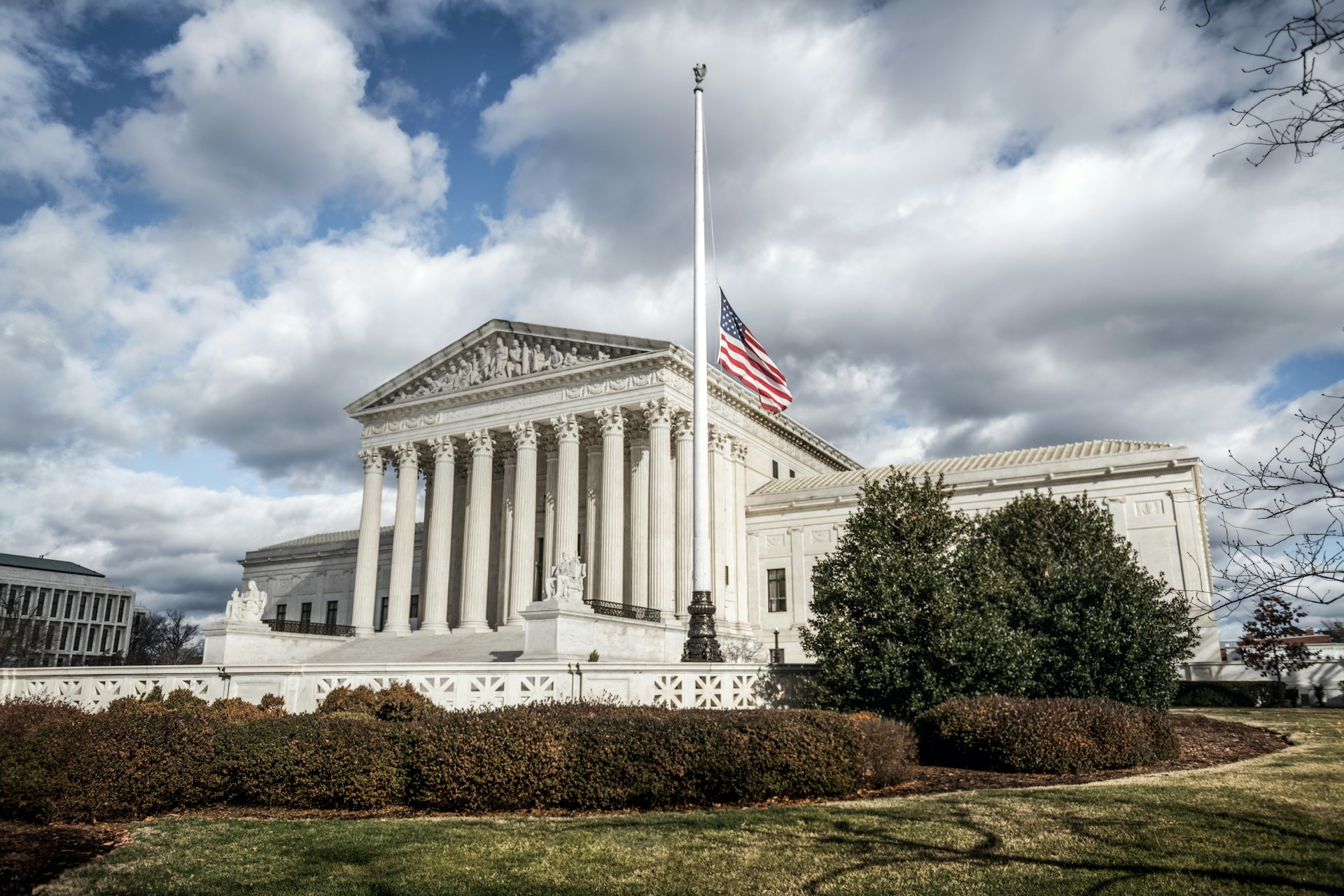
A major Republican effort to permanently protect the Supreme Court’s nine-seat structure has failed in the House, opening a new political battle over the future of the nation’s highest court and the conservative majority shaped in large part by President Donald Trump.
The House voted 212-206 on a proposed constitutional amendment that would have permanently established the Supreme Court at nine members — one chief justice and eight associate justices.
Despite receiving more “yes” than “no” votes, the amendment failed because constitutional amendments require a two-thirds majority in both chambers of Congress before they can be submitted to the states for ratification.
Only one House Democrat, Rep. Don Davis of North Carolina, joined Republicans in supporting the measure.
The immediate result is important: Nothing about the Supreme Court changes today.
The Court still has nine seats.
But the vote means the number nine will not receive the additional constitutional protection Republicans were seeking, leaving Congress with its longstanding authority to change the size of the Supreme Court through legislation.
For conservatives concerned about protecting Trump’s judicial legacy, that distinction could become increasingly important.
Republicans Tried to Permanently Protect Nine Justices
The Republican-backed amendment was straightforward.
It would have added language to the Constitution establishing that the Supreme Court of the United States must consist of nine justices: one chief justice and eight associate justices.
That would have made it dramatically more difficult for a future president and Congress to increase the size of the Court.
House Speaker Mike Johnson and other Republicans framed the vote as an opportunity to force Democrats to publicly reveal where they stand on the increasingly contentious issue of Supreme Court expansion.
Before the vote, Johnson said lawmakers who have attempted to distance themselves from the Democratic Socialists of America would have an opportunity to prove it.
“They’re going to get a chance to show us,” Johnson said.
The political strategy was clear.
Republicans wanted voters to know which lawmakers were willing to permanently protect the traditional nine-member Court — and which were not.
Why This Matters for Trump
Few presidents in modern American history have had as significant an impact on the Supreme Court as Donald Trump.
Trump appointed three Supreme Court justices during his first presidency, helping establish the Court’s current 6-3 conservative majority.
Those appointments transformed the ideological balance of the Court and became one of Trump’s most consequential accomplishments for conservative voters.
That legacy is precisely why the debate over expanding the Court matters.
If a future Democratic president took office with sufficient congressional support, lawmakers could attempt to increase the number of Supreme Court seats.
Adding four seats, for example, would increase the Court from nine to 13 justices and potentially give a president the opportunity to dramatically alter its ideological balance.
That would require overcoming substantial political and legislative obstacles, and Wednesday’s vote does not make such an expansion imminent.
But Republicans argue that the possibility itself represents a threat to the independence and stability of the judiciary.
Democrats Have Openly Discussed 13 Justices
Republican concerns are not based entirely on a hypothetical political scenario.
Several prominent Democrats have publicly discussed expanding the Supreme Court.
Former Vice President Kamala Harris recently suggested revisiting the idea of a 13-member Supreme Court.
“We need to revisit the point of expanding the court to 13 justices like we have 13 district courts,” Harris said during a July appearance.
Rep. Jim Clyburn of South Carolina has also endorsed the idea of increasing the number of justices.
Clyburn suggested that 13 could be an appropriate number for the Court, describing it as a “baker’s dozen.”
Those comments have given Republicans additional ammunition as they warn voters that court expansion could become a genuine political issue if Democrats regain sufficient power in Washington.
Not every Democrat supports expanding the Supreme Court, and opposition to the Republican constitutional amendment does not necessarily mean every lawmaker voting against it supports adding justices.
Democratic leaders have argued instead that Congress should not surrender a constitutional power it has possessed since the nation’s founding.
That distinction is important.
Still, the overwhelming Democratic opposition gives Republicans a powerful political talking point heading into the midterm elections.
The Supreme Court Hasn’t Always Had Nine Justices
Many Americans may assume that the Constitution requires exactly nine Supreme Court justices.
It does not.
The Constitution establishes a Supreme Court but leaves its precise size to Congress.
The original Supreme Court had six members. Congress subsequently changed the number several times as the nation and federal court system developed.
The Court eventually reached its current nine-seat configuration in 1869.
That arrangement has now survived for more than 150 years, spanning Republican and Democratic administrations, wars, economic crises and enormous political changes.
The nine-member Court has consequently become one of America’s longest-lasting governmental traditions.
But tradition and constitutional protection are not the same thing.
Federal law currently provides for one chief justice and eight associate justices. Congress retains the ability to change that law.
The Republican amendment sought to take that power away from future congressional majorities by placing the nine-seat structure directly into the Constitution.
America Has Seen This Fight Before
The controversy surrounding “court packing” is hardly new.
One of the most famous examples came during President Franklin D. Roosevelt’s administration in the 1930s.
After the Supreme Court created obstacles for portions of Roosevelt’s New Deal agenda, his administration backed a proposal that could have substantially increased the number of justices.
The proposal triggered fierce resistance, including concerns that changing the Court’s composition for political purposes could undermine judicial independence.
Roosevelt’s plan ultimately failed.
But nearly nine decades later, the fundamental question has returned:
Should politicians be able to change the size of the Supreme Court when they are unhappy with its decisions?
Republicans say permanently establishing nine justices would prevent either political party from manipulating the Court’s membership for ideological advantage.
Opponents counter that Congress has historically possessed the authority to determine the Court’s size and should not voluntarily surrender that constitutional power.
Andy Biggs Warns About Government Overreach
Rep. Andy Biggs of Arizona, who introduced the Republican proposal, has argued that fixing the Court at nine members would protect the judiciary from political manipulation.
His concern centers on what could happen whenever one political party controls both Congress and the White House but dislikes the direction of the Supreme Court.
“How can the Supreme Court protect Americans from government overreach if the same government can pack the court whenever it dislikes a ruling?” Biggs previously asked.
That argument is likely to resonate with conservatives who view an independent judiciary as an essential safeguard against unchecked government power.
Supporters contend that presidents and lawmakers should not be able to respond to unfavorable Supreme Court decisions simply by creating additional seats and appointing new justices who share their political philosophy.
Could Democrats Actually Expand the Supreme Court?
Legally, Congress retains considerable authority over the size of the Supreme Court.
Federal law currently establishes nine seats, but that number is not written into the Constitution.
Congress has changed the size of the Court multiple times throughout American history.
That means a future Congress could theoretically pass legislation changing the number again.
There would, however, be major political hurdles.
Any court-expansion legislation would need to pass the House and Senate and be signed by the president.
Under current Senate rules, the legislative filibuster presents an additional obstacle for legislation lacking 60 votes.
A future Senate majority could potentially attempt to change those rules, creating another political battle before any Supreme Court expansion could occur.
In other words, expanding the Court is possible — but it would be neither automatic nor easy.
Trump’s Supreme Court Legacy Could Be at Stake
The broader political stakes extend far beyond one House vote.
Trump’s three Supreme Court appointments helped produce a conservative majority that could influence American law for decades.
For conservatives, protecting that legacy has become a major priority.
For Democrats frustrated with the Court’s direction, structural reform has increasingly become part of the conversation.
Wednesday’s vote demonstrated just how sharply divided Washington has become over the issue.
Republicans overwhelmingly supported permanently fixing the Court at nine.
Nearly every Democrat voted against doing so.
Neither side is likely to forget those votes.
What Happens to the Supreme Court Now?
For the immediate future, nothing changes.
The Supreme Court remains composed of nine justices, and the failed constitutional amendment does not remove, replace or add a single member.
There is also no guarantee that Democrats will ever have the political votes necessary to expand the Court.
What the vote does accomplish is preserving the existing system.
Congress retains the authority it has historically exercised over the number of Supreme Court justices, while Republicans failed to establish a constitutional barrier against future expansion.
That could make the Supreme Court’s size an increasingly important campaign issue.
Republicans can now point to the vote and argue that they attempted to permanently protect the nine-member Court.
Democrats can respond that Congress should preserve powers granted to the people’s elected representatives rather than surrender them permanently.
Voters will ultimately decide which argument they find more convincing.
Supreme Court Battle Could Become a Major Election Issue
With control of Congress at stake, Republicans now have a recorded vote they can use against vulnerable Democrats.
The political message is simple: Republicans offered lawmakers an opportunity to constitutionally guarantee nine Supreme Court seats, and nearly every House Democrat rejected it.
Democrats will counter that their vote was about maintaining Congress’ historical constitutional authority rather than endorsing court packing.
That debate could become particularly important among older voters who remember previous battles over the judiciary and view the Supreme Court as one of the country’s most important institutions.
For Trump supporters, the concern is equally straightforward.
Trump spent years building a conservative Supreme Court majority through the constitutional nomination and confirmation process. If future political leaders eventually expand the Court, the ideological balance created by those appointments could change rapidly.
The Republican amendment was designed to prevent that possibility permanently.
It failed.
The Supreme Court still has nine justices today. But after Wednesday’s vote, the political fight over whether it should remain that way is far from over.








Leave a Reply