
This was surprising to hear.
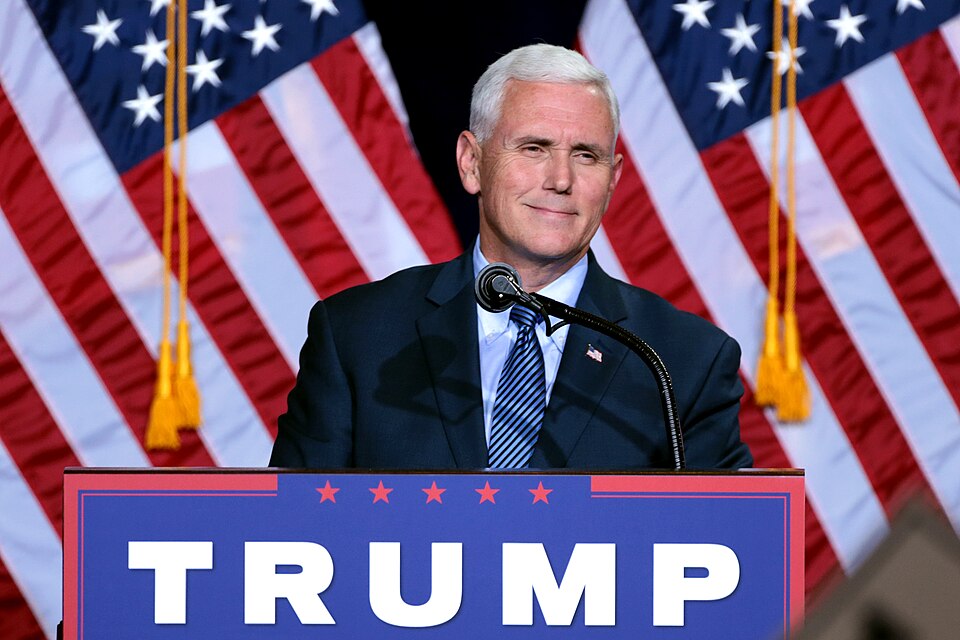
Former Vice President Mike Pence is warning President Donald Trump that the war with Iran may be approaching a critical turning point, arguing that the United States and Israel could eventually have to take stronger action to bring the conflict to a decisive conclusion.
Pence, who served alongside Trump for four years, has strongly supported the effort to confront Iran. But his latest comments highlight a difficult reality facing the White House as the conflict stretches toward the six-month mark.
During a Sunday appearance on CNN, Pence argued that diplomatic pressure alone may not be enough to achieve America’s objectives.
“I think the time is going to come sooner rather than later when the president and our ally Israel are going to have to go in and finish the job,” Pence said while visiting Kyiv, Ukraine.
His warning comes as Trump faces growing questions about how long the conflict will continue, what victory would ultimately look like and how much longer American military forces will be required in the Middle East.
Pence Says Iran Has Not Accepted Defeat
Pence argued that Iranian leaders have yet to recognize the extent of the military pressure they face.
He also expressed skepticism about negotiations surrounding the temporary 60-day ceasefire, suggesting diplomacy cannot produce a lasting settlement until Tehran accepts substantially tougher terms.
“You don’t make peace with your enemy, you make peace with your defeated enemy,” Pence said.
The former vice president’s position is clear: America should maintain pressure rather than give Iran an opportunity to recover and rebuild its military capabilities.
That argument is likely to resonate with conservatives who believe Iran must be prevented from threatening American forces, Israel and international shipping.
But it also creates a difficult question for Trump.
How far should the United States go to secure a decisive outcome?
Trump Faces A Major Decision On Iran
The conflict has already lasted considerably longer than many Americans initially expected.
Trump administration officials had previously expressed confidence that the fighting could be resolved relatively quickly. Instead, the United States continues maintaining a substantial military presence in the region.
Pence believes reducing that pressure now would be a mistake.
“It’s gonna be absolutely imperative that we keep the pressure on and that we keep our military assets in the region,” he said.
For Trump, that means balancing two priorities important to many Republican voters: preventing Iran from becoming a renewed threat while avoiding an open-ended American military commitment overseas.
That balancing act could become increasingly important as the 2026 midterm elections draw closer.
USS Abraham Lincoln Finally Heads Home
Pence’s remarks came as the USS Abraham Lincoln begins leaving the region following an exceptionally long deployment.
The aircraft carrier is being relieved by the USS George Washington, allowing thousands of sailors aboard the Lincoln to begin their journey home.
The Lincoln’s extended deployment attracted attention on Capitol Hill following reports of supply problems, difficult living conditions and mental health concerns among members of the crew.
Defense Secretary Pete Hegseth has pushed back against some of those reports, saying conditions aboard the carrier had been misrepresented.
Regardless of the controversy, the rotation demonstrates that the United States is not abandoning its military presence in the region.
Instead, new American forces are taking over the mission.
Strait Of Hormuz Remains Critical
One of the most important objectives for U.S. forces is maintaining access through the Strait of Hormuz, one of the world’s most strategically important shipping routes.
A significant portion of global energy supplies normally moves through the narrow waterway.
Disruptions there can have consequences far beyond the Middle East, including increased uncertainty in global oil markets and potentially higher transportation and energy costs.
American forces have established a protected shipping corridor near Oman that has allowed commercial vessels to resume some movement through the strait.
Traffic reportedly remains below normal pre-war levels, however.
For American consumers already concerned about household expenses, the security of this shipping route is more than a foreign-policy issue. Prolonged disruptions to global energy supplies can eventually affect fuel, transportation and other costs throughout the economy.
America’s Original Iran Mission Has Evolved
Earlier in the conflict, much of the administration’s attention centered on Iran’s nuclear program.
Washington sought an agreement that would prevent Tehran from rebuilding its nuclear capabilities, including restrictions involving nuclear facilities and enriched material.
But the conflict has evolved.
Protecting commercial shipping and preventing Iran from restricting passage through the Strait of Hormuz have become major priorities for American forces.
Trump and his allies have repeatedly emphasized the enormous damage inflicted on Iran’s military capabilities.
Even so, Iranian forces have retained some ability to threaten American interests and regional shipping.
That continuing danger helps explain Pence’s insistence that Washington cannot declare the mission finished prematurely.
More Than 750 U.S. Troops Have Been Wounded
The human cost of the conflict has also become increasingly significant.
The Pentagon recently disclosed that more than 750 American service members have been wounded since the Iran war began, according to reporting from The Associated Press.
For military families, those numbers underscore the stakes surrounding every decision made in Washington.
Trump must determine how to protect American troops already deployed overseas while deciding what level of military pressure will ultimately be required to achieve U.S. objectives.
Ceasefire Ends Without A Breakthrough
Another challenge is the uncertain future of diplomacy.
The latest extension of a 60-day ceasefire has expired, while prospects for a comprehensive new agreement remain unclear.
Pence appears convinced that additional pressure will ultimately be necessary.
Others within the Republican Party have expressed concern about allowing the conflict to become a prolonged American military commitment.
That debate could grow considerably louder if the war continues toward Election Day.
Pence’s Warning Raises The Biggest Question Yet
Pence and Trump have had major political disagreements since leaving office together, making the former vice president’s strong support for Trump’s campaign against Iran particularly notable.
But Pence is now arguing that the administration may eventually have to make an even bigger decision.
Should Trump maintain the current combination of military and economic pressure while waiting for Iran to accept an agreement?
Or will the United States and Israel ultimately need additional military action to achieve the decisive outcome Pence wants?
For Trump, the challenge is finding a path that protects American troops, prevents Iran from rebuilding its military and nuclear capabilities, keeps vital shipping routes open and avoids trapping the United States in another indefinite Middle Eastern conflict.
Pence’s warning suggests that he believes the moment for that decision is getting closer.
And with the Iran conflict approaching the six-month mark, the question of how Trump intends to “finish the job” could become one of the defining foreign-policy issues of his presidency.





Leave a Reply