
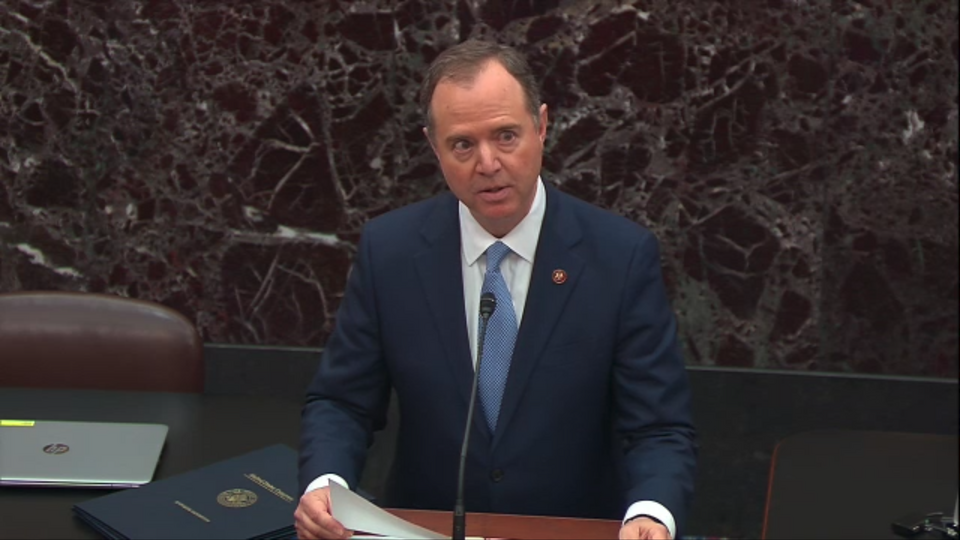
Schiff just got humbled.
Sen. Adam Schiff launched a sharp attack on President Donald Trump over the high-profile Freedom 250 IndyCar race in Washington, D.C., but his criticism quickly ran into a major complication.
The California Democrat suggested taxpayers were footing the bill for what he portrayed as an expensive presidential spectacle. But veteran IndyCar driver Graham Rahal pushed back, pointing out that the race itself was privately financed — a distinction that put Schiff’s accusation under immediate scrutiny.
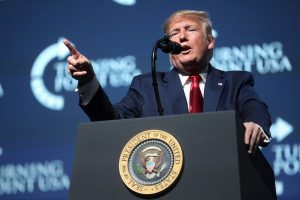
The controversy erupted after Trump helped kick off the historic race, part of the celebrations surrounding America’s 250th anniversary.
Schiff Takes Aim at Trump Over IndyCar Race
Schiff criticized Trump on social media while Americans continue to worry about gasoline prices, taxes and the overall cost of living.
“While you struggle with the cost of gas, Trump offers you the spectacle of an IndyCar race hoping you will not notice,” Schiff wrote Sunday.
He then accused Trump of spending additional taxpayer money on “self-aggrandizing distractions.”
That was the part of Schiff’s argument that quickly attracted attention.
While government agencies did have responsibilities connected to the massive Washington event, Penske Corporation covered the cost of staging the race itself, with corporate sponsors also supporting the event.
That distinction gave Schiff’s critics an opening.
Graham Rahal Corrects the Record
Veteran IndyCar driver Graham Rahal responded directly to Schiff and rejected the senator’s characterization of the event.
Rahal argued that the Freedom 250 was an opportunity for Americans to celebrate their country while watching one of the nation’s most recognizable forms of motorsports.
He also challenged Schiff on the funding question.
According to Rahal, the event was privately financed rather than being a government-funded race. He also argued that thousands of spectators traveling to Washington created an economic benefit for the city.
Those visitors potentially meant additional business for hotels, restaurants, transportation companies and other establishments throughout the Washington area.
Rahal, who finished 13th in the race, said the event also brought people to the nation’s capital who might never have otherwise visited.
For many Trump supporters, his response turned the argument around: instead of taxpayers simply financing a presidential spectacle, a privately backed sporting event attracted enormous public interest while showcasing Washington and American motorsports.
So Who Paid for the Freedom 250?
The answer is more nuanced than the political back-and-forth might suggest.
Penske Corporation President Bud Denker was previously asked by Washington’s NBC affiliate who was paying for the event.
His answer was straightforward: Penske was.
The company covered the primary costs associated with staging the race, while sponsorships and corporate hospitality generated some revenue.
Denker also indicated the Freedom 250 was not designed as a break-even venture, meaning Penske was prepared to absorb substantial costs associated with bringing IndyCar racing to the streets of Washington.
The race attracted an extensive roster of corporate sponsors, adding another source of private financial support.
But that does not mean taxpayers had absolutely no expenses connected to the weekend.
A major event in the nation’s capital requires significant security. Local and federal law enforcement agencies were involved, and Washington has access to federal resources intended to help secure large public events.
That distinction matters.
The race itself was primarily privately financed, while taxpayers still supported certain government functions surrounding the event, particularly security and public safety.
Massive Crowds Descend on Washington
The Freedom 250 was more than another stop on the motorsports calendar.
It was staged as part of the United States’ 250th anniversary celebration, placing high-speed IndyCars against the backdrop of some of America’s most recognizable landmarks.
The event generated enormous interest.
Organizers reported hundreds of thousands of ticket requests, while spectators traveled to Washington to experience the unusual sight of IndyCars racing through the heart of the nation’s capital.
General admission was offered free through a ticketing system, giving ordinary racing fans an opportunity to attend the historic event.
That turnout became another part of the argument against Schiff’s criticism.
Supporters said the race provided entertainment, celebrated American history and potentially generated additional tourism spending during an event that drew visitors from across the country and overseas.
White House Fires Back at Schiff
The White House did not ignore Schiff’s remarks.
White House spokesman Davis Ingle accused the senator of allowing his opposition to Trump to overshadow the patriotic significance of America’s 250th anniversary celebrations.
The administration portrayed the Freedom 250 as a celebration of the country rather than simply another political event centered on Trump.
That response reflects the larger divide surrounding the president.
Trump’s critics often view his involvement in large public spectacles as an extension of his political brand. His supporters, however, frequently see the same events as opportunities to promote patriotism, American culture and national pride.
The Freedom 250 became the latest example of those two interpretations colliding.
Critics Say Schiff Spoke Too Soon
Schiff also faced criticism from commentators who argued that he should have examined the event’s financing before making taxpayer spending central to his attack.
Former electronics executive Sam Antar accused Schiff of reacting to Trump’s involvement before determining who was actually paying for the race.
That criticism gets to the heart of the controversy.
Schiff was certainly free to question whether a president should devote time and government resources to a major sporting event. He could also criticize the security expenses or challenge Trump’s priorities.
But claiming taxpayer money was being spent on the race itself invited a factual challenge once Penske’s substantial financial role became clear.
For readers trying to separate the political rhetoric from the underlying facts, that distinction is important.
Trump Has Long Embraced American Motorsports
Trump’s involvement in the Freedom 250 should not come as a surprise.
The president has maintained a visible relationship with American motorsports for years and has repeatedly praised racing executive Roger Penske.
Trump has attended the Daytona 500 and built relationships with prominent figures from NASCAR and other racing organizations.
Motorsports also fit naturally into several themes Trump regularly emphasizes: American industry, competition, manufacturing, patriotism and traditional American culture.
The Freedom 250 brought many of those themes together in one highly visible event.
Rather than holding the race at a conventional track, organizers put IndyCars on the streets of Washington, creating an unmistakably American backdrop for the competition.
Why Schiff’s Attack Became the Story
The political lesson from the controversy may ultimately have less to do with auto racing than with accuracy.
Schiff wanted to make a larger point about Trump’s priorities at a time when many Americans remain focused on household expenses and the economy.
That is a legitimate political debate.
But by tying his criticism specifically to taxpayer funding of the race, Schiff opened himself to a straightforward rebuttal.
Penske financed the event itself, corporate sponsors contributed financial support, and the race attracted a large number of spectators to Washington.
At the same time, government agencies did incur expenses associated with security and other official responsibilities.
Both facts can be true.
And that distinction is exactly why Schiff’s original attack generated such a forceful response.
The Bottom Line
Adam Schiff tried to turn President Trump’s appearance at the Freedom 250 into an argument about government spending and the cost pressures facing American families.
Instead, the funding structure of the event quickly became the focus.
Penske Corporation covered the primary expense of staging the race, with corporate sponsors helping support the event. Taxpayer-supported government resources were still involved in security and other public responsibilities, but that is considerably different from saying taxpayers simply paid for the race.
Graham Rahal seized on that distinction and publicly challenged Schiff.
For Trump supporters, the episode became another example of a political opponent attacking the president before all the facts were established. For Schiff and his supporters, questions can still be raised about government resources devoted to such a massive presidential event.
But on the narrow question at the center of Schiff’s original attack — who paid to put on the race — the details made his criticism much harder to sustain.
And instead of leaving Trump on the defensive, Schiff soon found himself facing questions about his own claim.


Leave a Reply