

Wow! This was was unexpected.
The battle for control of the U.S. Senate is already heating up, and new fundraising numbers are giving Democrats fresh momentum in several of the nation’s most competitive races. While Republicans remain confident they can hold the upper chamber, the latest campaign finance reports reveal that two Democratic candidates have built massive financial war chests that could reshape the political landscape heading into the 2026 midterm elections.
Federal Election Commission filings show that Democratic Senate candidates are dominating individual fundraising, with eight of the top ten fundraisers belonging to the Democratic Party. Altogether, the leading Democratic campaigns have raised an impressive $574 million, compared to $336 million for their top Republican counterparts.
Leading the nation is Georgia Sen. Jon Ossoff, who has become the biggest fundraiser of the election cycle. As of June 30, Ossoff had collected an astonishing $77 million while holding $42.5 million in cash on hand, giving him one of the strongest financial positions of any Senate candidate. Since launching his first Senate campaign in 2020, Ossoff has now raised nearly $98 million.
Not far behind is Texas Democrat James Talarico, who has emerged as another fundraising powerhouse. His campaign has generated approximately $68.5 million, with more than $21.5 million remaining in the bank as the campaign season intensifies.
Several other Democratic candidates are also posting eye-catching fundraising totals. Former Ohio Sen. Sherrod Brown has raised roughly $38.6 million, while former North Carolina Gov. Roy Cooper has brought in approximately $35 million, underscoring Democrats’ determination to compete aggressively in battleground states across the country.
Even candidates who are no longer running attracted significant financial support. Former Maine candidate Graham Platner, who ended his campaign earlier this month, raised about $21 million—more than incumbent Republican Sen. Susan Collins, whose campaign reported roughly $16.2 million in fundraising.
The fundraising surge comes as both parties prepare for what is expected to be one of the most expensive midterm elections in American history. Political observers consider Georgia, Texas, Maine, Ohio, North Carolina, Michigan, Alaska, New Hampshire, and Iowa among the states most likely to determine which party controls the Senate after the election.
Although Democrats have built an impressive fundraising advantage among individual candidates, Republicans still hold a significant edge where it may matter most.
The National Republican Senatorial Committee reports approximately $48.9 million in cash on hand, compared to about $38.9 million for the Democratic Senatorial Campaign Committee. That organizational advantage gives Republicans additional resources to invest in advertising, voter outreach, and get-out-the-vote efforts during the final months of the campaign.
The gap becomes even larger at the national party level. Financial disclosures show the Republican National Committee holding roughly $125.5 million in available funds, while the Democratic National Committee reports approximately $14.9 million. That substantial difference could provide Republicans with a powerful advantage as election season accelerates.
A recent Supreme Court decision may make those party resources even more valuable. The ruling cleared the way for official political party committees to coordinate more closely with individual candidates, potentially allowing Republicans to maximize their larger national war chest even in races where Democratic candidates have outraised their GOP opponents.
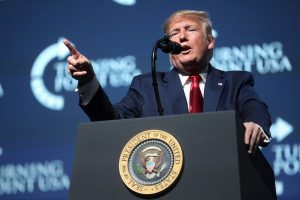
For President Donald Trump and Republican leaders, the latest fundraising reports present both a warning and an opportunity. Democrats have clearly energized their donor base and assembled enormous campaign accounts in several high-profile races. At the same time, Republicans continue to benefit from stronger national party finances, a well-funded campaign infrastructure, and a political map that many analysts believe still favors the GOP in the fight for Senate control.
With billions of dollars expected to be spent before Americans head to the polls, fundraising is only one piece of the larger political battle. Republicans are betting that President Trump’s influence, voter turnout, and their financial advantages at the party level will outweigh Democrats’ success in individual fundraising.
The race for the Senate is still taking shape, but one thing is already clear: both parties are preparing for an intense showdown that could determine the direction of Washington for years to come.






Leave a Reply