
Here’s what happened.
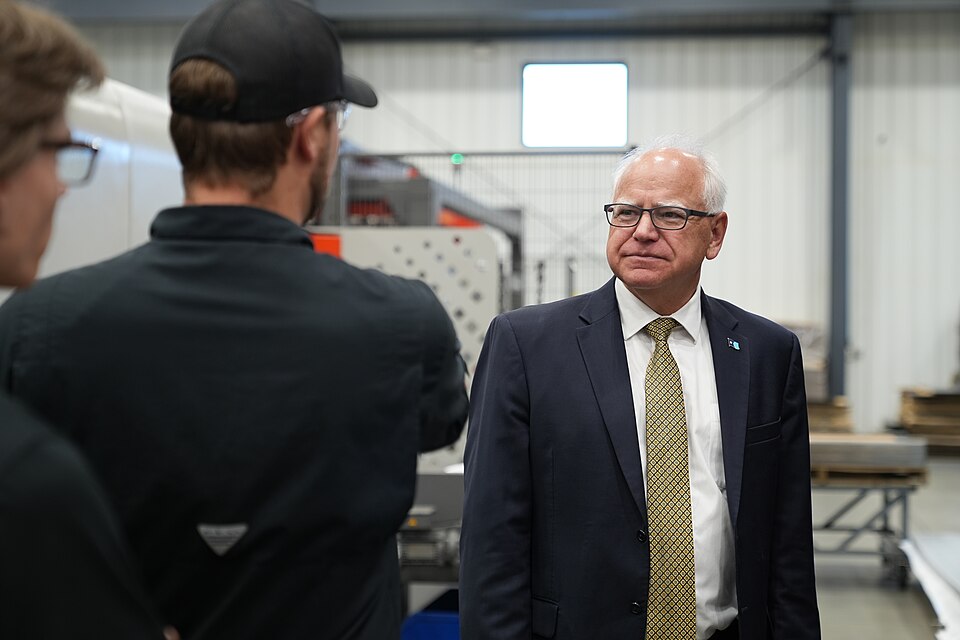
A major political battle is erupting in Minnesota after Democratic Gov. Tim Walz moved to restrict copper and nickel mining near the Boundary Waters, putting him directly at odds with President Donald Trump’s push to expand American mineral production.
Republicans are warning that the decision could have consequences reaching far beyond Minnesota.
House Majority Whip Tom Emmer, R-Minn., argues that restricting access to valuable domestic mineral deposits could increase America’s dependence on foreign countries — including China — for materials used in manufacturing, technology and national defense.
Walz and environmental organizations strongly disagree. They say stronger protections are necessary to prevent mining activity from threatening the Boundary Waters Canoe Area Wilderness and its surrounding watershed.
The result is a high-stakes debate involving national security, American jobs, environmental protection and the country’s ability to produce more of the raw materials it needs at home.
Walz Moves Against Mining Near Boundary Waters
Walz issued an executive order Tuesday directing Minnesota agencies to halt certain permitting and environmental-review work involving nonferrous mining proposals in the Rainy River Headwaters Watershed near the Boundary Waters.
The action also prevents the state from issuing new nonferrous mineral leases in the affected area.
The decision comes only months after Trump signed legislation reversing a Biden-era federal restriction that had blocked new mining leases in the area for 20 years.
That federal action was supported by Republicans who believe northeastern Minnesota’s mineral deposits could play an important role in strengthening domestic production and reducing America’s dependence on foreign supply chains.
Walz is now using state authority to push policy in the opposite direction.
Because mining projects can require both federal and state approvals, Minnesota’s refusal to process necessary state permits could create a significant obstacle for proposed projects even after the federal restrictions were lifted.
Republicans Warn About National Security
Emmer responded forcefully to Walz’s decision.
The Minnesota Republican called the governor’s move “stupid” and “dangerous,” arguing that it could hurt northern Minnesota workers while increasing America’s reliance on geopolitical competitors.
Emmer specifically pointed to China.
His concern centers on a broader issue that has received growing attention in Washington: America’s dependence on foreign countries for minerals and other materials essential to the modern economy.
Copper and nickel are used across a wide range of industries. Applications include electronics, transportation equipment, batteries, infrastructure and military hardware.
That means access to these materials isn’t merely an environmental or economic question. Supporters of increased domestic mining argue it has become a matter of national security as well.
Minnesota Is Sitting On Enormous Mineral Resources
The dispute is especially significant because northeastern Minnesota contains the Duluth Complex, a massive geological formation known for deposits of copper, nickel and other valuable metals.
Republicans believe those resources represent an opportunity for the United States.
Instead of depending heavily on overseas mining and processing, supporters say America should responsibly develop more of the resources located within its own borders.
That argument has gained additional urgency as competition between the United States and China has intensified.
For many conservatives, the calculation is straightforward: If America needs these minerals for its economy and national defense, producing more of them domestically could strengthen supply chains while supporting American workers.
But opponents of mining near the Boundary Waters argue that location matters.
Environmental Groups Back Walz’s Decision
Mining is already prohibited within the Boundary Waters Canoe Area Wilderness itself.
The controversy instead involves proposed mining activity in surrounding areas and watersheds.
Environmental organizations argue that copper-nickel mining near the wilderness could create pollution risks that eventually threaten water flowing into the protected region.
Save the Boundary Waters strongly supported Walz’s executive action and accused the federal government of removing protections that Minnesotans had spent years fighting to establish.
Supporters of Walz’s position believe the Boundary Waters is simply too valuable to expose to the potential environmental risks associated with nearby mining.
The wilderness is famous for its lakes, forests, canoe routes and outdoor recreation, making it an important natural and economic resource for Minnesota.
That creates a genuine policy dilemma: How should America balance environmental protection against its growing need for domestically produced minerals?
Emmer Says America Can Protect The Environment And Mine
Emmer rejects the suggestion that supporters of mining do not care about environmental protection.
He argues that Americans across the political spectrum want clean air and clean water.
The Republican’s position is that refusing to mine domestically does not eliminate America’s demand for copper, nickel and other minerals. Instead, the country could become more dependent on materials extracted elsewhere.
That could mean relying on nations operating under environmental, labor and regulatory standards different from those in the United States.
Supporters of domestic mining contend that American environmental laws and regulatory requirements provide a path for extracting resources while still requiring companies to meet strict standards.
For conservatives, that raises an important question: If the minerals are going to be mined somewhere, should more of that production take place in America?
American Jobs Are Also At Stake
The dispute carries significant economic implications for northern Minnesota.
Mining has long been part of the region’s economy, and supporters of new projects argue that expanded mineral development could provide well-paying jobs while creating additional economic activity.
Republicans have particularly emphasized the potential impact on union workers and communities where mining has historically played an important role.
Environmental advocates counter that the Boundary Waters supports its own economy through tourism, recreation and outdoor businesses.
They warn that environmental damage could threaten those industries and permanently affect one of America’s most distinctive wilderness areas.
Both sides therefore argue that Minnesota’s economic future is at stake — but they disagree sharply about which path provides the greatest long-term benefit.
Trump’s America-First Mineral Strategy Faces A Test
The controversy also presents a challenge to Trump’s broader effort to increase American production of strategically important resources.
Trump has repeatedly emphasized domestic energy and resource development as part of his America First economic agenda.
Supporters believe the United States became too dependent on foreign supply chains over several decades, creating vulnerabilities that became increasingly obvious during international disruptions and geopolitical conflicts.
Critical minerals have become an important part of that discussion.
A country capable of producing more of the materials needed for its military, infrastructure and industries may be less vulnerable when overseas supply chains are interrupted.
Walz’s action shows how state governments can still play a decisive role even when Washington favors increased development.
China Looms Over The Debate
China’s role in global mineral supply chains makes the Minnesota controversy especially significant for national-security conservatives.
Beijing has spent years building a powerful position across mineral extraction, processing and manufacturing.
American policymakers from both parties have increasingly discussed ways to reduce strategic dependence on China, although they often disagree about how domestic mining should fit into that strategy.
Republicans like Emmer argue that restricting potentially valuable American mineral deposits works against that objective.
Environmental advocates respond that national-security concerns should not automatically override protections for environmentally sensitive areas.
That disagreement is likely to continue well beyond Minnesota.
A Bigger Question For America
The Boundary Waters fight illustrates a challenge the United States will face repeatedly as demand for minerals grows.
America wants secure supply chains.
It wants good-paying domestic jobs.
It wants a strong military and manufacturing sector.
And Americans also want clean water, protected wilderness and responsible development.
Achieving all of those objectives simultaneously is difficult.
Trump and his Republican allies believe expanding responsible domestic mining can reduce America’s dependence on foreign competitors while creating jobs and strengthening national security.
Walz and his environmental allies believe some areas are too environmentally sensitive to expose to the risks associated with mineral development.
For Americans concerned about China, national security and the future of U.S. manufacturing, the Minnesota showdown deserves close attention.
The ultimate question is bigger than one governor or one mining proposal: Should America develop more of its own strategic resources under U.S. environmental standards, or continue relying more heavily on minerals produced overseas?
That is a debate voters are likely to hear much more about as the United States confronts the economic and national-security consequences of its dependence on global mineral supply chains.


Leave a Reply