
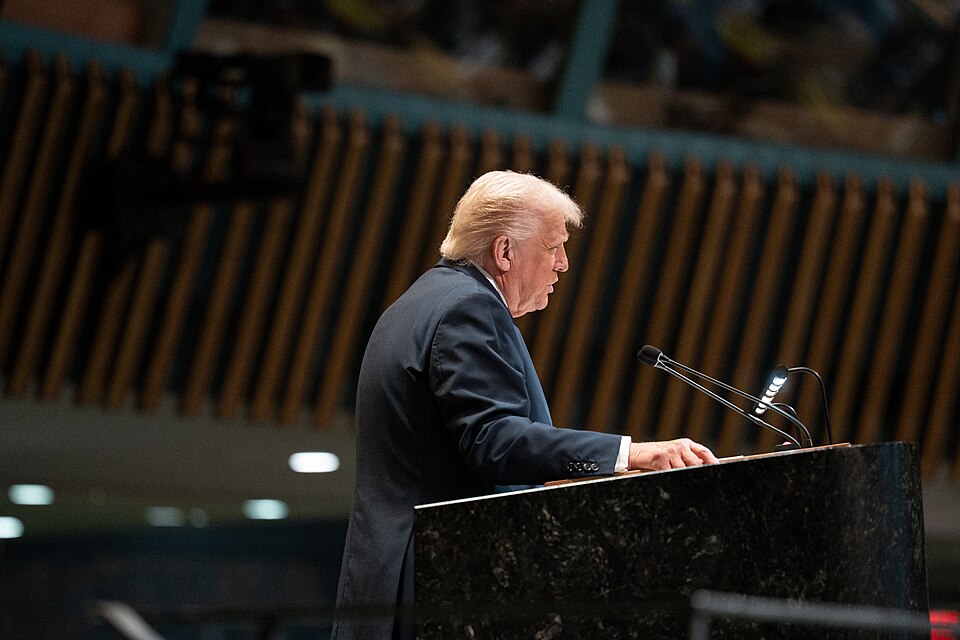
Trump has proven he wants what’s best for the GOP.
President Donald Trump is putting political differences aside as his administration takes action that could provide a major boost to one of his most outspoken Republican critics just weeks before the November midterm elections.
Sen. Susan Collins of Maine, who has repeatedly challenged Trump on high-profile issues, is welcoming a new administration decision aimed at bringing down home heating costs for families across New England.
The unexpected cooperation comes as Collins faces a difficult reelection battle that could have major consequences for Republican control of the U.S. Senate.
And with winter approaching, the decision could have an immediate impact on thousands of Americans struggling with rising energy bills.
Trump Administration Makes Major Energy Announcement
On October 21, the Department of Energy announced plans to make up to 315,000 barrels of heating oil available from the Northeast Home Heating Oil Reserve.
The action follows a September 22 request from Collins and independent Sen. Angus King, who urged the administration to intervene as heating expenses climbed across Maine.
Energy Secretary Chris Wright confirmed that discussions with Collins helped influence the decision.
The federal government will offer the fuel through a competitive exchange program designed to increase available supplies and address regional shortages.
Under the arrangement, participating companies must eventually return the borrowed fuel, along with an additional premium, to replenish the reserve.
The Department of Energy expects deliveries to be completed by November 13.
Officials estimate the additional fuel could increase available heating oil supplies in New England by approximately 13%, potentially easing pressure on prices during the colder months.
For Trump and Collins, the announcement represents a rare moment of public cooperation despite their longstanding political disagreements.
Rising Heating Costs Put Pressure on Maine Families
The announcement comes at a critical time for Maine residents, many of whom depend on heating oil to keep their homes warm throughout the winter.
Approximately half of the state’s households use heating oil, leaving many families vulnerable to sudden price increases.
According to figures reported by the Bangor Daily News, average heating oil prices in Maine recently reached approximately $5.97 per gallon, compared with substantially lower prices one year earlier.
For a household filling a standard 275-gallon heating oil tank, the difference could mean hundreds of dollars in additional expenses.
Those costs can be especially difficult for retirees, seniors living on fixed incomes, and working families already managing higher household expenses.
Collins has argued that expanding available supplies could provide meaningful relief.
Although the administration’s decision does not guarantee immediate savings at the pump or on home deliveries, officials believe increasing supply could help stabilize the regional market.
The move also highlights the importance of affordable and dependable domestic energy supplies, particularly in states where winter heating is an essential household expense.
Collins and Trump Have Clashed Before
The cooperation is striking given the sometimes contentious relationship between the president and the Maine Republican.
Collins was one of seven Republican senators who voted to convict Trump during his second impeachment trial in 2021.
She has also opposed certain administration policies and nominations, including Trump’s choice of Pete Hegseth to lead the Department of Defense.
Those decisions have frustrated some conservative voters who believe Republican lawmakers should more consistently support the president’s agenda.
However, Collins has also voted with the administration on numerous legislative priorities.
Her political approach has long emphasized maintaining independence while supporting traditional Republican positions on issues such as fiscal policy, national security, and economic development.
That independence has helped her win elections in Maine, a state that has favored Democratic presidential candidates for decades.
Despite their disagreements, the latest energy announcement demonstrates that Trump and Collins can still find common ground when their priorities overlap.
Importantly, the decision does not amount to a Trump endorsement of Collins’ reelection campaign.
Maine Senate Race Could Be Critical for Republicans
The timing of the announcement is particularly significant because Collins is fighting to retain her Senate seat in the November 3 election.
Her Democratic opponent, former Maine Senate President Troy Jackson, is attempting to defeat the longtime Republican incumbent as Democrats work to regain control of Congress.
Collins has served in the Senate since 1997 and has repeatedly demonstrated an ability to win over voters who do not necessarily support Republican presidential candidates.
In 2020, she secured reelection even as Trump lost Maine to Democrat Joe Biden.
That ability to attract independent and moderate voters has made Collins an important figure in the Republican Party’s efforts to compete in traditionally Democratic-leaning states.
But the political environment remains challenging.
Democrats have made the Maine contest a priority, and the outcome could influence the balance of power in Washington.
For Republicans, retaining the seat would help protect their Senate majority and strengthen their ability to advance legislative priorities during the final two years of Trump’s current term.
Why Trump’s Decision Matters Politically
Although the heating oil announcement concerns energy policy rather than campaign politics, its timing could provide Collins with an opportunity to demonstrate her effectiveness in Washington.
One argument Collins has consistently made to voters is that her experience and seniority allow her to deliver results for Maine.
Successfully pressing the administration to release additional heating oil supplies provides another example she can point to.
It also creates an interesting political dynamic for Trump.
The president has frequently criticized Republican lawmakers who oppose his agenda. However, Republicans seeking to maintain control of Congress must also consider the electoral realities of competitive states such as Maine.
A Republican Senate majority would remain important for advancing the administration’s priorities, including tax policy, border security, federal spending, and judicial appointments.
Even a Republican senator who occasionally breaks with Trump may be more supportive of his agenda than a Democratic replacement.
That political calculation helps explain why cooperation between the White House and Collins could benefit both sides.
Still, there is no indication that the heating oil decision was formally linked to the senator’s reelection effort.
Will the Heating Oil Decision Help Maine Voters?
The immediate question for Maine families is whether the additional heating oil supplies will lead to noticeable savings.
The Northeast Home Heating Oil Reserve was established to provide emergency supplies during serious disruptions.
According to federal officials, the current exchange is intended to address supply challenges and reduce pressure on regional fuel prices.
It is an unusual use of the reserve, which has rarely been tapped since its creation.
However, energy analysts caution that prices are affected by several factors beyond regional supply, including international oil markets, transportation expenses, and overall demand.
That means any consumer savings will depend on how quickly the additional oil reaches distributors and how energy markets respond.
For residents already facing expensive winter heating bills, even modest relief could be welcome.
Meanwhile, the administration’s decision has renewed attention on broader energy questions, including America’s domestic fuel production, infrastructure, and long-term energy affordability.
What Happens Next for Trump and Collins?
With Election Day rapidly approaching, the Maine Senate race remains one of the contests Republicans and Democrats will be watching closely.
Collins must persuade voters that her independence from Trump is an asset while also convincing Republicans that keeping her in Washington is important for the party’s future.
The president, meanwhile, has an interest in maintaining a Republican Senate majority, even when individual lawmakers do not agree with him on every issue.
Their latest cooperation shows that political disagreements do not necessarily prevent Washington leaders from working together on issues affecting everyday Americans.
For Maine households concerned about winter energy expenses, the most important outcome will be whether additional supplies actually help bring down heating costs.
For Republicans nationwide, the bigger question is whether Collins can survive another competitive election and help the GOP maintain its influence in Congress.
With the November midterms approaching, this unexpected cooperation between Trump and one of his Republican critics could prove significant both for Maine families and for the future balance of power in Washington.








Leave a Reply