

Here are the latest facts.
The United States is mourning the loss of two American service members following a deadly attack in Jordan, as President Donald Trump defended ongoing military operations against Iran and vowed that the sacrifices made by U.S. troops would not be in vain.
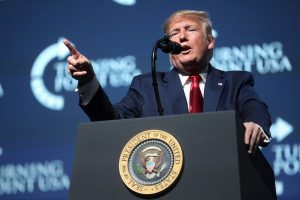
Speaking Saturday during a new round of U.S. airstrikes targeting Iranian military assets, Trump called the deaths “a shame” while arguing that the broader mission remains focused on preventing Iran from obtaining a nuclear weapon and protecting long-term American national security interests.
The tragedy comes as tensions between Washington and Tehran continue to rise, fueling concerns that the conflict could expand across the Middle East if diplomatic efforts fail.
Trump Honors Fallen American Service Members
The attack occurred Friday at Muwaffaq Salti Air Base in Jordan, where two U.S. service members were killed, one remains missing, and at least four others were injured after an assault linked to Iranian-backed forces.
When asked about the loss of the troops, Trump expressed sympathy for their families while emphasizing the importance of their mission.
“They did it because they don’t want to see Iran have a nuclear weapon,” Trump said, adding that their sacrifice reflects the serious threat posed by the Iranian regime.
The president also confirmed that he plans to personally contact the families of the fallen service members.
“Of course I will. I always do,” Trump said.
The deaths mark the first reported American military fatalities since the latest phase of the conflict with Iran intensified, underscoring the growing risks facing U.S. forces stationed throughout the region.
Why the U.S. Launched New Airstrikes
Only hours after the attack in Jordan, the United States launched a fresh wave of airstrikes against targets inside Iran.
According to U.S. Central Command (CENTCOM), the strikes were designed to reduce Iran’s ability to threaten commercial shipping through the Strait of Hormuz, one of the world’s most strategically important waterways for global energy supplies.
Military officials also said the operation targeted infrastructure associated with Iran’s Islamic Revolutionary Guard Corps (IRGC), which Washington has repeatedly accused of supporting attacks on American personnel and allied interests across the Middle East.
Defense officials described the strikes as part of a broader effort to weaken Iran’s military capabilities while deterring additional attacks against U.S. forces.
Pentagon Reinforces America’s Military Presence
As military operations expanded, the Pentagon reportedly ordered additional aircraft into the region to strengthen America’s defensive posture.
Reports indicated that F-16 fighter jets departed from Spangdahlem Air Base in Germany, while F-35 stealth fighters were deployed from a U.S. air base in the United Kingdom. Additional aerial refueling aircraft had already been positioned nearby to support extended operations if necessary.
The movement of additional military assets highlights growing concerns among defense officials that the conflict could continue escalating in the days ahead.
Trump Defends the Administration’s Strategy
Earlier Saturday, Trump also responded after Iran announced it was withdrawing from a previous memorandum of understanding with the United States.
Speaking with NewsNation, the president dismissed the announcement and reiterated that his administration’s primary objective remains preventing Iran from developing nuclear weapons.
Trump has consistently argued that a nuclear-armed Iran would threaten American allies, increase instability throughout the Middle East, and create long-term security risks for the United States.
During his remarks, the president also defended the military campaign against criticism from political opponents, noting that previous administrations experienced significantly higher American casualties during lengthy overseas conflicts.
While acknowledging the pain caused by the loss of U.S. service members, Trump argued that preventing a larger regional crisis remains an important national security priority.
Washington Divided Over the Iran Conflict
The deaths of the American troops quickly became the center of political debate in Washington.
Republican lawmakers largely expressed support for the military and called for prayers for the families of those who lost loved ones while emphasizing the need to stand behind American service members during a dangerous period overseas.
Several Democratic lawmakers, however, criticized the administration’s handling of the conflict and argued that the latest casualties demonstrate the dangers of deeper U.S. involvement in the region. Some called for renewed efforts to reduce military engagement and pursue diplomatic solutions to avoid additional loss of life.
The contrasting reactions reflect the broader debate over America’s role in the Middle East and how best to address the growing threat posed by Iran.
Why the Strait of Hormuz Matters
One of the central objectives of the latest U.S. operation involves protecting the Strait of Hormuz, a narrow waterway through which a significant portion of the world’s oil supply passes each day.
Any disruption to commercial shipping in the strait can affect global energy markets, increase fuel prices, and create uncertainty for businesses and consumers worldwide.
U.S. officials have repeatedly warned that maintaining freedom of navigation through the waterway remains essential to international trade and global economic stability.
What Happens Next?
The latest escalation follows the collapse of a cease-fire that had temporarily reduced hostilities between the United States and Iran. That agreement had included commitments intended to keep shipping lanes open and reduce military confrontations throughout the region.
With Iran stepping away from that understanding and both sides increasing military activity, analysts warn that the possibility of further retaliation remains high.
For now, the United States continues reinforcing its military presence while monitoring Iran’s next moves. At the same time, world leaders are closely watching whether the conflict can be contained or whether it develops into a broader regional crisis.
As Americans mourn the loss of the two service members, attention is turning toward what comes next. The administration has made clear that preventing Iran from obtaining a nuclear weapon remains a central objective, while lawmakers continue debating the best path forward. How events unfold in the coming weeks could have significant consequences not only for U.S. foreign policy but also for global security, energy markets, and stability throughout the Middle East.




Leave a Reply