
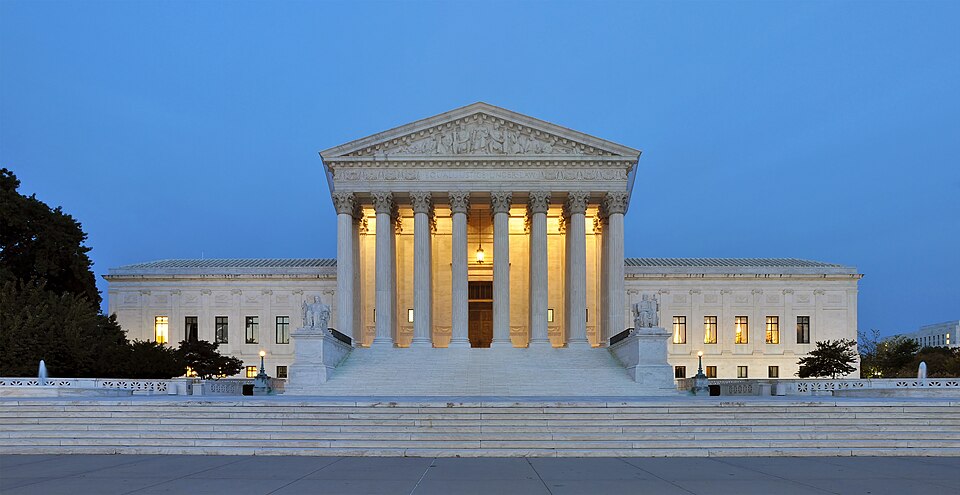
Trump put a lot of faith in these Justices.
President Donald Trump has become increasingly critical of some of the Supreme Court justices he personally appointed after several major decisions went against his administration.
Trump appointed Justices Brett Kavanaugh, Amy Coney Barrett and Neil Gorsuch during his first term, helping create the Supreme Court’s current conservative majority. But recent rulings have underscored an important reality about lifetime appointments to the nation’s highest court: justices are not required to support the president who nominated them.
Among Trump’s three Supreme Court selections, one justice has opposed his administration’s position more often than the others in a group of major cases reviewed since the beginning of his second term.
That justice is Amy Coney Barrett.
Amy Coney Barrett Has Rules Against Trump Most Often
A review of 10 major Supreme Court cases involving the Trump administration since January 2025 found that Barrett opposed the administration’s position in seven of them.
Brett Kavanaugh opposed the administration in five of the cases examined, while Neil Gorsuch did so in three.
Chief Justice John Roberts, a George W. Bush appointee, also ruled against the Trump administration in seven of the 10 cases reviewed.
The voting record has fueled Trump’s public frustration with members of the court, particularly justices he expected would take a consistently conservative approach to questions involving presidential power, immigration, elections and federal authority.
After one major ruling involving his tariff policies, Trump sharply criticized members of the majority and accused them of failing to properly defend the Constitution.
He later acknowledged that he was disappointed with his Supreme Court nominees.
“They voted against me too often,” Trump told TIME while discussing whether he regretted his selections.
Trump also acknowledged that his nominees have sided with his administration in other important cases.
That mixed record has renewed a familiar debate among conservatives over how Republican presidents should select Supreme Court nominees — and whether judges chosen for their conservative legal philosophies will continue reaching reliably conservative outcomes after receiving lifetime appointments.
Barrett Played a Major Role in Several Trump Defeats
Barrett was Trump’s third Supreme Court appointment and was confirmed shortly before the 2020 presidential election.
Since Trump returned to the White House, she has played a key role in several decisions that went against his administration.
In February, Barrett joined a 6-3 majority that concluded the International Emergency Economic Powers Act did not provide the presidential authority necessary for the tariffs at issue in the case.
She later joined Roberts and the Supreme Court’s three liberal justices in a major case involving Trump’s attempt to change birthright citizenship policy through executive action.
Barrett also wrote the majority opinion in Watson v. RNC, ruling that states may count certain mail ballots postmarked by Election Day even when they arrive afterward.
The Trump administration had supported the opposing position.
She additionally voted against the administration in litigation involving the Illinois National Guard, Postal Service mail-ballot regulations and one case involving the Alien Enemies Act.
Those decisions have repeatedly drawn Trump’s attention.
Following the tariffs ruling, the president criticized both Barrett and Gorsuch.
Trump has argued publicly that some of the justices he selected have ruled differently from what he anticipated when he nominated them.
Barrett Says She Is Following the Law
Barrett has pushed back against suggestions that her decisions represent a political shift.
Speaking at an event in Arkansas, she rejected the description of herself as the Supreme Court’s new “swing vote.”
Instead, Barrett said she considers herself an independent justice whose responsibility is to follow the law.
That distinction is important.
Supreme Court justices receive lifetime appointments precisely so they can make decisions without facing political pressure from presidents, Congress or voters.
For supporters of judicial independence, a justice occasionally ruling against the president who appointed them demonstrates that the judicial branch remains separate from the executive branch.
Some conservatives, however, believe Republican presidents have historically struggled to identify nominees who consistently maintain the judicial philosophy expected of them after confirmation.
That disagreement has existed inside the Republican Party for decades.
Barrett Has Also Delivered Major Conservative Victories
Despite Trump’s criticism, Barrett has also authored or supported several decisions welcomed by conservatives and the administration.
One of the most important came in Trump v. CASA.
Barrett authored the court’s 2025 majority ruling that narrowed the circumstances in which lower federal courts can issue nationwide injunctions against presidential actions.
Nationwide injunctions had become a major source of frustration for Republican administrations because a single federal judge could potentially stop a policy from taking effect across the entire country.
The ruling therefore represented an important victory for Trump and supporters of broader presidential authority.
Barrett also sided with Samuel Alito, Gorsuch and Thomas in favor of giving Trump greater authority in litigation involving Federal Reserve Governor Lisa Cook.
Her overall record consequently cannot be described as consistently hostile to Trump.
Instead, Barrett has produced a series of decisions that sometimes support the administration and sometimes place her directly against it.
Brett Kavanaugh Comes in Second
Justice Brett Kavanaugh has also delivered a mixed record in cases involving Trump.
At one point this year, the president enthusiastically praised Kavanaugh after the justice disagreed with the Supreme Court majority in the tariffs case.
Kavanaugh argued that tariffs have historically served as a traditional tool for regulating imports.
Trump responded by publicly describing Kavanaugh as his “new hero.”
But that relationship quickly became more complicated.
Kavanaugh later provided an important vote against Trump in litigation involving Federal Reserve Governor Lisa Cook.
He joined Roberts and the court’s three liberal justices in blocking the administration’s attempt to remove her.
Kavanaugh also reached a decision against the administration in the birthright citizenship dispute, although his reasoning differed from that of some other members of the majority.
He additionally opposed the administration in litigation involving the Illinois National Guard and one Alien Enemies Act case.
The record illustrates why Kavanaugh can be difficult to place neatly into one political category.
He remains a conservative justice but has demonstrated a willingness to rule against Republican administrations when his interpretation of federal law leads him in a different direction.
Trump Eventually Criticized All Three Appointees
Trump’s frustration eventually extended beyond Barrett.
After another unfavorable ruling, the president criticized Gorsuch, Kavanaugh and Barrett together.
Trump suggested that the three justices were behaving differently from what he expected when he interviewed and selected them for the Supreme Court.
At the same time, he continued praising conservative Justices Clarence Thomas and Samuel Alito.
The comments highlighted a growing divide between Trump’s expectations for conservative judges and the institutional independence claimed by members of the Supreme Court.
Presidents can select nominees, but once a justice receives Senate confirmation and joins the court, there is no mechanism requiring that justice to remain aligned with the president’s political agenda.
Neil Gorsuch Has Opposed Trump Less Often
Although Neil Gorsuch has received some of Trump’s sharpest public criticism, his record in the 10 cases examined was actually more favorable to the administration than Barrett’s or Kavanaugh’s.
Gorsuch opposed the Trump administration in three of the cases.
Those included the tariffs dispute, a Postal Service mail-ballot case and an Alien Enemies Act case.
The tariffs ruling became an especially significant source of tension.
Gorsuch wrote a lengthy opinion explaining his interpretation of presidential authority and the legal principles surrounding the case.
Trump reacted angrily to the ruling and expressed disappointment with members of the majority he had personally placed on the court.
Yet Gorsuch has sided with the administration in several other important disputes.
He supported Trump’s position in cases involving birthright citizenship, the attempted removal of Cook from the Federal Reserve, the Illinois National Guard dispute and Watson v. RNC.
In other words, Gorsuch has been less likely than Barrett or Kavanaugh to oppose the administration in the major cases reviewed.
Trump Has Still Won Many Supreme Court Battles
The disagreement between Trump and some conservative justices can create the impression that his administration is routinely losing before the Supreme Court.
The broader record tells a different story.
Despite several major defeats, Trump has also received numerous favorable decisions from the court.
According to figures cited by the Brennan Center for Justice, the Supreme Court issued 32 emergency rulings involving Trump administration actions beginning in January 2025.
The administration received at least a partial victory in 24 of those rulings.
That amounts to roughly 75 percent.
Those numbers provide important context for the president’s criticism.
While several individual losses have generated significant headlines, the administration has continued winning many of its most consequential legal battles.
Trump’s Three Justices Have Also Voted Together
Gorsuch, Kavanaugh and Barrett have frequently joined together in support of Trump administration positions.
All three were part of the 6-3 majority in Trump v. Slaughter, a major case involving the president’s authority to remove a member of the Federal Trade Commission.
That ruling overturned a precedent that had stood for more than 90 years and strengthened presidential control over portions of the executive branch.
All three justices also sided with Trump in Trump v. CASA, the landmark case restricting nationwide injunctions.
Gorsuch and Kavanaugh additionally joined the 5-4 majority allowing the administration to proceed with certain removals under the Alien Enemies Act in 2025.
Those decisions demonstrate that Trump’s Supreme Court nominees continue to play a major role in advancing conservative legal principles even when they occasionally disagree with the administration.
John Roberts Remains a Crucial Vote
Chief Justice John Roberts continues to occupy one of the most influential positions on the Supreme Court.
Although appointed by Republican President George W. Bush, Roberts has repeatedly joined liberal justices in closely divided cases while maintaining conservative positions in many other disputes.
Research examining recent divided Supreme Court decisions found that Justice Elena Kagan and Roberts have frequently voted together.
Kavanaugh has also sometimes joined Roberts and the liberal wing of the court to create narrow majorities.
These shifting alliances make Supreme Court decisions far less predictable than simply looking at which president appointed each justice.
Conservative justices frequently disagree among themselves over the Constitution, federal statutes, executive authority and the proper role of the courts.
Why Supreme Court Appointments Matter
The controversy also highlights why Supreme Court nominations remain among the most consequential decisions any president makes.
Presidential terms are temporary.
Supreme Court appointments can influence American law for decades.
Justices routinely decide disputes involving:
- Presidential authority
- Immigration enforcement
- Election laws
- Gun rights
- Religious liberty
- Federal regulations
- Abortion
- Free speech
- Government agencies
- States’ rights
- Constitutional protections
For older Americans who have watched the Supreme Court reshape major areas of public policy over several decades, the importance of these appointments is difficult to overstate.
A single justice can become the deciding vote in cases affecting millions of Americans.
That is why Republican and Democratic administrations alike devote enormous resources to selecting, confirming and defending their nominees.
Conservatives Continue Debating Republican Judicial Picks
Trump’s dispute with Barrett, Kavanaugh and Gorsuch also reflects a larger conversation inside the conservative movement.
Republican voters have repeatedly seen judges appointed by Republican presidents later participate in decisions opposed by conservative activists.
For some conservatives, that history suggests Republican presidents should use a stricter vetting process when choosing future Supreme Court nominees.
They want judges with clear records supporting originalism, textualism and a limited interpretation of federal power.
Others argue that demanding political loyalty from Supreme Court justices would undermine the independence of the judiciary.
Under that view, conservative judges should follow their interpretation of the Constitution even when doing so produces a result Republican politicians dislike.
The disagreement is unlikely to disappear anytime soon.
Major Trump Supreme Court Cases Are Still Ahead
The next Supreme Court term could make this debate even more significant.
The justices are expected to consider major questions involving immigration detention, deportation policy and election rules.
One case involves whether certain people facing removal proceedings can be detained without bond.
Another involves the administration’s policy concerning deportations to third countries.
The Supreme Court is also expected to hear litigation involving Arizona’s proof-of-citizenship requirements for voter registration.
The Trump administration supports significant portions of that law.
Those cases will once again place Gorsuch, Kavanaugh and Barrett under intense scrutiny from both conservatives and liberals.
Amy Coney Barrett Tops the List
Based strictly on the 10 major cases examined, Amy Coney Barrett has voted against Trump administration positions more frequently than either of Trump’s other Supreme Court nominees.
She opposed the administration in seven of those cases.
Kavanaugh did so five times.
Gorsuch did so three times.
But describing any Supreme Court justice as politically “loyal” or “disloyal” requires important context.
Supreme Court justices are not members of a presidential administration, and they do not legally owe allegiance to the presidents who nominated them.
Their constitutional responsibility is to decide cases independently.
Trump’s criticism instead reflects his frustration that several judges he selected because of their conservative legal records have sometimes rejected arguments made by his own administration.
The Bigger Supreme Court Question
For conservative voters, the more consequential issue may not be whether one particular justice has disappointed Trump.
The bigger question is how the Supreme Court will approach presidential power, immigration, elections, government regulation and constitutional rights in the years ahead.
Trump’s three appointments helped establish a durable conservative majority on the court.
But that majority does not guarantee unanimous decisions — even when a Republican president is asking the court to uphold his policies.
Barrett’s record illustrates that reality more clearly than perhaps any other Trump-appointed justice.
She has delivered major conservative victories while simultaneously providing decisive votes against the Trump administration in several of its most important cases.
With another consequential Supreme Court term underway, Americans will be watching closely to determine whether Barrett continues charting an independent course — and whether the president’s growing frustration with his own judicial appointments becomes an even bigger political story.








Leave a Reply