
Trump knew this would happen.
New York City’s push toward “free” public transportation is running into an expensive reality as the Metropolitan Transportation Authority struggles with widespread fare evasion and mounting concerns over who will ultimately pay the bill.
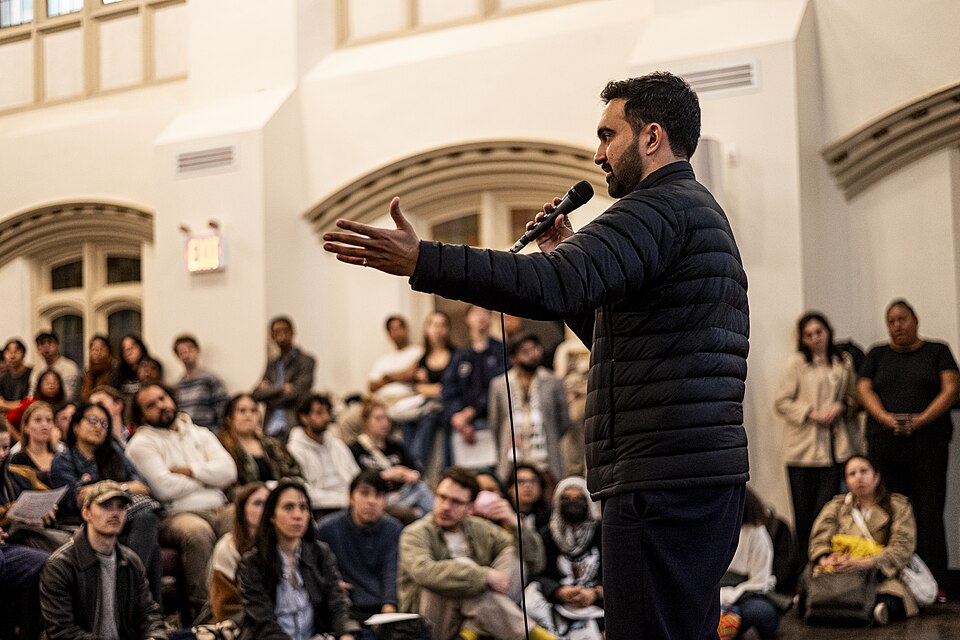
Mayor Zohran Mamdani made “fast and free buses” one of the signature promises of his political rise. But transit officials and union leaders now warn that repeated talk about eliminating bus fares may be encouraging more passengers to stop paying before any permanent fare-free policy has actually been adopted.
The consequences could be significant for taxpayers.
Paid bus ridership fell nearly 8% in June compared with the same month a year earlier, according to MTA figures cited in reports about the dispute. During Mamdani’s first six months in office, bus fare revenue reportedly dropped by $31 million compared with the first half of 2025.
MTA estimates also indicate that nearly half of bus riders are failing to pay the required $3 fare.
The numbers have intensified a larger debate over government spending, personal responsibility and whether New York can afford another major taxpayer-supported program.
MTA Chairman Warns About “Free Buses” Message
MTA Chairman Janno Lieber publicly raised the issue in July.
After an MTA board meeting, Lieber told reporters that a noticeable pattern had emerged. Although he stopped short of singling out Mamdani, he suggested that the ongoing political discussion about making bus service free was influencing rider behavior.
Fare evasion is not a new problem created by the Mamdani administration. The MTA had been losing hundreds of millions of dollars annually to unpaid fares before he became mayor.
But critics believe political promises of fare-free transportation risk making an existing problem even harder to control.
The Citizens Budget Commission previously estimated that fare and toll evasion cost the MTA roughly $1 billion in 2024, including hundreds of millions in unpaid bus fares.
For an agency responsible for one of America’s largest public transportation networks, those losses eventually have consequences.
The money has to come from somewhere.
Mamdani Cannot Make NYC Buses Free on His Own
There is also an important political complication surrounding Mamdani’s promise.
The mayor does not control the MTA.
New York’s transit authority is primarily controlled at the state level, giving Democratic Gov. Kathy Hochul enormous influence over whether Mamdani’s fare-free proposal can become reality.
Mamdani and Hochul announced a transportation initiative in July focused on making bus service faster rather than immediately eliminating fares.
Yet the political debate over free buses continues.
For critics, that creates a strange situation: New Yorkers are hearing elected officials discuss making buses free while passengers are still legally required to pay.
Transit workers say they are seeing the consequences firsthand.
Bus Drivers Say Fare Evasion Is Getting Worse
John V. Chiarello, president of Transport Workers Union Local 100, described current fare evasion as among the worst his drivers have experienced.
The union represents more than 40,000 transit workers.
Chiarello pointed to what happened during the COVID-19 pandemic, when bus rides were temporarily free. After normal fare collection returned, the MTA had to reestablish the expectation that passengers should pay.
He believes Mamdani’s campaign promise has complicated that effort.
“Once you make something free, and you give people a feeling of entitlement, and then the mayor says that he wants to make buses free, you have a perfect storm of people not wanting to pay,” Chiarello said.
The issue is particularly difficult for bus drivers because they generally are not supposed to confront passengers who refuse to pay.
Those rules are intended to protect operators from potentially violent encounters.
As a result, drivers can find themselves watching passengers board without paying while fare-paying customers continue handing over their money.
Union Leader Says It Isn’t Just Poor Riders Skipping Fares
Mamdani has argued that fare evasion is closely connected to New York City’s affordability crisis.
There is little question that many New Yorkers face substantial financial pressure from housing, food and other everyday expenses.
But Chiarello disputed the idea that everyone avoiding the fare simply cannot afford $3.
He said he has personally seen professionally dressed passengers who appear capable of paying walk onto buses without doing so.
“These are people that have the money,” Chiarello said. “It’s just that they’re not paying because it’s in vogue now.”
Lieber has made a similar appeal to New Yorkers with steady incomes.
Lieber urged commuters with solid incomes to do their part, criticizing those who board buses without paying even though they can afford the fare.
Then he identified the financial reality at the center of the controversy.
You’re simply shifting the expense onto other taxpayers, because ultimately, someone still has to cover the cost of the trip.
How Much Would Free NYC Buses Cost?
That could become the billion-dollar question.
New York City’s Independent Budget Office has estimated that making buses fare-free could eliminate approximately $1.1 billion in annual fare revenue.
Nicole Gelinas, a senior fellow at the Manhattan Institute specializing in urban policy, has warned that such a loss would be particularly difficult because the MTA already faces significant financial pressures.
“The idea of giving up a billion dollars plus in fare revenue from the buses, when you have no way to replace that, it’s just not fiscally wise,” Gelinas said.
That gets to the fundamental problem with the word “free.”
The buses themselves do not become free to operate simply because passengers stop paying at the door.
Drivers still receive salaries and benefits. Buses still require fuel or electricity. Vehicles must be repaired and replaced. Stations, depots and other infrastructure must be maintained.
If riders do not pay those expenses through fares, the money must come from another source.
That could mean additional state or city funding, higher taxes, spending reductions elsewhere or some combination of those options.
Paying Riders Could Start Asking: Why Should I Pay?
There is another danger for the MTA.
Fare evasion can become self-reinforcing.
A passenger who pays $3 every morning may begin questioning that decision after repeatedly watching other riders board without paying.
Gelinas described the problem this way:
“You pay your fare, and then you watch 10 people get on and not pay the fare. So at some point, you’re just going to think like, ‘Why am I paying the fare?’”
That creates a potential downward spiral.
More fare evasion means less revenue. Visible fare evasion can encourage additional passengers not to pay. That creates still more lost revenue and potentially places a larger burden on the passengers and taxpayers who continue following the rules.
The MTA has been trying to address that broader problem for years, including investments in new fare-control technology and enforcement. Its capital plans include major spending intended to reduce fare evasion.
Mamdani Says Fare Evasion Proves His Point
The Mamdani administration offers a very different interpretation.
Rather than viewing the current situation as evidence against fare-free buses, the mayor’s office argues that widespread nonpayment demonstrates why the policy is needed.
“Fare evasion has been a persistent problem for years, and the fact that some people are unable to afford bus fare highlights the affordability crisis in our city,” deputy press secretary Jeremy Edwards said.
The administration said the situation reinforces Mamdani’s argument for eliminating bus fares altogether.
Mamdani’s administration also points to results from a previous fare-free bus pilot he supported while serving as a state assemblyman.
According to the mayor’s office, ridership increased by more than 30% during that program, with New Yorkers earning less than $28,000 annually representing the largest group of new riders.
The administration also says assaults on bus operators fell by nearly 40%.
Those figures form a central part of Mamdani’s case that fare-free buses could produce benefits beyond saving passengers money.
The Real Debate Is About Who Pays
The battle over New York City’s buses highlights a much larger disagreement over government and the meaning of the word “free.”
Supporters of Mamdani’s proposal believe public transportation should be treated as an essential service and funded accordingly. They argue that eliminating fares could help working families, increase transit use and make buses faster by reducing the time spent collecting fares.
Critics see a different equation.
Operating America’s largest transit systems costs billions of dollars regardless of whether passengers are charged when they board. Eliminating fares doesn’t eliminate those costs — it shifts them.
For taxpayers concerned about government spending and the rising cost of living, that distinction matters.
Fare evasion was a serious problem long before Mamdani entered City Hall. But with paid ridership declining and the mayor continuing to advocate fare-free buses, New York now faces an increasingly urgent question.
If passengers aren’t paying for the ride, who will?




Leave a Reply