
Nobody expected to see this.
One of President Donald Trump’s best-known MAGA allies has found surprising common ground with Sen. Bernie Sanders over the rapidly expanding debate surrounding artificial intelligence.
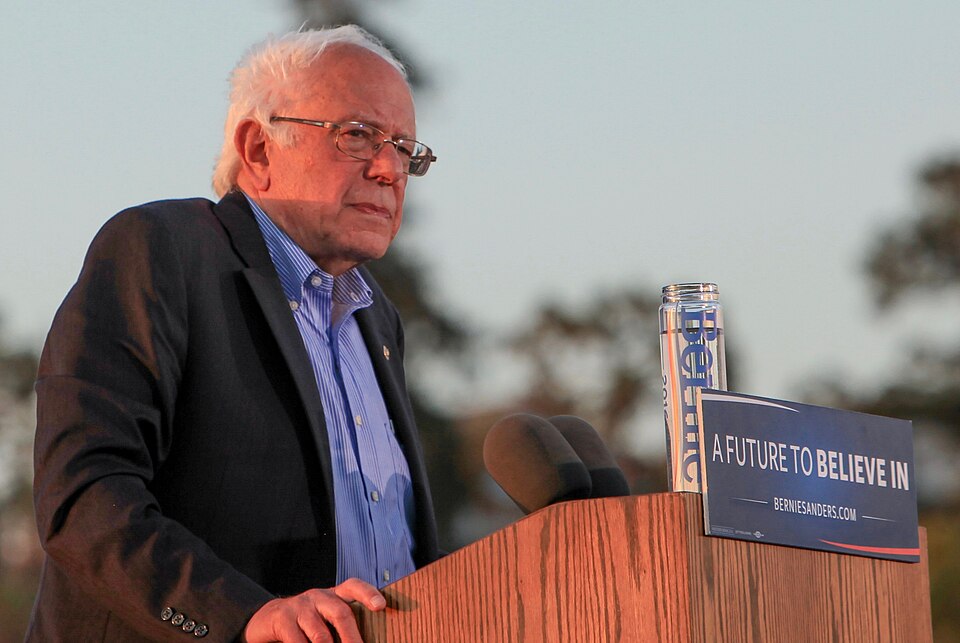
Steve Bannon, the former Trump White House chief strategist and longtime conservative media figure, appeared alongside Sanders at the “Pro-Human Assembly” in Washington, D.C., on Tuesday as political leaders from across the ideological spectrum called for greater oversight of advanced AI.
The pairing was striking.
Sanders and Bannon disagree on a long list of political issues, but both are raising questions about the enormous influence of major technology companies and whether Washington is moving quickly enough to address the potential consequences of increasingly powerful artificial intelligence.
Their agreement only goes so far, however. The two offered significantly different ideas about how the United States should respond — particularly when it comes to China.
Bernie Sanders Sounds Alarm Over Artificial Intelligence
Sanders used his appearance to warn about several potential consequences of rapidly advancing AI technology, including privacy concerns, surveillance, deepfakes and the concentration of technological power.
The Vermont independent also criticized Washington’s response.
According to Sanders, both Republican and Democratic leaders have failed to establish an adequate national framework for dealing with the rapid development of artificial intelligence.
“Congress, under both Democratic and Republican control, has been asleep at the wheel,” Sanders said.
He also criticized Trump’s approach to the issue, arguing that the president has not taken the potential risks seriously enough.
Sanders believes Congress should impose significantly stronger restrictions on advanced AI development.
He said he plans to introduce legislation with Rep. Greg Casar of Texas that would seek to permanently prohibit the development of what they describe as “superintelligent” artificial intelligence.
Steve Bannon Joins The Push For AI Guardrails
Bannon took the stage after Sanders and delivered his own warning about allowing major technology companies to determine the future of AI with limited government oversight.
The former Trump adviser urged political leaders to move beyond normal partisan divisions when considering the issue.
Bannon focused heavily on the power held by technology executives, arguing that Americans should be skeptical of assurances coming from corporate leaders with major financial interests in the continued expansion of AI.
While Bannon and Sanders come from dramatically different political movements, both questioned whether a relatively small collection of powerful companies should have so much influence over technology that could reshape American jobs, privacy, national security and everyday life.
That shared concern has created an unusual political alliance — at least on this particular issue.
Sanders And Bannon Split Over China
Despite their common concerns about AI, Sanders and Bannon are far from agreement about what Washington should do next.
China represents one of their clearest disagreements.
Sanders has advocated international negotiations designed to prevent countries from engaging in an uncontrolled race toward increasingly advanced artificial intelligence.
He has called for Trump and Chinese President Xi Jinping to discuss an agreement addressing advanced AI development.
Bannon favors a dramatically different strategy.
Rather than seeking cooperation with Beijing, Bannon argued for greater separation between the American and Chinese technology sectors, including tighter restrictions involving advanced computer chips, research and technical knowledge.
Their disagreement highlights an important distinction: Bannon and Sanders are not forming a broader political coalition.
Instead, two prominent figures from opposing political movements have reached a similar conclusion that artificial intelligence deserves greater scrutiny while remaining divided over the appropriate solution.
Trump Rejects Growing AI Fears
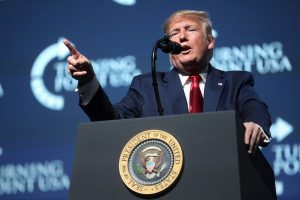
President Trump has taken a different position from both men.
Trump publicly pushed back against some of the most serious warnings surrounding artificial intelligence this week, describing fears that AI could eventually destroy humanity as a “HOAX.”
The president has emphasized the importance of maintaining America’s technological advantage, particularly as the United States competes with China.
Trump has also argued that excessive restrictions could damage American innovation and allow foreign competitors to gain ground.
That puts Bannon in the unusual position of disagreeing with Trump on a major emerging technology issue despite his longstanding ties to the MAGA movement.
It also demonstrates how artificial intelligence is creating political divisions that do not always follow traditional party lines.
AI Debate Creates Unusual Political Alliances
Artificial intelligence has quickly moved beyond Silicon Valley and become a significant policy debate in Washington.
Supporters of stronger safeguards point to concerns involving privacy, cybersecurity, employment, deepfakes and the possibility of increasingly capable AI systems becoming difficult to control.
Those skeptical of sweeping restrictions emphasize the economic opportunities created by AI, America’s technological competitiveness and the danger of allowing China to take the lead in a strategically important industry.
The Sanders-Bannon appearance shows how those concerns are reshaping familiar political alliances.
A progressive senator and a prominent MAGA figure may disagree on much of American politics, but both are now questioning whether Washington should place stronger limits on the companies developing some of the world’s most powerful artificial intelligence systems.
Trump, meanwhile, is pushing in another direction, emphasizing American innovation and rejecting some of the dire warnings surrounding the technology.
What Happens Next Could Affect Millions Of Americans
The debate is no longer limited to technology executives and computer scientists.
Artificial intelligence is increasingly affecting workplaces, education, healthcare, cybersecurity, entertainment and the information Americans encounter online.
That means decisions made in Washington could eventually influence how companies use AI, what safeguards developers must follow and how the United States competes with China.
For Americans watching the technology advance at remarkable speed, the disagreement between Trump, Bannon and Sanders presents a fundamental policy question:
Should Washington impose stronger restrictions on advanced artificial intelligence, or would aggressive regulation risk slowing American innovation at exactly the moment global competition is accelerating?


Leave a Reply