
Here’s what happened.
President Donald Trump’s latest move involving the U.S. military presence on the Korean Peninsula is putting renewed attention on one of America’s most important alliances in Asia.
South Korean President Lee Jae Myung said Tuesday that his country should accelerate efforts to take greater control over its own military defense, including a long-discussed transfer of wartime operational control from the current U.S.-led command structure.
Lee wants the transition completed before his presidential term ends in 2030.
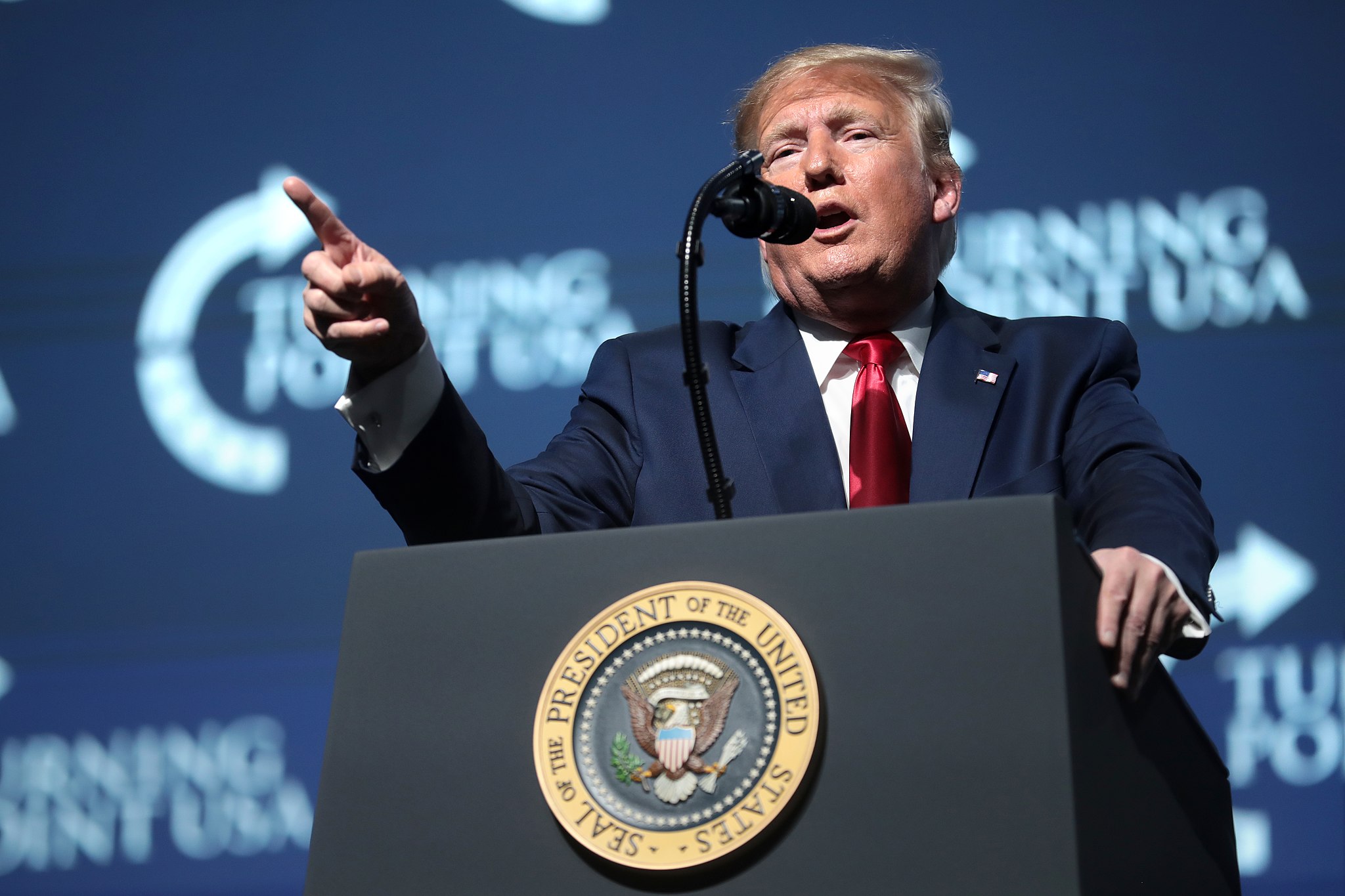
His announcement comes shortly after Trump ordered the Pentagon to “substantially reduce” the annual Ulchi Freedom Shield military exercises conducted by American and South Korean forces.
The developments do not necessarily mean Washington and Seoul are moving apart. In fact, Lee argued that a more capable South Korean military could ultimately make the alliance stronger.
Lee told his Cabinet that a solid alliance strengthens national security, while improving South Korea’s own defense capabilities makes the country a more valuable and important partner.
For Americans who have watched Trump repeatedly demand that U.S. allies take greater responsibility for their own defense, South Korea’s push presents an important question: Could Seoul assuming more military responsibility ultimately benefit the United States?
Trump Changes Course on Major Military Drills
Trump ordered the reduction of the Ulchi Freedom Shield exercises after pointing to what he described as improved behavior from North Korea.
The president said North Korea has been “unthreatening and respectful” and once again emphasized his relationship with North Korean leader Kim Jong Un.
The annual military exercises began Monday and are scheduled to continue through August 27.
Roughly 18,000 South Korean service members are taking part in the exercises alongside U.S. troops and around 70 personnel from 11 additional United Nations Command member countries.
The training has evolved to reflect the changing nature of warfare.
In addition to conventional military operations, troops are preparing for threats involving drones, cyberattacks and GPS interference — capabilities that have become increasingly important in conflicts around the world.
Military planners originally scheduled 14 combined field exercises at the battalion level or higher.
Trump has not publicly detailed precisely which elements will be reduced.
Trump Says His Strategy Is Making Korea Safer
North Korea has fiercely opposed U.S.-South Korean military exercises for decades, describing them as rehearsals for an invasion.
Pyongyang has also used the exercises to justify some of its own weapons testing while continuing to expand its nuclear and missile capabilities.
Trump believes his personal diplomacy with Kim offers another way to manage the threat.
Trump said Monday that he believes his approach has made the situation safer, pointing to the mutual respect and understanding he says exists between himself and Kim Jong Un.
Trump’s supporters may view that approach as an attempt to avoid unnecessary confrontation while keeping diplomatic channels open.
But the decision also raises an important strategic question for Washington and Seoul: How can the allies reduce tensions without sacrificing military readiness?
That question has become particularly significant as South Korea seeks greater authority over its forces during a potential wartime emergency.
South Korea Wants More Control Over Its Own Defense
The debate involves what military officials call wartime operational control, commonly shortened to “Opcon.”
Its origins go back more than seven decades.
During the Korean War from 1950 to 1953, South Korea placed command authority over its armed forces under the U.S.-led United Nations Command.
The Korean War ended with an armistice rather than a formal peace treaty, meaning North and South Korea technically remain divided without a permanent peace agreement.
Authority was transferred to the South Korea-U.S. Combined Forces Command in 1978.
South Korea regained peacetime operational control of its forces in 1994. During wartime, however, an American general continues to command the combined force.
Changing that arrangement has been discussed for more than 20 years.
The transfer has repeatedly been postponed because it is supposed to occur only after South Korea meets agreed military readiness requirements.
Lee now wants to accelerate that process and complete the transition during his presidency.
Could This Actually Fit Trump’s America First Strategy?
Although the latest developments could initially appear to signal tension between Washington and Seoul, there is another way to view the situation.
Trump has spent years arguing that prosperous American allies should contribute more toward their own security rather than expecting the United States to shoulder a disproportionate share of the burden.
A South Korea capable of taking greater responsibility for its military operations could potentially fit that broader philosophy.
The United States maintains a major military presence in South Korea because of the continuing threat posed by North Korea.
A stronger South Korean military would not necessarily eliminate the need for American forces, but it could change how responsibilities are divided between the two countries.
Lee himself appears to recognize that distinction.
His argument is that greater South Korean military independence can exist alongside — rather than instead of — a strong relationship with Washington.
Nuclear-Powered Submarine Plan Moves Forward
Lee is also pressing his government to accelerate another major military project supported by Trump: South Korea’s planned nuclear-powered submarine program.
Trump approved the project last year, and Washington subsequently agreed to support Seoul’s efforts to obtain the nuclear fuel needed for the program.
South Korea intends to develop and construct the submarines domestically using low-enriched uranium.
The first vessel is currently expected to launch sometime in the mid-2030s.
Nuclear-powered submarines can remain submerged for extended periods and potentially give South Korea greater ability to track and respond to North Korean submarine activity.
That could become increasingly important as Pyongyang develops submarine-launched missiles and other weapons capable of threatening South Korea and potentially American interests in the region.
Seoul has emphasized that the submarine project does not mean it intends to develop nuclear weapons.
The submarines would use nuclear technology for propulsion while South Korea maintains its existing commitment against building its own nuclear arsenal.
North Korea Remains the Central Challenge
Despite Trump’s diplomatic outreach, North Korea remains one of the most difficult security problems facing both Washington and Seoul.
Pyongyang has continued developing nuclear weapons and increasingly sophisticated missile systems.
That leaves Trump attempting to balance two competing priorities: maintaining enough military strength to deter an attack while avoiding actions that could unnecessarily increase tensions.
The president believes his relationship with Kim gives him an advantage in managing that balance.
His critics are likely to question whether reducing military exercises could affect readiness.
Supporters, meanwhile, can argue that diplomacy backed by military strength may offer a better alternative than maintaining permanent confrontation on the peninsula.
South Korea Says Exercises Are Defensive
South Korea’s presidential office has emphasized that the Ulchi Freedom Shield exercises are defensive.
Officials said the training does not represent an intention to attack North Korea or deliberately escalate tensions.
Instead, Seoul says its objective is protecting the safety and everyday lives of the South Korean people.
That distinction matters as both governments attempt to manage their relationship with North Korea without creating unnecessary instability.
What This Means for American Taxpayers
For Americans, especially those concerned about defense spending and the country’s extensive overseas commitments, the bigger issue may extend beyond South Korea.
The United States has spent decades providing military protection and security guarantees to allies around the world.
Trump has consistently challenged that arrangement when he believes allies are not contributing enough themselves.
South Korea seeking greater military independence could therefore create both challenges and opportunities.
A poorly managed transition could create uncertainty in a strategically vital region.
But a successful transition could produce a stronger ally that is better prepared to defend itself while continuing its close military relationship with the United States.
That could ultimately reduce some of the pressure placed on American forces and taxpayers.
A Major Test for Trump’s Foreign Policy
Trump’s decision to reduce portions of the military exercises does not mean America is abandoning South Korea.
Nor does Lee’s push for greater military control necessarily mean Seoul wants American forces gone.
Instead, the developments point toward a possible transformation in how the two countries divide responsibility for defending the Korean Peninsula.
Trump is betting that his relationship with Kim can help keep tensions under control.
South Korea, meanwhile, is preparing for a future in which it possesses greater military capabilities and assumes more responsibility for its own defense.
Whether those strategies complement each other could determine the future of an alliance that has helped maintain stability on the Korean Peninsula for generations.
For American voters, the debate also raises a larger question that Trump has repeatedly placed at the center of his foreign policy:
Should wealthy U.S. allies take greater responsibility for defending themselves while America remains a powerful partner?



Leave a Reply