
Are Trump and Vance butting heads over a controversial new remark?
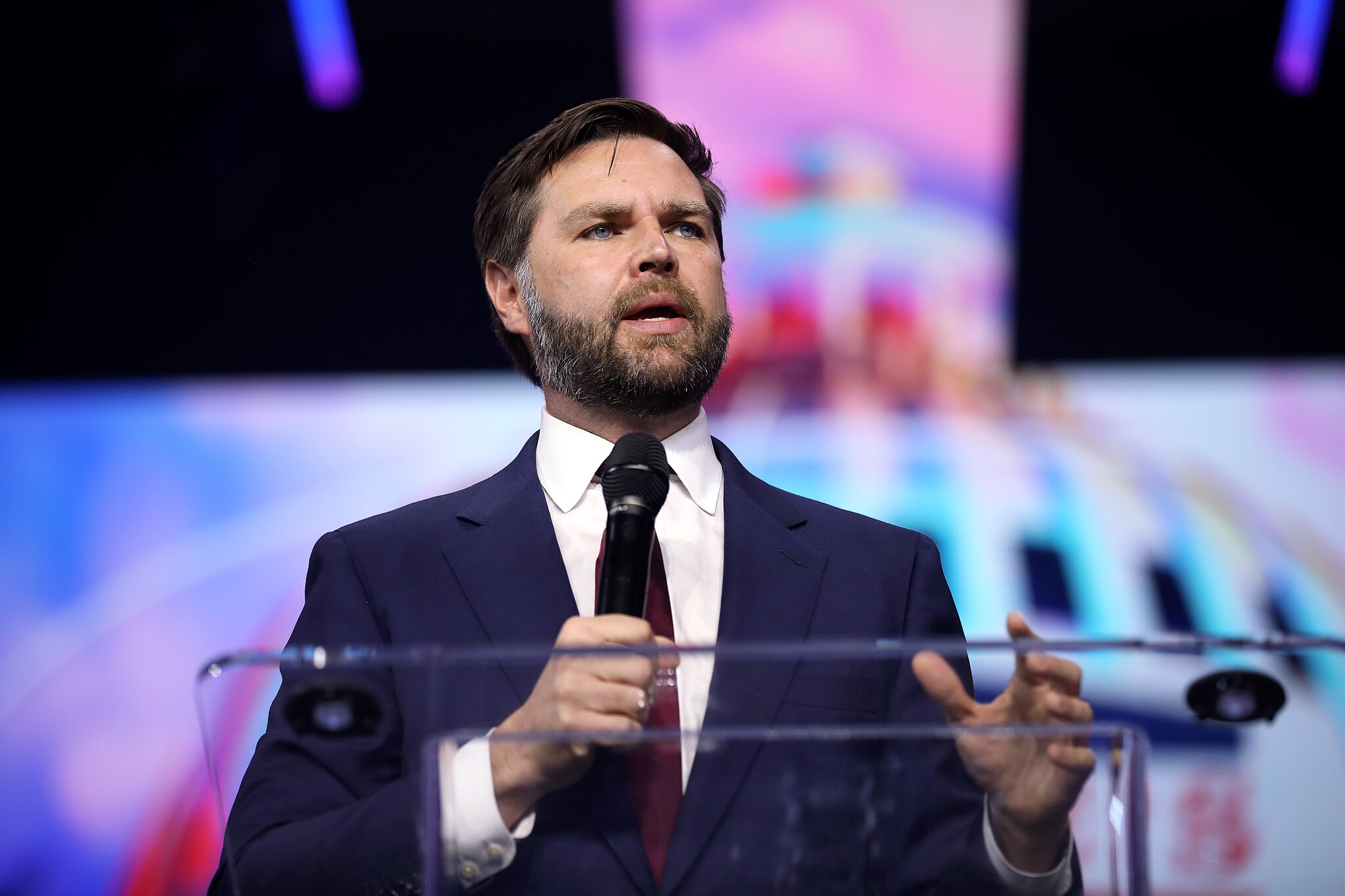
Vice President JD Vance offered a more cautious message than President Donald Trump on Monday as a growing debate over artificial intelligence data centers threatens to become an issue in the upcoming midterm elections.
Trump has strongly defended the massive facilities as essential to American jobs, economic growth and the country’s competition with China.
Vance agrees that data centers are important to America’s AI future. But he also acknowledged one of the biggest concerns being raised by homeowners and communities across the country: rising electricity bills.
The difference in tone comes as Republicans face the challenge of promoting America’s rapidly expanding technology industry without alienating voters worried about energy costs and the cost of living.
Vance Addresses Concerns Over Data Centers
Vance discussed the issue while taking questions from reporters before traveling to Michigan, a critical political battleground where the construction of data centers has generated controversy.
A reporter asked the vice president how Trump’s enthusiastic support for the facilities would be received as data centers become a political issue in some communities.
Vance responded by emphasizing their importance to the artificial intelligence economy while acknowledging why some Americans have pushed back.
According to Vance, much of the opposition emerges when residents believe new facilities will increase demand on the electrical grid and ultimately leave families paying higher utility bills.
That is where Vance believes developers have a responsibility.
“When people build them, they have to build the power plants along with the data centers,” Vance said.
The vice president argued that companies should take advantage of federal efforts to reduce regulatory barriers and construct the additional energy infrastructure necessary to support their projects.
“If you build a data center, you should be putting power back into the grid, not taking it out,” Vance said.
He suggested that many objections could fade if developers can demonstrate that their facilities will not drive up electricity costs for surrounding communities.
“It’s when the utility bills get so much higher — that’s when it’s a real problem,” Vance added.
For Americans already concerned about grocery prices, housing expenses, gasoline and monthly household bills, that could be an important distinction.
Trump Sends A Much Stronger Message
Trump took a considerably more aggressive approach earlier Monday.
In a Truth Social post, the president delivered an unmistakable defense of data center development, arguing that communities turning away the facilities risk surrendering jobs, investment and economic opportunities.
“The only reason that communities throughout the U.S.A. should not want Data Centers is if they want to end up being backwards and poor,” Trump wrote.
Trump argued that communities welcoming the projects could become more prosperous while benefiting from additional employment and potentially lower taxes.
The president also connected the issue directly to America’s competition with China.
“China could not be happier with this anti Data Center movement,” Trump wrote.
For Trump, the stakes extend well beyond individual development projects.
Artificial intelligence is rapidly becoming another front in the economic and technological rivalry between the United States and China. The enormous computing infrastructure required to develop and operate advanced AI systems means data centers — and the electricity needed to power them — are becoming strategically important.
Trump’s argument is that America cannot lead the AI revolution if communities refuse to build the infrastructure that makes it possible.
“If we kill the Golden Goose, you will only have yourselves to blame,” Trump warned.
Are Trump And Vance Actually Disagreeing?
The president and vice president clearly used different rhetoric, but their comments do not necessarily amount to a major policy disagreement.
Trump focused heavily on the potential benefits: American jobs, investment, technological leadership and competition with China.
Vance focused more heavily on the potential costs to ordinary Americans if development is handled poorly.
In other words, Vance did not argue that communities should reject data centers.
Instead, he said developers should generate enough additional electricity to prevent their enormous power demands from becoming a financial burden on existing customers.
That could be especially important politically.
Americans may support keeping the United States ahead of China in artificial intelligence while simultaneously opposing projects they believe will increase their own household expenses.
For retirees and other Americans living on fixed incomes, electricity costs can be particularly noticeable because recurring increases directly affect monthly household budgets.
Data Centers Emerge As A Midterm Issue
Republicans are already paying attention to the political risks surrounding the issue.
Axios reported in August that a National Republican Senatorial Committee memo warned that Democrats were attempting to make data centers a major campaign issue in their effort to defeat Republican Ohio Sen. Jon Husted.
The memo reportedly described the controversy as a potential “sleeper issue” during the election cycle.
The concern is easy to understand.
If voters begin associating large data center projects with higher electricity prices, candidates who strongly support development could find themselves facing an unexpected political backlash.
At the same time, opposing the projects carries risks of its own.
AI development is expected to require enormous investments in computing capacity and electricity generation. Communities that reject those investments could potentially lose jobs, construction projects, tax revenue and other economic opportunities to neighboring states or regions.
That leaves Republicans attempting to make two arguments at once: America needs to build quickly enough to beat China in the AI race, but American households should not be forced to subsidize that expansion through higher power bills.
Energy Could Be The Key To America’s AI Expansion
Vance’s answer points toward one potential solution: dramatically expand America’s electricity supply alongside its data center infrastructure.
If companies construct or finance additional power generation as part of their projects, the administration believes the United States could expand AI capacity without placing as much pressure on existing electrical grids.
That approach also fits Trump’s broader emphasis on expanding domestic energy production.
The political equation could therefore come down to whether Republicans can convince voters that America can have both: a booming artificial intelligence industry and affordable, reliable electricity.
Why This Debate Matters To American Families
For many voters, artificial intelligence can seem like a distant technology issue.
Electric bills are not.
That is why Vance’s comments could prove significant.
Trump is presenting data centers as part of a larger battle over America’s economic future and competition with China. Vance is making the case that winning that battle should not mean forcing American families to absorb higher monthly expenses.
Those positions are not necessarily contradictory.
But the difference in tone reveals the political challenge Republicans could face as AI infrastructure spreads into more communities.
The Trump administration wants America to dominate the next generation of technology. Voters, meanwhile, are likely to judge individual projects by a much more immediate question:
Will this create jobs and opportunity — or will it make my monthly electric bill more expensive?
As the midterm elections approach, the answer could determine whether America’s data center boom becomes a political advantage for Republicans or an unexpected vulnerability.






Leave a Reply