
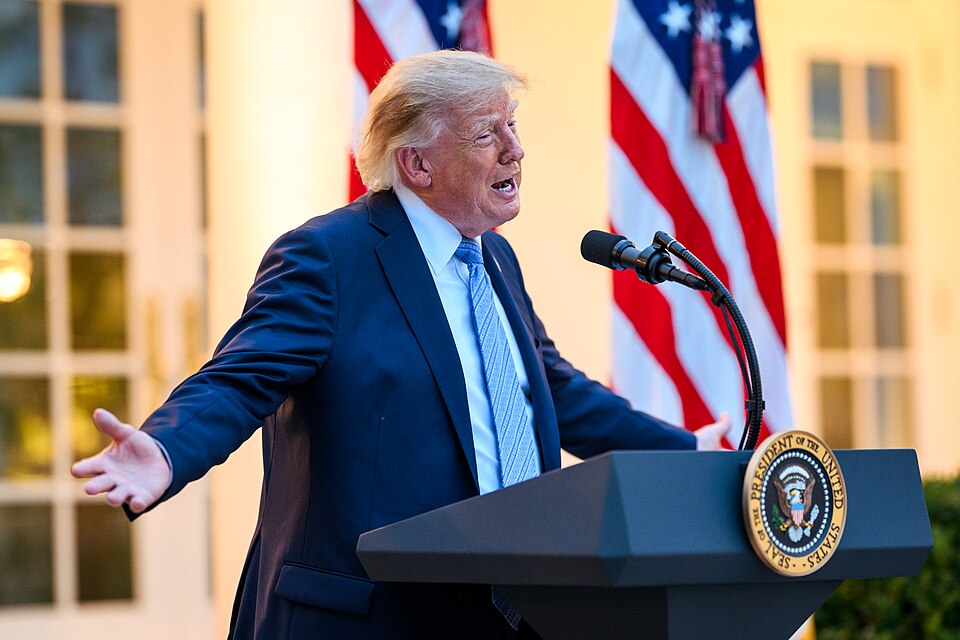
Here’s what was learned.
President Donald Trump’s administration has made a significant decision about federal election monitoring just days before Americans head to the polls for the November 3 midterm elections.
The Department of Justice has confirmed that agents and employees from the FBI and Immigration and Customs Enforcement (ICE) will not serve as election monitors, following growing legal challenges and concerns about the federal government’s role at polling locations.
The announcement represents an important clarification of the administration’s election security plans. However, it does not mean that federal oversight is being eliminated.
In fact, the Justice Department is still preparing to deploy approximately 1,000 personnel nationwide as part of an unusually large election-monitoring operation.
The development comes as both political parties prepare for a closely watched election that could determine control of Congress.
Justice Department Makes Major Election Announcement
The administration disclosed its plans in an October 28 federal court filing connected to a lawsuit brought by the NAACP.
Eric Neff, the acting chief of the Justice Department’s Voting Section, explained that FBI and ICE personnel would not participate in the department’s election-monitoring program.
The decision addresses one of the central concerns raised by critics who questioned whether federal law enforcement agents might be stationed at polling places.
However, employees from several other federal agencies will still be eligible to serve as election monitors.
Those agencies include the Drug Enforcement Administration, the Bureau of Alcohol, Tobacco, Firearms and Explosives, and the Federal Bureau of Prisons.
The Justice Department emphasized that these employees will not exercise law enforcement authority while serving in their election-monitoring roles.
Instead, their responsibilities will be limited to observing voting procedures and documenting potential violations of federal election laws.
Trump Administration Still Planning Nationwide Election Oversight
Although the FBI and ICE will not participate, the Trump administration is moving ahead with its broader plans to monitor the upcoming elections.
The Justice Department has outlined an operation involving approximately 1,000 personnel, with monitoring activities planned across all 50 states.
That represents a substantial federal effort at a time when election integrity remains a major political issue.
Federal election monitoring has existed for decades, with Justice Department officials observing elections to help ensure compliance with voting-rights laws.
However, the size and scope of the current administration’s plans have attracted considerable attention.
Trump has consistently emphasized the importance of secure elections and restoring confidence in the voting process.
His administration has also sought access to voter-registration information from several states, arguing that stronger safeguards are necessary to maintain public trust.
Critics have questioned aspects of those efforts, particularly the extent of federal involvement in elections traditionally administered by state and local governments.
Federal Election Monitors Face Strict Restrictions
The Justice Department also clarified what federal personnel will and will not be permitted to do at polling locations.
According to the court filing, election monitors will be prohibited from carrying firearms while performing their assigned duties.
They will not be allowed to interfere with voters, obstruct election workers, or take actions normally associated with law enforcement.
Their primary responsibility will be observing election procedures and recording potential concerns for further review.
The department also stated that monitors have been trained to follow applicable state and local election laws.
These restrictions are intended to distinguish election observation from active policing.
While some monitors may ordinarily work for federal law enforcement agencies, they will not be operating in that capacity during the election.
The Justice Department maintains that its monitoring activities will follow practices established during previous election cycles.
Democrats Challenge Trump’s Election Monitoring Plans
The administration’s plans have faced opposition from Democratic lawmakers and voting-rights organizations.
The NAACP has pursued legal action seeking greater transparency about the federal monitoring operation.
The organization has expressed concern that placing personnel associated with law enforcement agencies near polling locations could discourage some voters from participating.
Its lawsuit seeks records concerning the government’s monitoring plans, including information about where personnel may be deployed and what authority they will exercise.
The Justice Department has defended its approach, maintaining that federal monitors are expected to observe the election without interfering with voters or election officials.
The disagreement reflects competing concerns surrounding the 2026 midterm elections.
Supporters of stronger election oversight argue that transparency and enforcement of existing laws are essential to maintaining confidence in election results.
Opponents worry that an expanded federal presence could create unnecessary confusion or raise questions about the independence of local election administration.
Why the 2026 Midterm Elections Matter
The controversy comes at a particularly important moment for American politics.
Voters will decide the composition of the next Congress, with all seats in the House of Representatives and numerous Senate seats appearing on ballots.
The results will help determine how much legislative support President Trump has during the remainder of his second term.
A Republican-controlled Congress could make it easier for the administration to advance parts of its domestic policy agenda.
Democratic gains, particularly if they result in control of either chamber, could lead to greater congressional scrutiny of the White House and more difficult legislative negotiations.
Beyond the political consequences, the election also brings renewed attention to how votes are cast, counted, and certified.
State and local election officials remain responsible for administering elections, while federal authorities have a more limited role in enforcing applicable federal laws.
That distinction has become central to the disagreement over the Justice Department’s monitoring program.
What Happens Next for Trump’s Election Security Plans?
With Election Day approaching, the Justice Department is continuing preparations for its nationwide monitoring effort.
The administration’s latest court filing makes clear that FBI and ICE employees will not serve as election monitors.
Nevertheless, the broader federal operation remains in place, with personnel from other Justice Department agencies expected to participate.
The filing also establishes restrictions intended to prevent monitors from interfering with voters or exercising law enforcement powers.
Whether those assurances will satisfy the administration’s critics remains uncertain.
For now, the central questions involve how federal monitors will conduct themselves, whether they will comply with local election procedures, and how their observations will be used after voting concludes.
The administration’s decision to exclude FBI and ICE personnel may reduce some concerns, but it has not ended the larger debate over election oversight.
The bottom line is that Trump has not abandoned federal election monitoring. His administration has confirmed that FBI and ICE personnel will not participate, while plans for approximately 1,000 federal monitors remain in place.
As Americans prepare to vote on November 3, the administration’s election security measures will continue to face scrutiny from political leaders, election officials, and voting-rights organizations.



Leave a Reply