
Wow! Trump didn’t hold back this time.
President Donald Trump fired back at a Reuters reporter Thursday after a question about his campaign schedule turned into a heated confrontation over his health and ability to keep traveling ahead of the midterm elections.
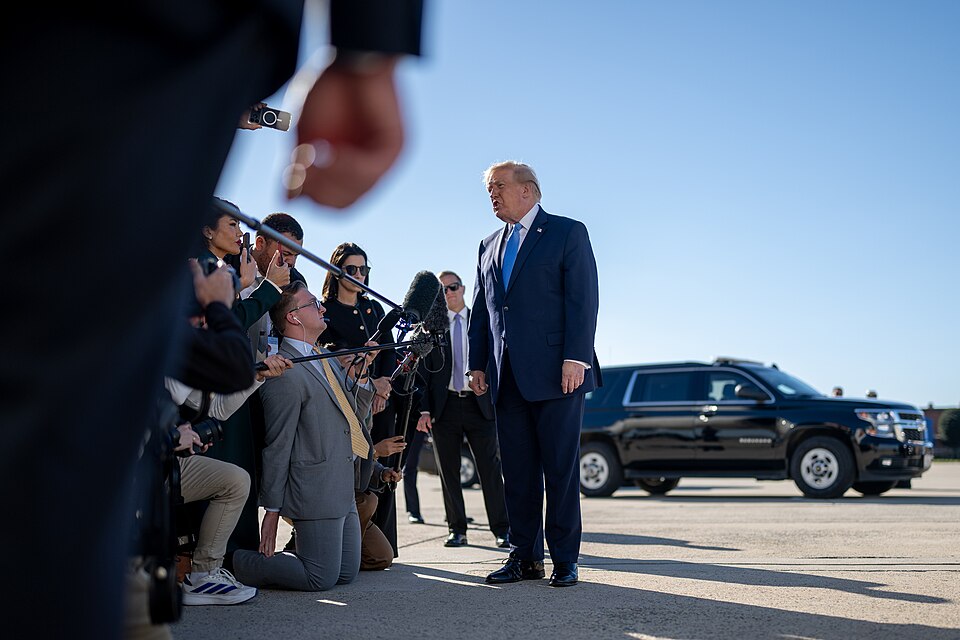
The unexpected exchange took place on October 29, 2026, as Trump spoke with journalists following his arrival aboard Air Force One.
What started as a routine question about a canceled campaign appearance in Kansas quickly became a tense confrontation, with the president criticizing both the reporter and the news organization he represented.
Trump, who has maintained an active travel schedule while supporting Republican candidates across the country, made it clear that he did not appreciate questions suggesting his decision to cancel the event might be related to fatigue.
The president insisted he was feeling well and had a straightforward explanation for the change in plans.
Trump Fires Back After Reporter Questions His Health
Reuters White House correspondent Jacob Bogage questioned Trump about his decision to cancel an upcoming appearance in Kansas, where Republican Senator Roger Marshall is seeking reelection.
The reporter asked whether the decision had anything to do with the president being tired of traveling.
Trump appeared to interpret the question as a suggestion that he might be sick.
“Oh, you’re sick to ask that question,” Trump responded.
The president then demanded to know which news organization the reporter worked for.
After Bogage identified himself as a Reuters journalist, Trump criticized the outlet and continued expressing his frustration with the question.
The reporter attempted to explain that he was simply interested in the president’s well-being.
However, that clarification did little to calm the situation.
Trump shifted his criticism toward the journalist personally, questioning his physical condition and appearance.
“You are disgusting. Put yourself in shape. You look like hell!” Trump declared.
The remarks quickly became the most widely discussed portion of the encounter, once again highlighting the president’s willingness to confront members of the national media directly.
WATCH:
.@POTUS absolutely DESTROYS Fake News @jacobbogage:
“You are a SICK guy! Reuters is terrible, by the way. Look at this guy — he’s way out of shape… You are disgusting. Put yourself in shape. You look like hell.” 🤣🤣🤣 https://t.co/ln0k71AEWt
— Rapid Response 47 (@RapidResponse47) October 29, 2026
Trump Reveals Why He Canceled Kansas Campaign Rally
Despite the heated exchange, Trump provided an explanation for his decision to cancel the Kansas appearance.
According to the president, the cancellation was unrelated to his health or energy level.
Instead, Trump said he believed Senator Roger Marshall was performing well enough in his reelection campaign that a personal appearance was not necessary.
Rather than traveling to Kansas, Trump planned to participate in a telephone rally supporting the Republican senator.
The president also emphasized that he was scheduled to campaign in Florida the following day.
“You’ve been following me for two weeks. I feel perfect,” Trump told the reporter.
His response was intended to reject any suggestion that the demands of campaigning were forcing him to reduce his activities.
The decision to skip Kansas was part of a broader adjustment to Trump’s campaign schedule as Republicans prepared for the final days before the November elections.
White House Announces New Campaign Approach
Trump’s change in plans comes as Republican candidates compete for control of Congress in the November 3 midterm elections.
With only days remaining before voters head to the polls, the president has been working to support GOP candidates in several closely watched races.
According to Reuters, Trump canceled planned in-person appearances in both Kansas and Iowa while preparing to participate in telephone-based campaign events across multiple states.
These tele-rallies allow Trump to reach voters and speak on behalf of Republican candidates without requiring additional travel between individual campaign stops.
The White House has indicated that the president will participate in more than 20 telephone events before Election Day.
The change could allow Trump to maintain a presence in numerous congressional contests while concentrating his remaining in-person appearances on selected locations.
However, the cancellations have also attracted attention because of the president’s extensive travel schedule and the competitive political environment facing Republicans.
The president has rejected suggestions that the changes indicate a personal health problem.
Trump’s Relationship With National Media Remains Contentious
The confrontation with the Reuters correspondent reflects Trump’s longstanding and frequently contentious relationship with national news organizations.
Throughout his political career, the president has repeatedly criticized journalists and media outlets he believes have treated him unfairly.
His exchanges with reporters are often direct, confrontational, and occasionally personal.
Thursday’s encounter followed that familiar pattern, although the original question appeared to focus on whether Trump was growing tired of traveling rather than whether he was suffering from an illness.
That distinction may help explain why the conversation escalated so quickly.
Trump seemed to interpret the question as a challenge to his health, while the reporter maintained that he was asking about the president’s well-being.
The incident illustrates how questions about presidential schedules can quickly become contentious, particularly during an election season when public appearances receive intense scrutiny.
Presidential health and fitness are legitimate subjects of public interest. At the same time, the president has maintained that he is capable of continuing his demanding responsibilities and campaign commitments.
Why the Kansas Race Matters for Republicans
The canceled appearance also draws attention to the political importance of the Kansas Senate race.
Republican Senator Roger Marshall is seeking another term, and Democrats are hoping to challenge Republican control of the seat.
Although Kansas has generally favored Republicans in statewide federal elections, the contest has attracted additional attention as both parties fight for control of the Senate.
Trump’s involvement could help encourage Republican participation, particularly among voters who remain strongly supportive of his presidency.
Even without appearing in person, a presidential telephone rally provides Marshall with an opportunity to reach Republican voters during the final stretch of the campaign.
For the White House, such events offer a way to support multiple candidates without the considerable time and logistics required for traditional rallies.
The broader stakes are significant.
Republicans are seeking to preserve their congressional majorities, while Democrats hope to gain enough seats to challenge the administration’s legislative agenda.
The election results will help determine how much support Trump receives from Congress during the remainder of his presidency.
Trump Remains Focused on Election Day
While the exchange with the Reuters reporter attracted considerable attention, Trump continued to emphasize his campaign plans.
The president maintained that he was healthy, defended his decision to cancel the Kansas appearance, and pointed to his scheduled Florida trip as evidence that he intended to remain active.
His explanation was that Marshall’s campaign did not require another in-person presidential visit, not that he was unable to make the trip.
The administration’s expanded use of tele-rallies also suggests that the White House is looking for ways to reach voters in numerous states before Election Day.
For Republicans, the immediate priority remains encouraging supporters to vote and preserving their majorities in Washington.
As the midterms approach, questions about the president’s schedule and campaign strategy are likely to continue.
But Thursday’s confrontation demonstrated one thing clearly: Trump remains prepared to challenge reporters directly when he believes their questions misrepresent his decisions or cast doubt on his ability to do the job.
Leave a Reply