
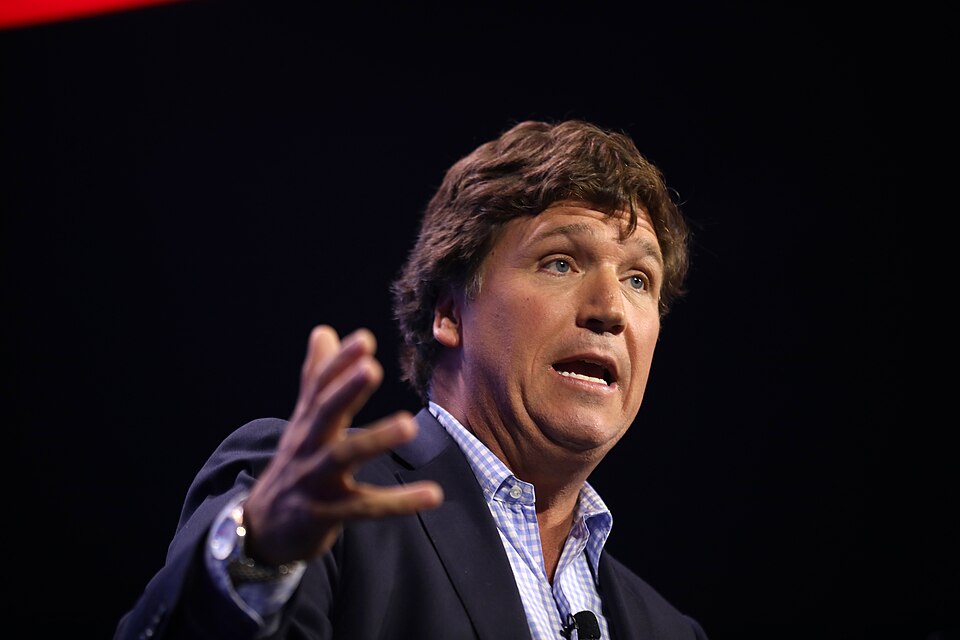
This was shocking to see.
A bitter feud between two prominent conservative figures has taken a deeply personal turn after Tucker Carlson launched a blistering verbal attack against Republican Sen. Ted Cruz of Texas, a longtime ally of President Donald Trump.
The former Fox News host sharply criticized Cruz during a Friday episode of The Tucker Carlson Show, going beyond political differences to make damaging allegations about the senator’s personal life and family relationships.
Carlson also questioned Cruz’s intelligence, judgment, and reputation, delivering some of his harshest public remarks yet about the Texas Republican.
The confrontation comes as conservatives continue debating the future of the Republican Party, President Trump’s America First agenda, and the role of the United States in foreign conflicts.
Tucker Carlson Unleashes Personal Criticism of Ted Cruz
The latest controversy began when Carlson answered a viewer’s question about which politicians he considers the best and worst in Washington.
Carlson named former Rep. Marjorie Taylor Greene, outgoing Rep. Thomas Massie, and former National Counterterrorism Center Director Joe Kent as his preferred political figures.
When asked to identify the worst politicians, Carlson initially offered a sweeping dismissal of virtually everyone else.
However, the conversation took a sharper turn when his producer brought up Cruz.
Carlson immediately singled out the Texas senator, describing him as an especially unhappy figure in Congress.
He went on to allege that Cruz has serious problems in his personal life, including a supposed lack of respect from members of his own family.
Carlson provided no evidence to support those accusations, and the remarks appeared to reflect his personal opinion rather than any independently established facts.
His decision to involve Cruz’s wife and children marked a significant escalation in a feud that has already produced several heated public confrontations.
Carlson Questions Cruz’s Intelligence and Judgment
The former television host continued his criticism by challenging Cruz’s reputation as an intelligent and highly educated political leader.
Carlson referred to Cruz as a “sad, greasy guy” and suggested that the senator’s strong verbal abilities have caused others to overestimate his judgment.
According to Carlson, the ability to speak persuasively or perform well in debates does not necessarily translate into sound decision-making.
He argued that Cruz has spent much of his career receiving praise for his intelligence without developing the self-awareness Carlson believes effective leaders should possess.
Carlson also suggested that the senator does not recognize how others perceive him.
Although Carlson portrayed his remarks as observations about Cruz’s character, he offered little evidence beyond his own assessments.
For a public figure who once regularly appeared alongside Republican leaders, the unusually personal comments demonstrate how far his relationship with Cruz has deteriorated.
Bitter Feud Between Conservative Figures Goes Back Years
The latest confrontation is hardly the first time Carlson and Cruz have publicly clashed.
Their disagreements date back several years and have involved major questions about national security, government accountability, and American foreign policy.
One notable dispute occurred in January 2022, when Cruz appeared on Carlson’s Fox News program to address his previous description of the January 6, 2021, Capitol riot.
Cruz had characterized the events using harsh language, prompting criticism from conservatives who disagreed with that description.
During the interview, Cruz attempted to clarify his remarks, explaining that his wording had been careless.
Carlson challenged that explanation, arguing that Cruz was too experienced and deliberate with language to have made such a mistake unintentionally.
The exchange quickly became contentious and exposed growing differences between the two influential Republicans.
Their disagreements would eventually extend into questions about America’s military commitments overseas.
Foreign Policy Disagreements Deepen Republican Divide
Another major confrontation occurred in 2025, when Carlson interviewed Cruz about the possibility of American military action against Iran.
The discussion became heated as Carlson challenged the senator’s knowledge of Iran and questioned his support for using military force.
Cruz maintained that Iran’s nuclear ambitions presented a serious national security concern that required a strong American response.
Carlson approached the issue from a different perspective, questioning whether additional military involvement in the Middle East would serve the interests of American citizens.
The disagreement reflected an increasingly visible divide within conservative politics.
Some Republican leaders support maintaining a strong American military presence abroad and confronting hostile governments with decisive action.
Others argue that the United States should avoid unnecessary overseas conflicts and concentrate more attention on domestic priorities.
Those competing viewpoints have created friction among conservative commentators, elected officials, and supporters of President Trump’s political movement.
Carlson’s latest attack suggests that the differences between him and Cruz have become personal as well as political.
Cruz Remains a Prominent Trump Ally
Despite the criticism from Carlson, Cruz remains an influential Republican senator with a long history of supporting many of President Trump’s priorities.
The Texas Republican has been an outspoken advocate for stronger border security, conservative judicial appointments, and policies intended to strengthen American national security.
His relationship with Trump has not always been smooth.
The two were fierce rivals during the 2016 Republican presidential primary, when Trump and Cruz exchanged sharp criticism while competing for their party’s nomination.
Following Trump’s victory, however, Cruz became an important congressional supporter of numerous Republican initiatives.
Their political relationship reflects the complicated alliances that have developed within the modern Republican Party.
Carlson, meanwhile, has frequently criticized prominent Republicans over foreign policy and what he considers departures from America First principles.
His latest remarks about Cruz illustrate how internal conservative disagreements can become especially bitter when prominent personalities challenge one another in public.
Personal Attacks Raise Questions About Political Discourse
While political disagreements are common in Washington, Carlson’s decision to target Cruz’s family relationships introduces a different dimension to the controversy.
Cruz and his wife, Heidi, have previously acknowledged experiencing difficulties while balancing their professional responsibilities and family commitments.
Those public discussions, however, do not establish the claims Carlson made about the senator’s current personal relationships.
The distinction matters because criticism of an elected official’s voting record or political positions can be evaluated through public evidence.
Claims about private family relationships are considerably harder to substantiate, particularly when the individual making them offers no supporting information.
The controversy also raises broader questions about whether increasingly personal attacks are distracting conservative voters from substantive debates over the country’s direction.
With important midterm elections approaching, Republicans face significant decisions involving economic policy, national security, immigration, and congressional leadership.
Public feuds between prominent conservative figures could complicate efforts to focus attention on those issues.
What Happens Next for Carlson and Cruz?
For now, Carlson’s remarks have added another chapter to one of the more contentious relationships in conservative media and Republican politics.
The former Fox News personality has demonstrated little reluctance to criticize Republican officials when he disagrees with their positions or leadership.
Cruz, meanwhile, has established himself as a combative political figure who regularly defends his positions against criticism from both Democrats and fellow Republicans.
Whether the Texas senator responds directly to Carlson’s latest comments remains to be seen.
What is clear is that the dispute has evolved far beyond a typical disagreement over legislation or foreign policy.
As Republicans prepare for the midterm elections, the growing hostility between Carlson and Cruz serves as another example of the tensions shaping the conservative movement.
The central question is whether those disagreements will remain focused on policy or continue escalating into personal attacks that divide influential figures within the Republican Party.





Leave a Reply