
CNN’s Anderson Cooper fired back immediately.
The often-contentious relationship between President Donald Trump and major news organizations was back in the spotlight this week after a tense exchange involving CNN correspondent Kaitlan Collins during an Oval Office press event.
The incident quickly gained attention across television, social media, and political circles, sparking discussion about media relations, presidential rhetoric, and the role journalists play in covering the nation’s highest office.
While clashes between Trump and reporters have become a familiar part of the political landscape, the latest confrontation generated renewed debate over how elected leaders interact with members of the press and whether personal criticism of journalists helps or hurts public discourse.
Oval Office Exchange Draws Attention
The exchange took place Wednesday as Trump responded to questions about the future of the Anti-Weaponization Fund, a Department of Justice initiative that was established following the resolution of a legal dispute involving the Internal Revenue Service.
Questions about the program emerged after Acting Attorney General Todd Blanche indicated during a recent hearing that the department was no longer expected to move forward with the fund.
When asked about the matter, Trump expressed support for the initiative and discussed what he described as the political weaponization of government agencies against him and his supporters. He argued that such actions had damaged public trust and called for greater accountability.
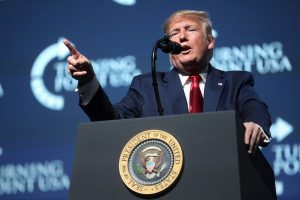
However, the conversation soon shifted away from policy when the president directed comments toward CNN correspondent Kaitlan Collins, who was standing among reporters in the room.
Trump criticized both Collins and CNN, repeating longstanding complaints about the network’s coverage. He also made personal remarks about Collins, saying he rarely sees her smile and suggesting that her expressions reflect opposition to policies he supports, including border security, military strength, and tax policy.
Video of the exchange quickly circulated online, generating reactions from political commentators, journalists, and media observers across the ideological spectrum.
WATCH:
Trump attacking Kaitlan Collins: CNN’s a very corrupt organization, with a corrupt reporter standing right there, never smiles. Young, beautiful woman, never smiles. I never see a smile on her face. I see her standing with such hatred in her eyes. pic.twitter.com/mF2dKWKC48
— Acyn (@Acyn) June 3, 2026
CNN Responds During Prime-Time Coverage
Later in the evening, CNN anchor Anderson Cooper addressed the incident during his broadcast, arguing that the president’s comments focused on Collins personally rather than on the substance of her reporting.
Cooper said Collins was performing her duties as a journalist and questioned why female reporters often become the subject of personal observations that are not commonly directed toward their male counterparts.
During the segment, CNN aired a compilation of previous interactions between Trump and Collins, along with several other exchanges involving reporters who have challenged the president during press conferences and interviews.
The network’s coverage framed the incident as part of a broader pattern of confrontations between Trump and members of the media.
Discussion Expands Beyond Politics
The conversation continued when Cooper spoke with journalist Tara Palmeri, who discussed how comments about appearance can be perceived differently when directed at women in professional settings.
Palmeri argued that observations about a journalist’s appearance or demeanor can sometimes shift attention away from their work and reporting. She suggested that the remarks reflected larger conversations taking place throughout society regarding workplace interactions and public criticism.
The discussion highlighted how political events often evolve into broader debates that extend beyond the immediate news cycle, touching on issues related to media culture, communication, and public perception.
Why the Exchange Is Drawing Attention
High-profile confrontations between politicians and journalists frequently generate significant public interest because they highlight the ongoing tension between government officials and the media.
Supporters of aggressive questioning argue that journalists serve an important role by seeking answers on behalf of the public and holding elected leaders accountable. Others believe some news organizations approach coverage with predetermined viewpoints, which can contribute to friction during press events.
As a result, moments like this often become larger conversations about transparency, trust, accountability, and the relationship between public officials and the press.
In today’s fast-paced media environment, exchanges that occur during live broadcasts can quickly become national stories, generating millions of views and widespread discussion online.
Trump’s Long History With the Media
Throughout his political career, Trump has maintained a highly visible and often combative relationship with many major news organizations.
Since entering national politics, he has frequently challenged reporters, criticized media coverage, and accused some outlets of unfair treatment. At the same time, journalists have continued to scrutinize his policies, public statements, and administration decisions.
This dynamic has made media confrontations a recurring feature of Trump’s presidency and political career.
Collins, in particular, has been involved in several widely reported exchanges with Trump over the years while covering the White House. Those interactions have often generated headlines and become part of larger debates about press access, accountability, and the role of journalists in government reporting.
Broader Questions About Political Communication
The latest exchange serves as another example of how modern political communication increasingly unfolds in real time before a national audience.
With press conferences, interviews, and social media clips reaching millions of viewers within minutes, even brief interactions can become major news stories that spark discussion far beyond Washington.
Supporters and critics often interpret these moments differently, reflecting broader divisions in how Americans view political leadership, media organizations, and public discourse.
As technology continues to accelerate the spread of information, the relationship between politicians and journalists remains one of the most closely watched aspects of American public life.
Looking Ahead
Whether viewed as a justified response to tough questioning or an unnecessary personal attack, the incident has once again placed the spotlight on the often-complex relationship between elected officials and the press.
As video of the exchange continues to circulate online, it is likely to remain part of a broader conversation about journalism, political accountability, media trust, and public communication.
For many Americans, the moment serves as a reminder that interactions between political leaders and reporters are no longer confined to the briefing room. In today’s digital era, they often become national debates that shape public perception and influence discussions far beyond the original event itself.

Leave a Reply