
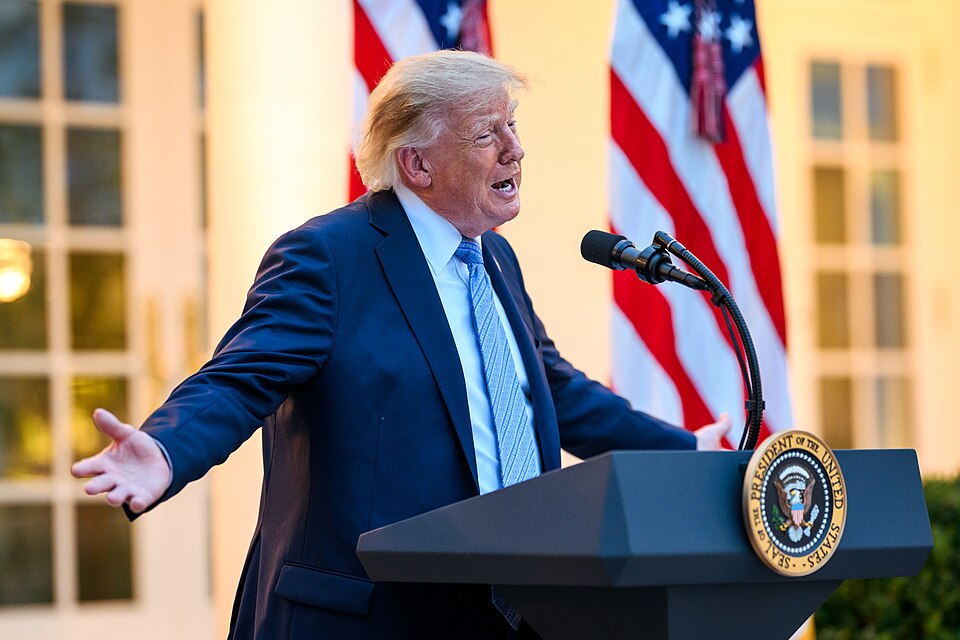
Here’s what happened.
President Donald Trump has secured a major new trade breakthrough with China following high-level talks with Chinese President Xi Jinping in Washington, D.C.
The United States and China have reached an agreement on recommendations that could provide more favorable tariff treatment for roughly $30 billion worth of non-sensitive goods in each direction, according to the White House.
The development could have important consequences for American farmers, manufacturers, exporters and consumers as the world’s two largest economies continue trying to ease years of trade tensions.
$30 Billion In U.S.-China Trade Gets New Treatment
Under the framework announced by the White House, several categories of American-made products could receive more favorable tariff treatment when entering China.
Those U.S. exports include:
- Agricultural products
- Fish and seafood
- Logs and wood products
- Cosmetics
- Medical devices
The recommendations also apply to a range of Chinese-made consumer goods, including compact household appliances, toys, seasonal decorations and child safety seats.
The agreement specifically focuses on non-sensitive goods, allowing the two countries to address commercial trade without immediately resolving more complicated disputes involving national security and advanced technology.
American Farmers Could Benefit
Agriculture remains one of the most closely watched parts of the U.S.-China economic relationship.
American farmers have repeatedly found themselves caught in the middle when tariffs and retaliatory measures reduce access to China’s massive marketplace.
The latest agreement could provide new opportunities for U.S. agricultural producers if the promised tariff treatment is ultimately implemented.
The White House also announced that the U.S.-China Board of Trade has created a working group aimed at addressing agricultural market-access barriers.
That could potentially become significant for farmers seeking to sell more American products overseas.
New Trade Board Could Shape Future Deals
The latest agreement was negotiated through the U.S.-China Board of Trade, a government-to-government body established following Trump’s May 2026 summit with Xi in Beijing.
The board gives American and Chinese officials a permanent mechanism for discussing trade disputes rather than relying entirely on emergency negotiations whenever tensions escalate.
The two governments can now use the board to consider additional tariff changes, agricultural access and other economic disputes.
That leaves open the possibility of broader U.S.-China trade agreements in the months ahead.
More Details Are Coming
U.S. Trade Representative Jamieson Greer said additional details about the trade negotiations are expected to be released Monday.
Several major questions remain unresolved.
The administration has not yet released all of the specific products covered by the arrangement or the final tariff rates that could apply.
Those details will be especially important to American companies attempting to determine how much the agreement could reduce their costs.
Until those terms are released, the precise financial impact on U.S. businesses and consumers remains uncertain.
Trump And China Have Battled Over Tariffs For Years
The agreement comes after a lengthy period of economic confrontation between Washington and Beijing.
Trump imposed additional tariffs on Chinese imports beginning in February 2025, citing concerns that included China’s alleged role in supplying chemicals used in the illegal fentanyl trade.
China responded by imposing tariffs on American exports, including coal, liquefied natural gas, crude oil and automobiles.
Trade tensions intensified sharply in the spring of 2025.
At one point, U.S. tariffs on certain Chinese goods reached extremely high levels while Beijing imposed similarly steep retaliatory tariffs on American products.
The escalating dispute raised concerns among businesses, farmers and consumers about higher costs and disrupted supply chains.
Geneva Talks Helped Cool The Trade Fight
American and Chinese negotiators eventually met in Geneva in May 2025 and agreed to temporarily reduce some of the most severe tariffs.
That agreement created a 90-day pause designed to give both governments more time to negotiate.
The truce was later extended as Washington and Beijing continued working toward a more permanent arrangement.
Additional discussions followed during a meeting between Trump and China’s president in South Korea in October 2025.
Those negotiations addressed several major American concerns, including fentanyl precursor chemicals, purchases of U.S. agricultural products and Chinese restrictions on rare-earth exports.
Why Rare-Earth Minerals Matter
Rare-earth minerals have become an especially important issue in U.S.-China trade negotiations.
These materials are used in a wide variety of products, including automobiles, electronics, military equipment and advanced technology.
China plays an enormous role in the global rare-earth supply chain, giving Beijing significant influence over industries that depend on the materials.
Previous negotiations included commitments by China involving restrictions on rare-earth exports, making the issue a central part of the broader economic relationship between the two countries.
What The Deal Could Mean For American Consumers
The potential benefits are not limited to farmers and manufacturers.
Some Chinese-made consumer goods covered by the agreement could receive more favorable tariff treatment when imported into the United States.
In theory, lower tariffs can reduce the cost of importing products.
However, that does not automatically mean shoppers will immediately see lower prices.
Retail prices are determined by numerous factors, including transportation expenses, labor costs, currency movements, supply-chain conditions and decisions made by individual companies.
Consumers will therefore have to wait until the final tariff rates are released before the potential effect on household expenses becomes clearer.
American Businesses Will Be Watching Closely
Companies that import products or export American goods to China will likely pay close attention to the final details.
For U.S. exporters, improved access to the Chinese market could create additional sales opportunities.
For American importers, reduced tariffs on certain Chinese products could lower expenses.
Businesses have spent years adjusting to changing tariffs between Washington and Beijing, making greater predictability particularly valuable for companies planning future investments.
A Broader Trade Agreement Could Come Next
The $30 billion framework may only represent one part of a larger negotiating process.
The White House says the Board of Trade will continue addressing economic disputes between the two countries.
That could eventually include additional tariff reductions, expanded agricultural access or agreements involving other categories of goods.
The two governments remain divided on numerous economic and strategic questions, meaning significant disagreements are unlikely to disappear overnight.
Still, the latest agreement represents another attempt to move the relationship away from the extraordinarily high tariffs that characterized some of the most intense periods of the U.S.-China trade confrontation.
What Happens Next
The next major development is expected Monday, when the Trump administration is set to provide additional information about the negotiations.
American farmers, manufacturers, retailers and consumers will be watching for three key details: the final tariff rates, the complete list of products covered and the timetable for implementing the agreement.
Those details will ultimately determine how significant the $30 billion arrangement becomes for the broader U.S. economy.
For now, the agreement gives Washington and Beijing another mechanism for reducing trade tensions while creating the possibility of additional negotiations ahead.



Leave a Reply